

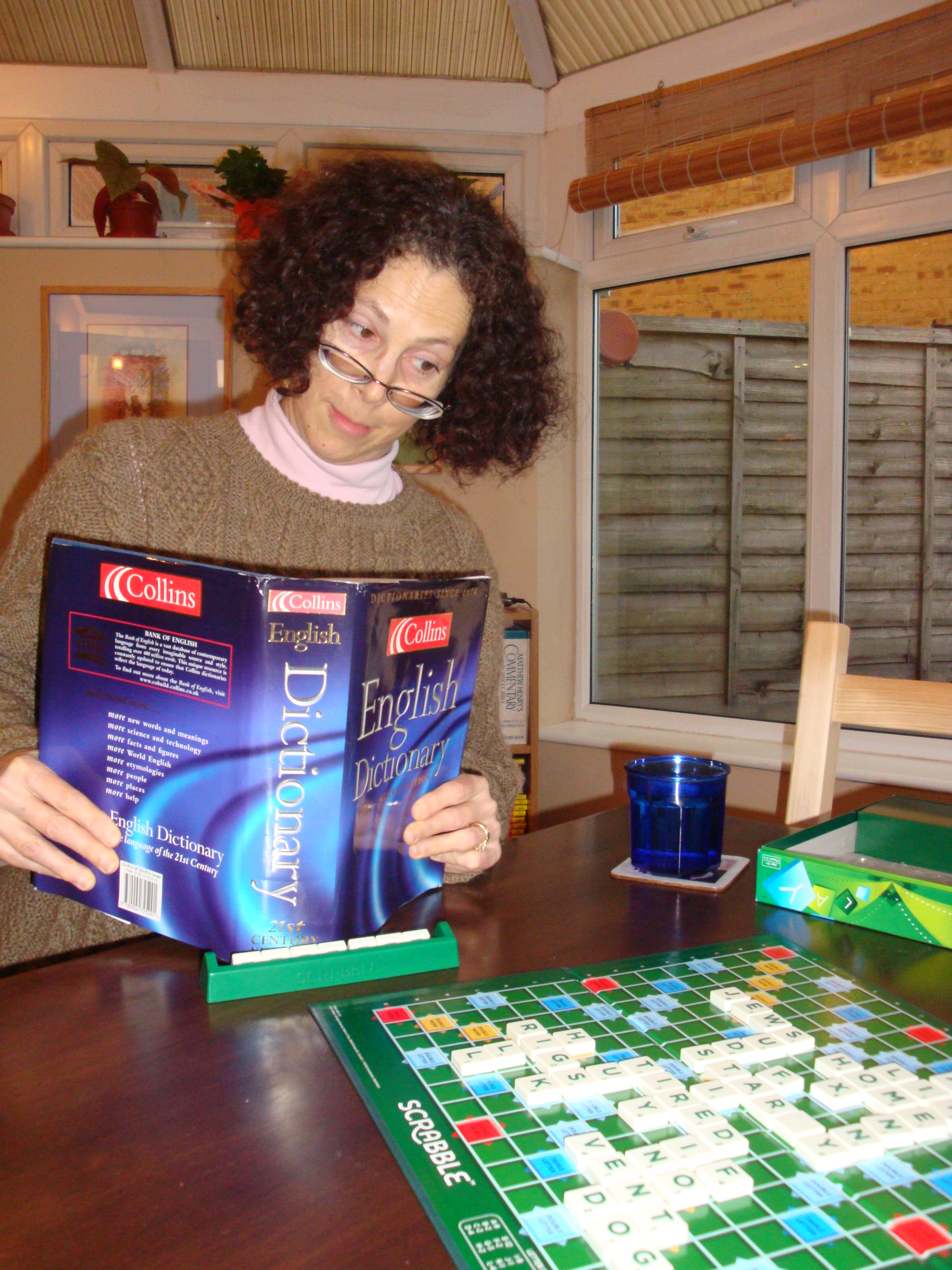
“I know your head aches. I know you’re tired. I know your nerves are as raw as meat in a butcher’s window. But think what you’re trying to accomplish – just think what you’re dealing with. The majesty and grandeur of the English language; it’s the greatest possession we have. The noblest thoughts that ever flowed through the hearts of men are contained in its extraordinary, imaginative and musical mixture of sounds. And that’s what you’ve set yourself out to conquer, Eliza. And conquer it you will.” – George Bernard Shaw, My Fair Lady
In a song from My Fair Lady Professor Henry Higgins famously asks, “Why can’t the English learn how to speak?” Also in that same song he rather rudely remarks, “There are even places where English completely disappears. In America they haven’t used it in years.”
English can be a beautiful language. There is a grandeur and majesty when it is spoken and written well which has inspired people through the ages. The speeches and soliloquies of Shakespeare’s plays can still send a shiver of excitement down a listener’s spine – over four hundred years after they were written. However, when a good language goes bad, to paraphrase a well-known nursery rhyme, it is horrid.
In my previous career as a corporate travel agent I worked with clients who hailed from the farthest corners of the globe. Doctors, engineers, research scientists and professors often had accents which were challenging to decipher, to say the least. After twenty-five years of practice I had become adept at listening intently and recognizing what people were trying to tell me.
This, I naively thought, would serve me well when I moved to the UK. I didn’t expect to have any difficulty understanding people in this country when they spoke to me. Oh boy was I ever wrong! On more than one occasion I have been completely flummoxed by an indecipherable barrage of words coming at me like machine gun fire from a native-born speaker.
I have also found place names, in particular, seem to have an unfortunate tendency to be pronounced in ways that have nothing whatsoever to do with how they are spelled. My initial attempts are often great sources of mirth for my husband and others around me. Adding to the confusion is the fact that how a word is pronounced has a lot to do with who I happen to ask.
For example, I’ve asked several people the correct way to pronounce the name of the city of Bath. After much hemming and hawing I am told that it depends on where you hail from. Most people I’ve surveyed have said, “Bawth”, but apparently the locals are more likely to pronounce it with the “a” as in “cat” sound. I go with the latter, because that’s what comes naturally.
Later this year my husband and I are taking a trip to Llandudno, Wales. Every English person I’ve asked has pronounced Llandudno differently, and what amuses me is that each one says his or her version with absolute and total confidence, as if this is the definitive way of saying that awkward Welsh word and all others are wrong. Some make the double-L sound like a K; others make it a more guttural CH sound. I am going to have to search out a genuine Welsh person to ask, and then stick to my guns with whatever my best approximation can be.
A few weeks ago Warwick Castle came up in a conversation with my husband, and in my innocence I pronounced it just as it is spelled, only to have my husband inform me that it’s actually pronounced, “Warrick”. Leicester is pronounced “Lester”, and I have to be careful when we go to Birmingham not to emphasize the “ham” like we do in America, but to kind of mumble it all together as “Birmingm”. Locals just say “Brum”.
An online search for the most common accents or dialects in Britain reveals a staggering number. A couple of examples are:
- Received Pronunciation – the accent you most often hear in Jane Austen movie adaptations; the one that originated with the aristocracy. With this accent people leave off the “r” at the end of words. An example would be, “Oh deah” instead of “Oh dear.” We Americans like this accent because we can understand it quite easily without having to constantly say, “Huh?” or turn on the subtitles on our TV’s. This is the one we most often try to mimic when we get silly and attempt to speak with a British accent.
- Cockney – originating in the East End of London, technically among those who lived within the sound of the Bow Bells. Most Americans’ first exposure to a Cockney accent came when we were children and saw Dick Van Dyke playing Bert in Mary Poppins. This, however, should not be used as a proper example since his is frequently cited as the worst attempt at a Cockney accent in a film, ever. Rhyming slang is a key feature of Cockney speech. Many have heard of having a cuppa Rosie Lee (rhymes with tea), and some of its expressions have been incorporated into everyday usage even in the US. Referring to $1,000 as “a grand” comes directly from Cockney slang, and if you ever look up the Cockney origins of the original English lyrics for “Pop Goes the Weasel” you’ll find quite a fascinating history. “Popping” is slang for pawning, and “weasel” is slang for coat or suit (Weasel and stoat = coat). The song is about spending all your money in the pub and then pawning your coat to raise more. It is a fascinating subject, but Cockney is an accent that amateurs should steer clear of if they want to avoid Dick Van Dyke syndrome.
- There is apparently an accent specific to the county of Somerset, just to the south of us. They say their “r’s” very strongly, and tend to speak slowly, or so my husband tells me. An example of this accent would be if you listen to The Wurzels sing their song Combine Harvester. http://www.youtube.com/watch?v=tb63PdPweDc
- Bristolians have a unique accent, a slight variation of a West Country Accent. Their “r’s” are even stronger than those of Somerset. For years a West Country accent has been used to denote rural England, rather like a Southern or Texan drawl is used in the US. However, in recent years this accent has become slightly more fashionable due to the influence of popular entertainers and television programs.
- And then there is Estuary English, West Country English, Midlands English, Northern England English, Geordie, Welsh English, Scottish English, Yorkshire, Scouse, Irish, and scores of others.
To an American ear it can take some getting used to, and often when people speak quickly I feel like there is a five second time delay while my brain tries to translate what they are saying into West Coast American English. In fact, Americans often do have a difficult time understanding British people when they speak, no matter what accent they happen to use.
A few years ago, when I was still living in the US, one of the TV news programs ran a story on what a popular drink Scotch was becoming in China. First they interviewed a Chinese person, asking about the new drinking trend. She spoke English very well, and her comments were allowed to stand alone, without interpretation. When the reporter interviewed the Scottish whiskey maker, however, the TV station provided subtitles as a matter of course, obviously having decided that the average American would have no clue what that man was saying.
It wasn’t until yesterday that I realized English people might have difficulty understanding me. Really? But I don’t have an accent, and I always speak perfectly plainly. Don’t I? Apparently not. With a few minutes to kill before an appointment in town I wandered into a toy and game shop. A clerk asked if he could be of assistance and I asked if they had any jigsaw puzzles. He gave me a blank look.
“Sorry?”
“Do you carry any jigsaw puzzles?” I repeated. I wondered if perhaps they’re not called jigsaw puzzles over here. What else might a jigsaw puzzle be called? I wracked my brain, but couldn’t come up with anything.
His expression grew, if you will pardon the pun, even more puzzled. “I’m sorry?” He was clearly confused.
And so, unable to think of any other solution, I fell back on the age-old trick of English-speaking travellers the world over. Raising my voice and speaking very slowly, I repeated, “Do…you…have… a…ny…jig…saw…puz…zles?”
And it worked! At last he understood and his face cleared with a happy smile. “Oh, puzzles,” he said, as if that was not what I had been saying all along. Then he paused. “No.”
Americans, it must be admitted, are suckers for a British accent, even if we can’t understand it half of the time. We just love to listen to British people talk and we love all of the variations – English, Scottish, Irish, Welsh, and we’ll even lump Australian in there – although they aren’t technically British anymore. Even if we can only understand every third word we will still listen, enthralled and amused. Many a Brit visiting America will find himself being told by complete strangers, “I just love your accent.”
I have never had a British person tell me, “I just love your accent,” or words to that effect, and it’s pretty much a guarantee that I never will. They may find our colloquialisms somewhat charming, but to a British person, even one who needs subtitles to be understood by anyone outside his home town, Americans will always be people who have forsaken the mother tongue.
And so I shall learn how to properly pronounce places like Gloucester (Gloster), Magdalene College in Oxford (Maudlin), Marylebone (Marleybone) underground station, and Caius College in Cambridge (Keys); but I will always sound like an American to the people around me, and that’s OK. As long as they can understand me, and I can understand them, then the entire purpose of language will have been accomplished – the sharing of ideas. Frankly, I hope the regional accents don’t ever totally fade away. Without them language would be a rather drab, colourless thing.
“There is no such thing as the Queen’s English. The property has gone into the hands of a joint stock company and we own the bulk of the shares!” – Mark Twain

 An American Wife in Wiltshire
Does anybody really say the entire name of that place or do they abbreviate it in some way? 🙂
We’ll have to go there and find out for ourselves. 🙂
Very interesting, Elizabeth! 🙂 I LOVE your blogs! I look forward to reading them all. This one was superb, to say the least.