
The fog comes
on little cat feet.
It sits looking
over harbour and city
on silent haunches
and then moves on.
– Carl Sandberg
Those lines by Carl Sandberg captured my imagination from the first moment I read them. I was still just a child and was curled up in a corner of the couch with the big, blue Arbuthnot Anthology of Children’s Literature spread open on my lap, thumbing through the tissue-paper thin pages. The imagery of fog creeping into a city on cat’s paws delighted me, for I have always loved a well-turned phrase and the evocative beauty of language.
We have now reached the season of the year here in Britain which has long been the subject of a great deal of verse, both lyrical and excruciating. For hundreds of years poets have attempted to put into words the joy and the wonder that is springtime. Wordsworth had his daffodils fluttering and dancing in the breeze, and countless other poets have pulled out all the stops in their attempts to capture the essence of springtime in England. Have no fear, for even the greatest surge of emotion has never been enough to cause me to break out in verse. However, I do feel compelled to follow the grand tradition and, like my more gifted literary predecessors, share with you some of the beauty of this changing of the seasons.
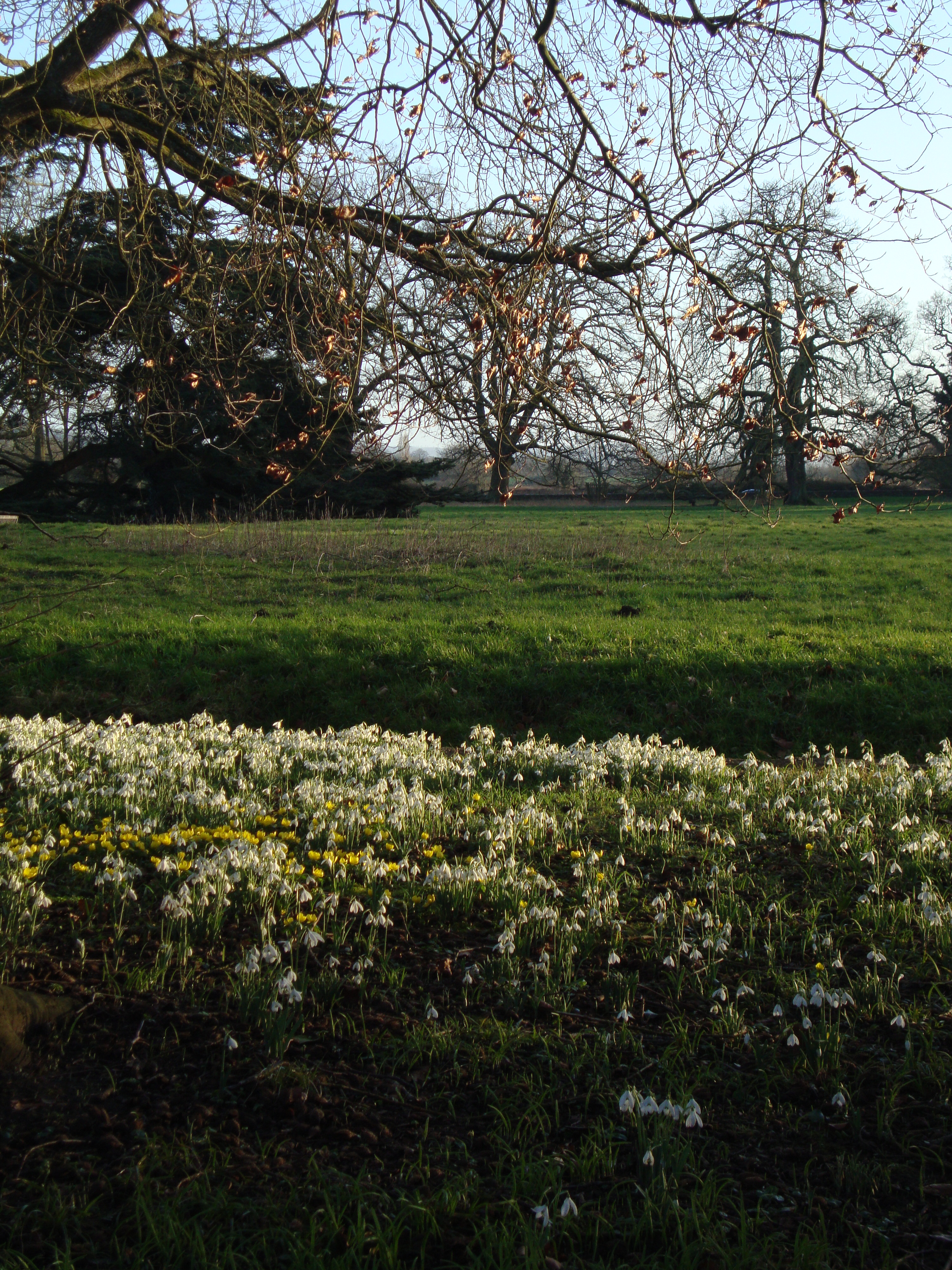
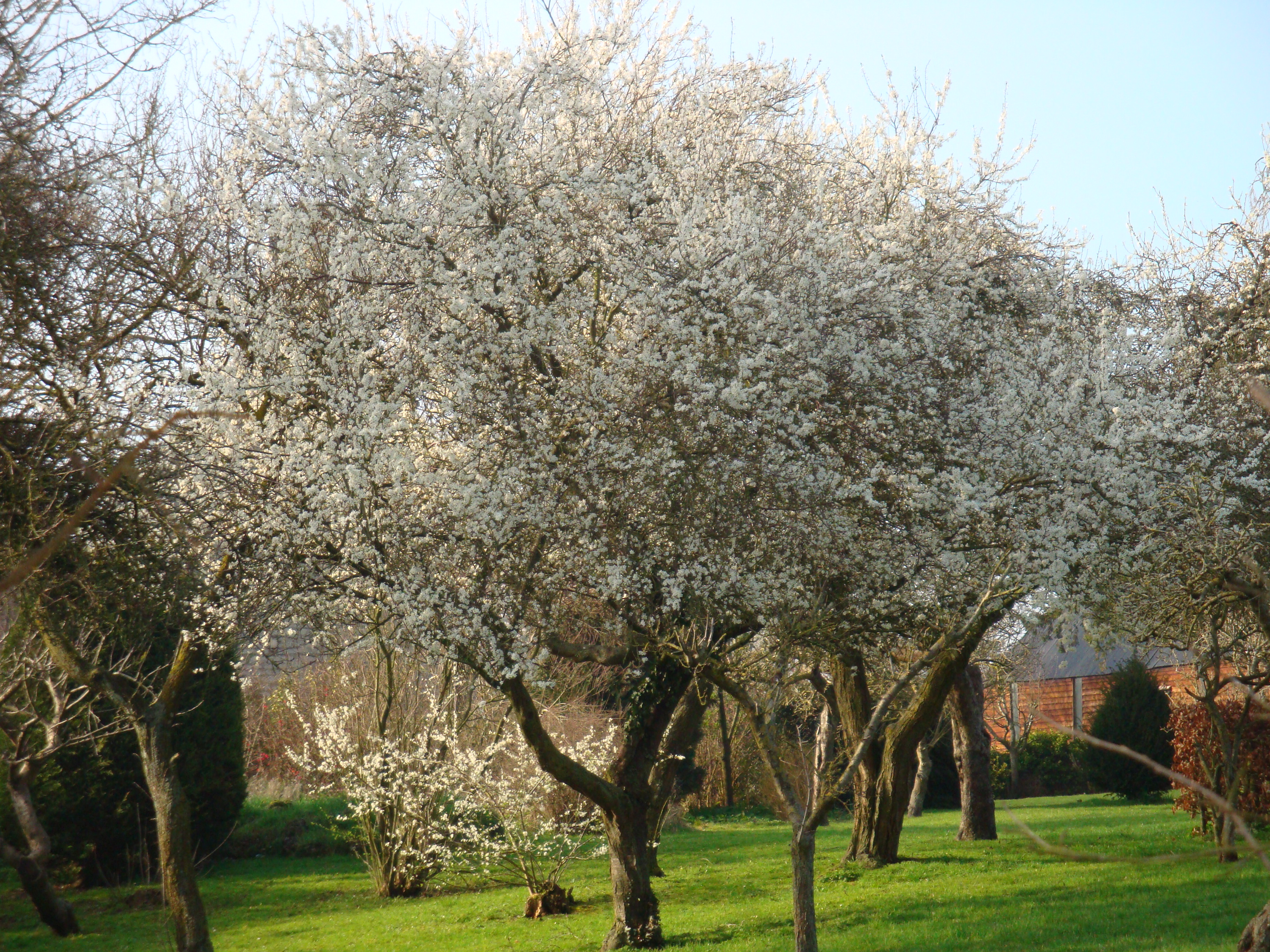
If fog comes in on little cat feet, then spring soars in on bird wings. It flutters among the hedgerows and trees and flashes along the brooks in a riotous, jubilant rush. At first it is just a barely perceptible lengthening of the days; then the first clump of snowdrops appear and droop their lovely white bell blossoms, brightening even the darkest of late winter days. Soon woodlands and roadsides are carpeted with white. Crocuses begin to appear in lawns, and the daffodils seem to grow several inches every day. Pale yellow catkins dangle from branches along the stream bank where we like to walk. Blackthorns growing along roads and fields burst into a cloud of white blossoms. Ornamental cherry trees planted in neighbourhood gardens take on a faint, pink glow before exploding in an exuberance of bloom. It seems that everywhere I look there is a resurgence of life and colour.
The birds themselves are more active, and our chilly early morning walks are accompanied by the joyful songs of blackbirds, robins, blue tits, finches, sparrows, and of course, the constant ambient noise of the wood pigeons. The earliest birds to begin the dawn chorus are usually the robins and blackbirds, and I have to say they have become my favourites. There is something indomitable about their singing on these chilly March mornings that lifts the spirits. To be out walking on an early morning as the sun is rising, and to hear the first few, tentative notes that swell into one of the greatest symphonies of nature, is to experience a peace that cannot easily be found in our fast-paced, digital world. I can walk out feeling sad and homesick for loved ones far away, and return home restored and hopeful once again.
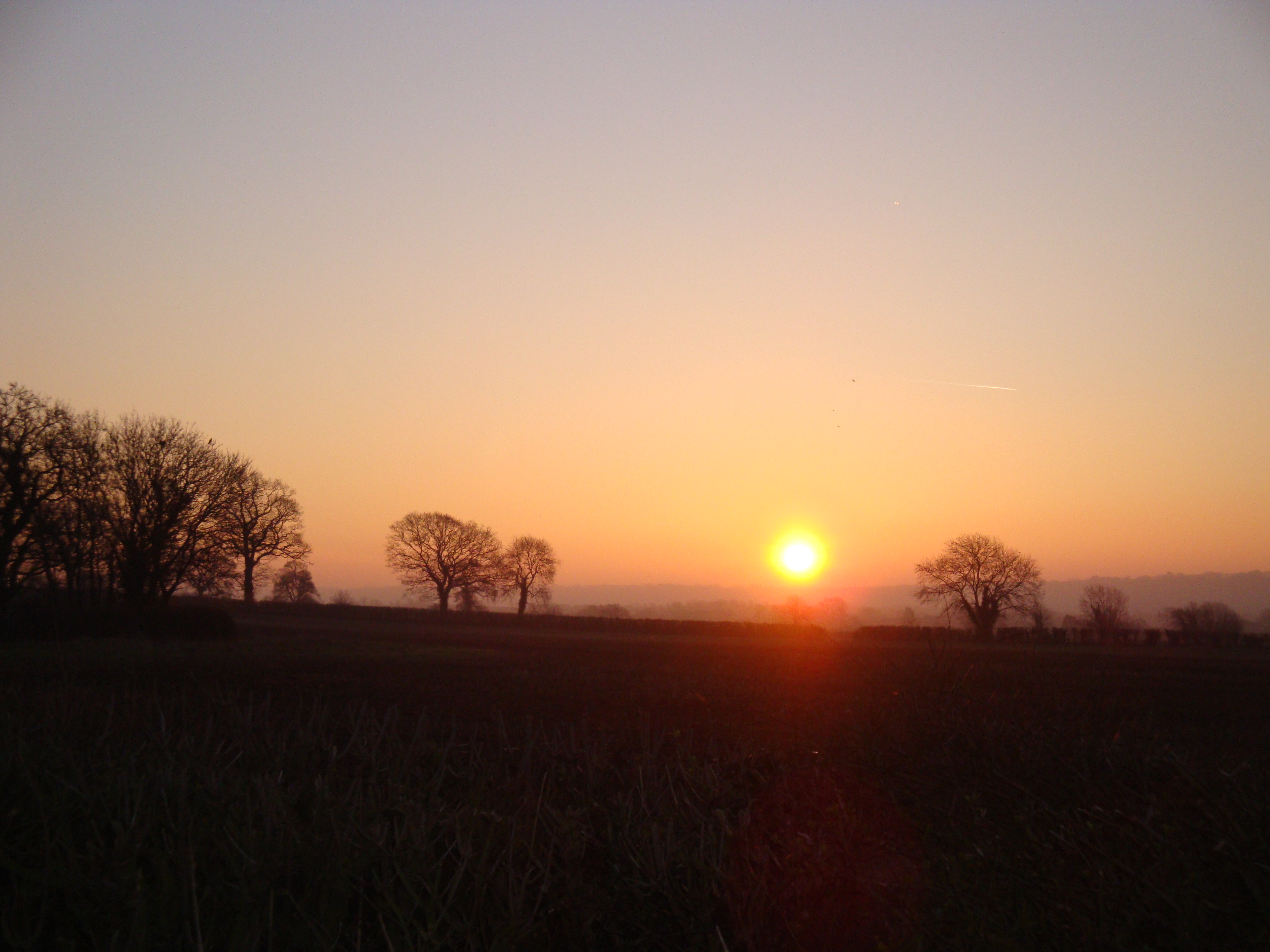
And so while you read the rest of this blog I would suggest that you click on this link and let the recording of the dawn chorus play in the background while I take you on an early springtime walk:
As the days lengthened and the temperatures began to warm up, my husband and I turned our sights outward again. No longer could we be content with quiet Sunday afternoons spent working jigsaw puzzles or playing cutthroat games of Scrabble or cribbage. And so it was that on the first weekend of March we felt the time had come to brave the elements and the mud. Enough of this mouldering indoors. We needed to be out, battling the wind, sucking great gulps of fresh air into our lungs, and getting back into some sort of shape after all of those comfort-baking binges I went on during December and January.
On that particular Sunday morning the weather report was predicting rain, rain and more rain. We chose option a: rain, hoping that by getting out early in the day we would be able to beat the rain and more rain that were slated to settle in by the afternoon. A short drive brought us to the top of Hackpen Hill, the highest point on the Ridgeway Path. We picked the Ridgeway in the hopes that its location at the top of a ridge would ensure there would be less mud to deal with than the trails in the valleys below.
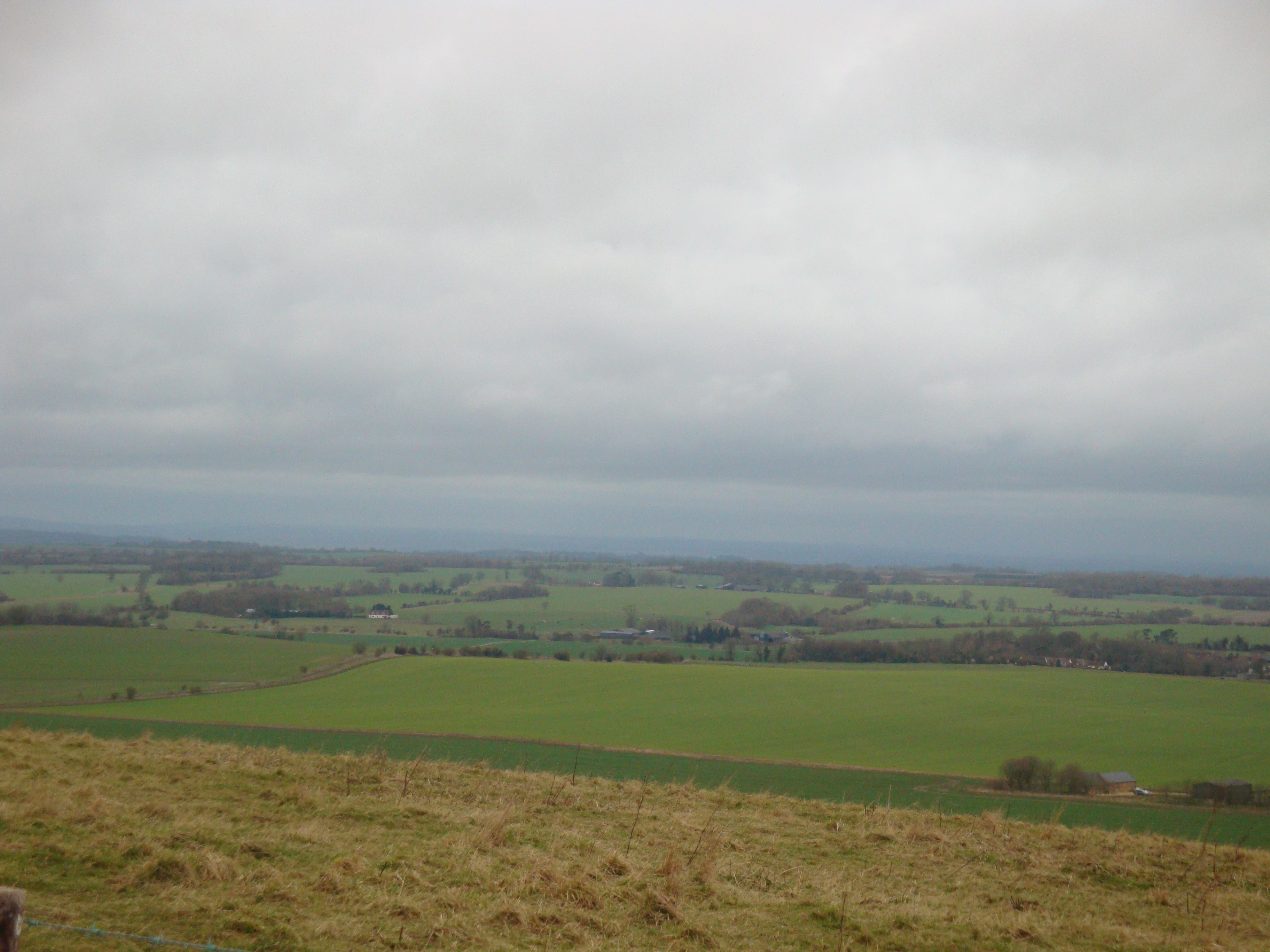
The views from the top of the hill are spectacular. Seemingly all of Wiltshire is spread out below us, dropping into river valleys and climbing up lesser hills. The fields and woodlands resemble the crazy quilts my great-grandmother was famous for making – all different shapes, colours and designs thrown together with the neat stitching of the hedgerows marking their borders. In the distance rise the Cotswold hills. The views from Hackpen Hill in the summer are of a peacefully drowsy English countryside basking in the sunshine. In early March it is far more dramatic, with dark grey clouds lying low along the horizon, creating a bold contrast with the viridescent pastures and grain fields below.
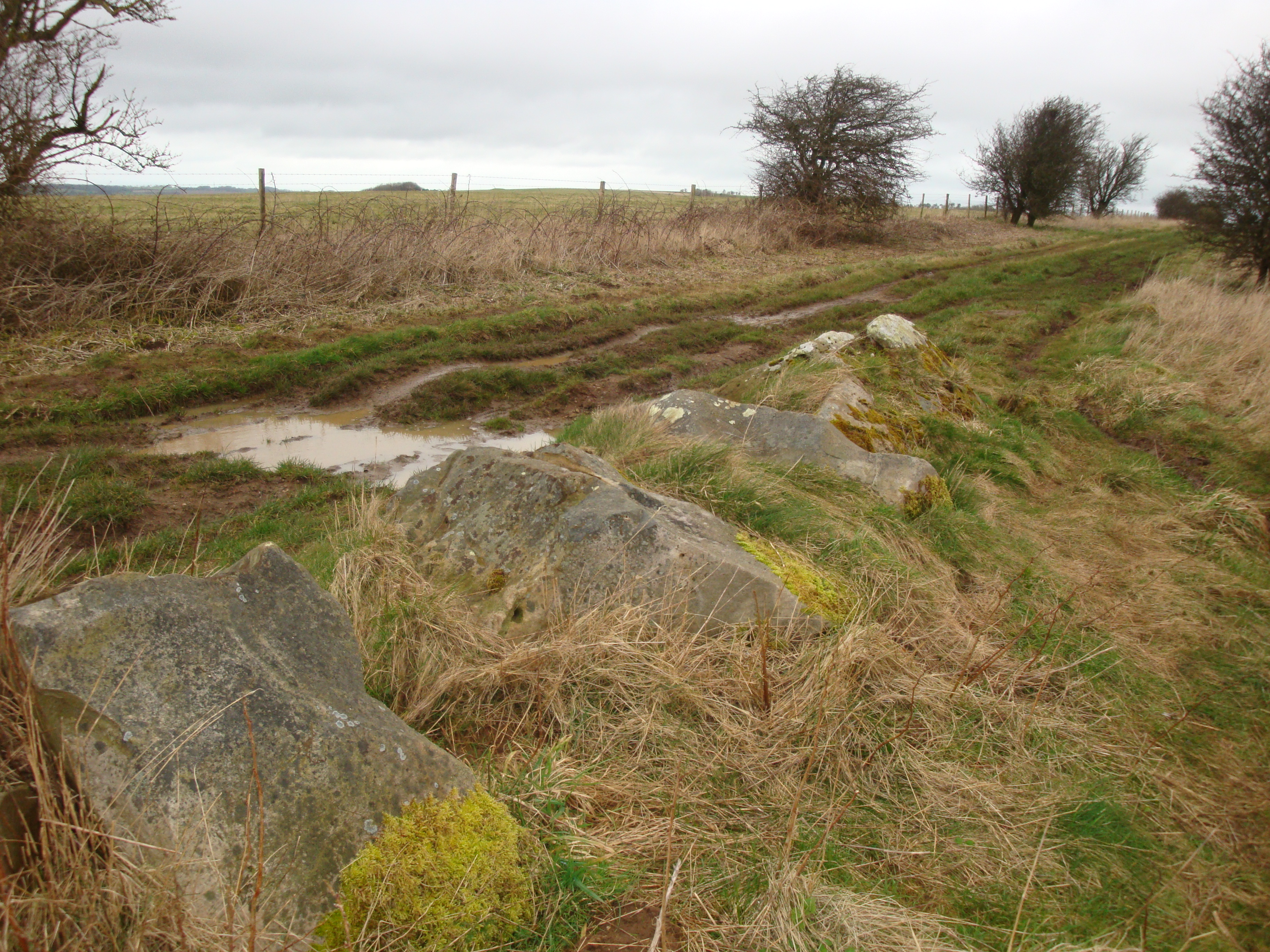
The Ridgeway is one of 15 national trails in England and Wales. For over 5,000 years people have walked and driven livestock along what is now known as The Ridgeway. Armies have marched along its heights, commanding strategic views of the landscape below that were unsurpassed. It once stretched for 250 miles, but now the official national trail is just over 85 miles. In our area it crosses the open, windswept area of the Wessex Downs – a bleak, often treeless landscape punctuated with sarsen stones rising from the turf. Sheep graze the lonely fields and gaze warily at passers-by. It is a lonely stretch of land; starkly beautiful.
It was cloudy, and the breeze could kindly be described as fresh when we started out, but mercifully it was not yet raining. The path is well-maintained and wide, and as we had hoped, drier than any of the trails near our home. We strode out confidently and happily, enjoying each other’s company and excited to be outdoors and active again. We covered the ground quickly, and before long came across a unique feature of the Downs – a dew pond. The chalky soil of the Downs allows rainwater to drain straight down. Since ancient times farmers have dug dew ponds and lined them with clay or straw to catch the rainwater and provide a watering trough for the sheep which graze these hills.
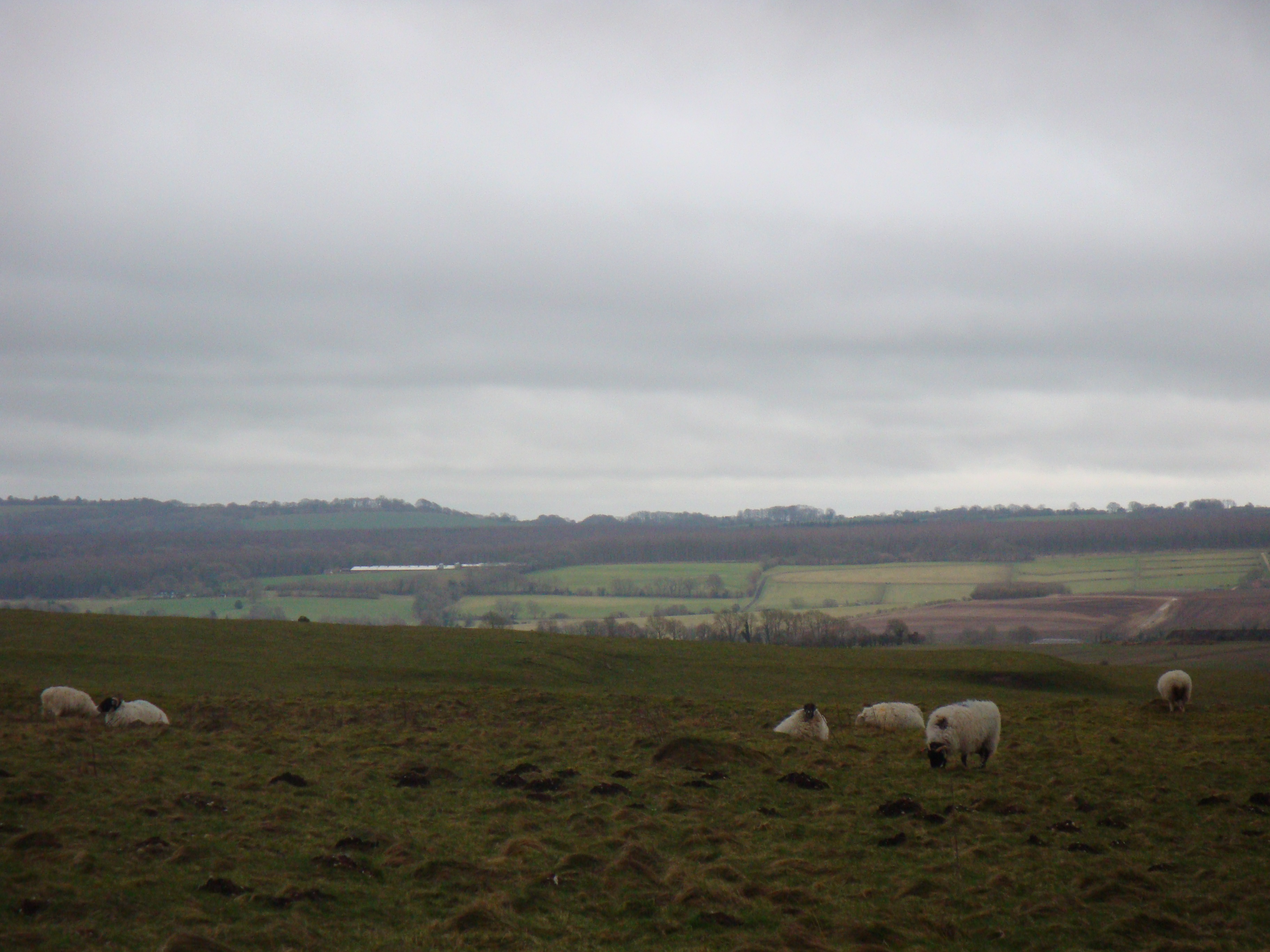
As we walked on, heading southward toward Avebury, we passed gorse that was beginning to bud. In just a couple of weeks the trail will be lined with a mass of yellow gorse in full bloom, but on that day they were just beginning to show some colour. Somewhere in the grassland alongside the trail a skylark was singing a long, continuous song. We never did see him, but he was out there, proclaiming in that glorious music that this was his territory. We stopped to listen, entranced by the beauty of it. It made me especially glad to be married, to have someone there to share in that perfect moment.
In one area a tractor had obviously been working along the trail and had churned up a long stretch of deep mud. We had to mince our way through and around that patch, and then shortly afterward we reached the junction where we could descend into the village of Avebury. Perhaps wisdom would have dictated that we had walked far enough, that the clouds were beginning to look increasingly threatening, and that we had just enough time to high-tail it back to our car before the deluge began. But the siren call of the Red Lion Pub in Avebury was too tempting to resist, and so we took the right fork in the trail and began our descent.
One of the first things I discovered, as a very fine mist began to swirl around, is that when it gets wet chalky soil turns into something like the wallpaper paste my grandmother used to make. It clung to my shoes, and turned the trail into a soupy, slippery mess. Thankfully the grassy verge offered some traction, and up ahead the roofs of Avebury beckoned.
Soon we were shedding our damp coats in the pub and settling down at a table by the window to enjoy our “medicinal” beverages. My husband enjoyed a pint of Avebury Well Water, which is actually a local beer, and I opted for a cup of tea because their coffee machine was broken and all they could offer me from the coffee family was instant. (Shocking!) We warmed ourselves in the convivial atmosphere for probably half an hour or so before deciding it was time to embark on the return journey of 4.5 miles back to the car.
That was when the going got a bit tougher. During the short time we had spent in the pub the rain and wind had both increased. As we made the slow climb up the sodden chalk hillside the wind drove the rain sideways, so that by the time we reached the top my jeans were soaked through. Once we reached the Ridgeway and turned left toward Hackpen the wind was at our backs and the going got slightly easier. Our progress was serpentine as we zigzagged from one side of the path to the other, jumping over the deepest bits of mud and trying to find stable footing along the edges.
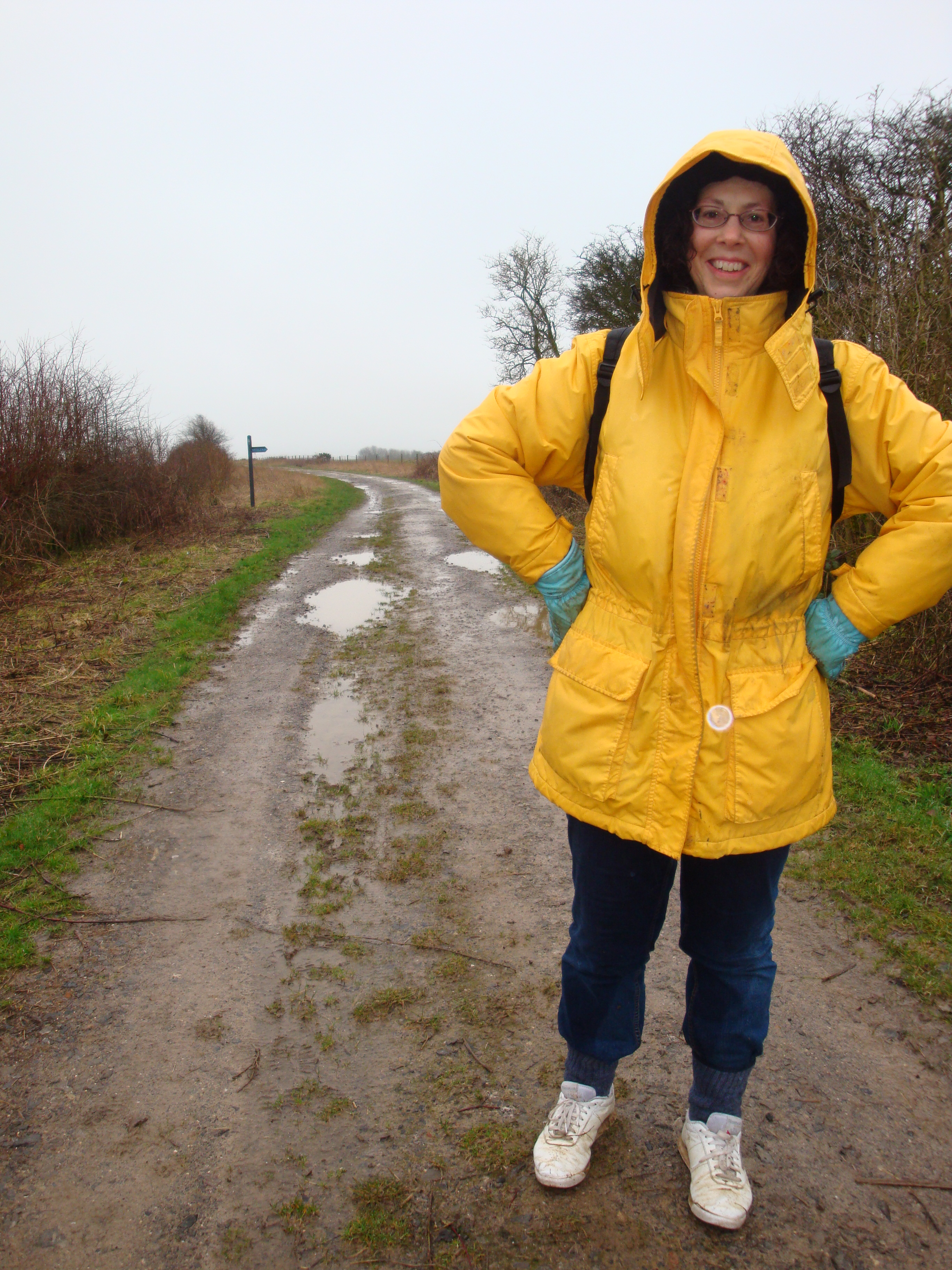
Before we had set out I had made up my mind not to complain, no matter what sort of weather we encountered, and no matter how wet and cold I might find myself before back in the warmth and comfort of the car. And so we trudged on, and after a while we found ourselves playing silly word games to take our minds off of our misery, shouting out silly phrases and laughing as if we were the two most amusing people on the planet. We met only two other intrepid walkers, and as we passed each other and exchanged brief pleasantries there was a feeling of sharing a common bond – the camaraderie of undaunted hill walkers worldwide.
We reached the car in the amount of time my husband had allotted for us. We’re supposed to be in training, you see, for bigger and grander walks. My husband declares that the nine miles we did that day didn’t really even qualify as training for the Lake District because it was too level, too easy. But I don’t care. Even if it was just a walk and accomplished nothing, it was the first of our long walks of the season, our first foray after a long, wet winter. It was punctuated with moments of incredible beauty and seasoned with joy. We will climb steeper hills and follow longer trails in the weeks and months to come, but I will always know that they began here, with this first walk on a chilly day in March when the first touch of spring was in the air.
***
The following weekend was one of delightful summer mildness. Throughout Britain many experienced the warmest day of the year so far, with blue skies and golden sunshine. My husband’s family convened at the home of his sister and brother-in-law in Hampshire, and we all sat outdoors enjoying the warmth while the children played on the grass. It was as if a June day had drifted accidentally into March, and we savoured every moment.
Today, as I write this, a thick fog has enveloped our village. It apparently crept in on little cat feet last night, and when I took my walk this morning the familiar streets and neighbourhoods had taken on an unexpected mysteriousness. Familiar landmarks were obscured, and sounds seemed more intense. The chill was penetrating, and I was dressed as if for winter – and glad for it, too. Moisture collected on branches above and dripped on us as we walked beneath the trees.
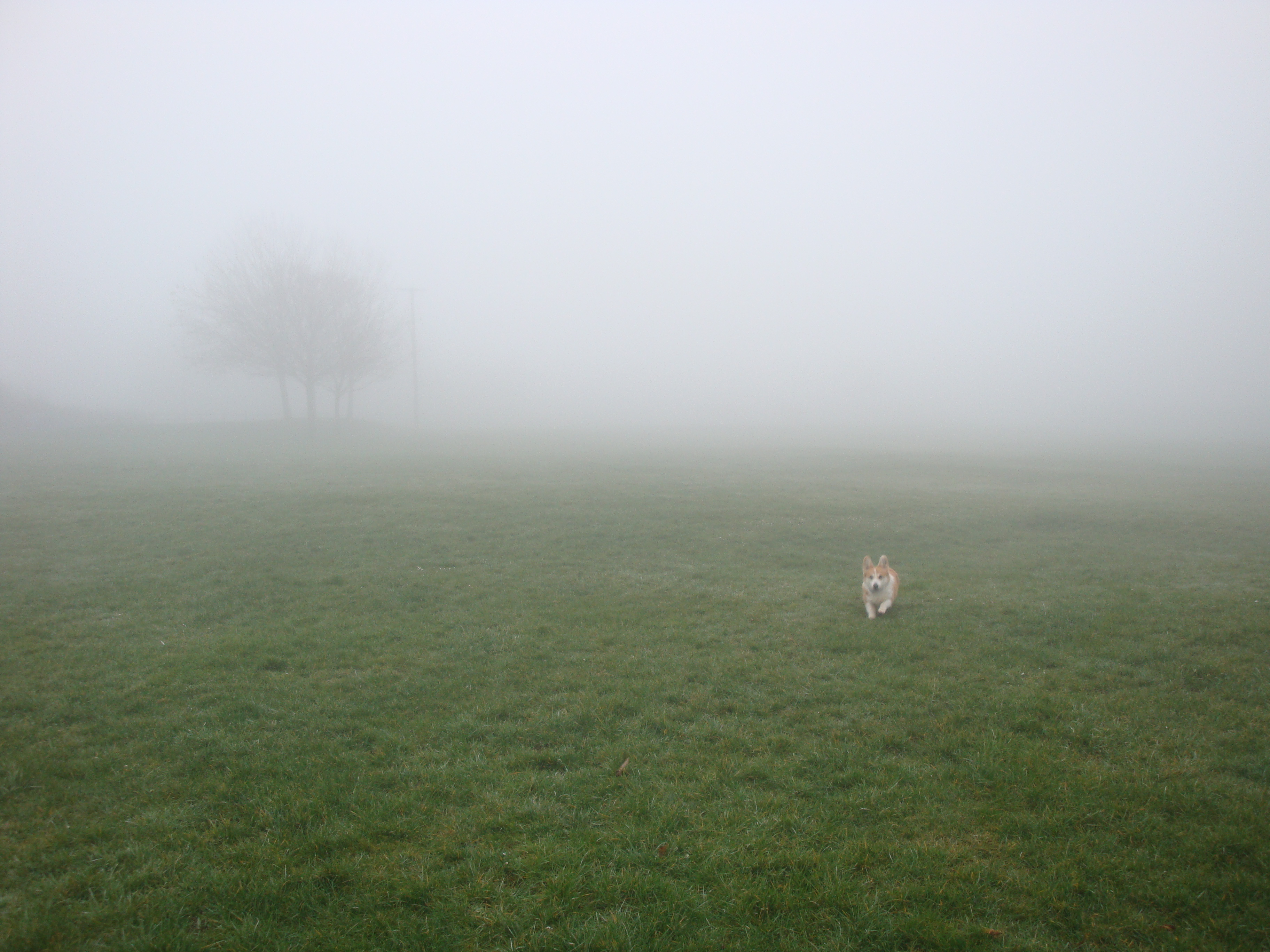
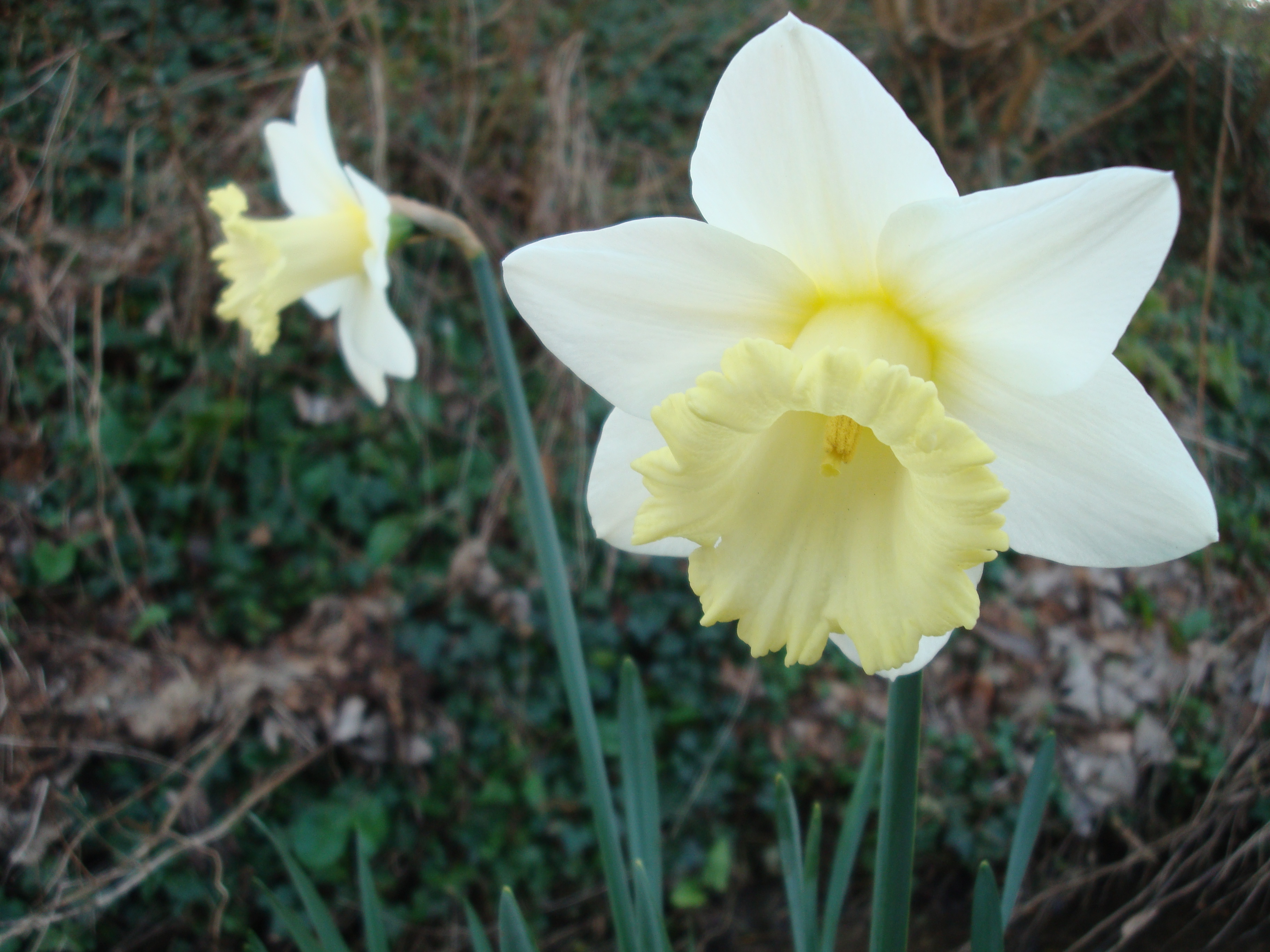
Spring is proving itself to be fickle. This is surprising to no one, since fickleness is a hallmark of the season. Like the migratory birds which arrive from the south to find it is still cold and damp, we must huddle for warmth a little while longer. But we know it is here. Spring has arrived. There may still be cold and damp ahead, but there will also be those golden, sunlit days when we shed our winter layers and scramble outdoors to bask and luxuriate in the warmth. The daffodils continue to dance in the breeze, the willows are budding, and each morning the dawn chorus of birdsong fills us with the hope and the certainty that longer, warmer days are on their way.
This is springtime in Wiltshire. This is life. This is joy. This is love.
Through primrose tufts, in that green bower,
The periwinkle trailed its wreaths;
And ‘tis my faith that every flower
Enjoys the air it breathes.
*
The birds around me hopped and played,
Their thoughts I cannot measure –
But the least motion which they made
It seemed a thrill of pleasure.
*
The budding twigs spread out their fan,
To catch the breezy air;
And I must think, do all I can,
That there was pleasure there.
– William Wordsworth

 An American Wife in Wiltshire
Beautiful, lyrical reading. Thank you.
Thanks Elizabeth, what a feast of beautiful word pictures!
Elizabeth – that was wonderful, and a special thank you for the recording. I absolutely love birdsong and could listen all day! You do have a gift.
You’ve out done yourself. Loved it!