“Maybe you had to leave in order to miss a place; maybe you had to travel to realize how beloved your starting point was.” ~ Jodi Picoult
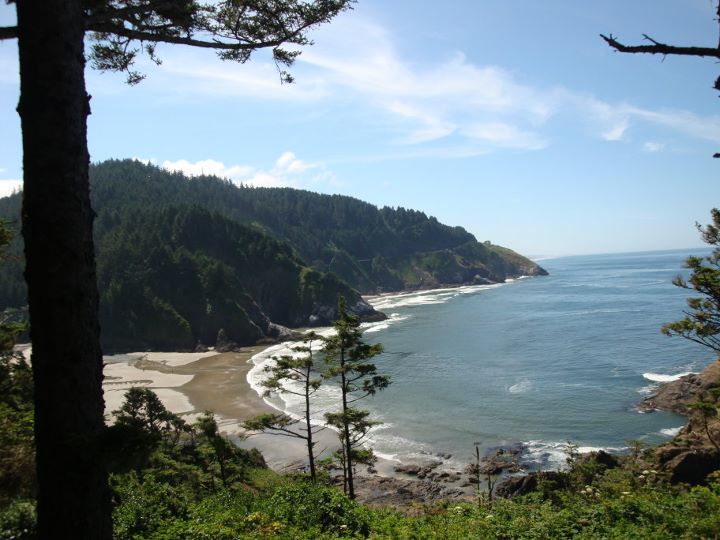
People will sometimes ask me what I miss from home. I can easily rattle off a list: my family and friends; Starbucks with drive-up windows; giant watermelons by the truckload in every grocery store during the summer; 4th of July parades and bonfires on the beach; really good Mexican food; wide roads; orchards and vineyards that stretch for miles; tall, snow-capped mountains rising dramatically out of untamed wilderness; the Oregon coast.
In the end, I’ve found that most of these items on my list have an equal, compensatory counterpart here in this country. My family and friends are still dearly loved and greatly missed, but I can be thankful to have married into one of the nicest families in all of England, and to have developed friendships here which are a comfort and a joy. As for the other items on the list, I’d rather park and go sit inside a Costa Coffee and enjoy a drink with my husband than ride in solitary splendour through the drive-up lane at any Starbucks. I hadn’t attended a 4th of July parade in over five years; watermelons are available here, even if they aren’t the size of pigs; you can adapt to narrow roads, and at least the cars are narrow to go along with them; you can make your own Mexican food that is as good as anything back home. The vineyards and orchards of the Northwest are incredibly beautiful, but so, too, is the English countryside, especially in springtime when the air is perfumed with the fragrance of lilac and May blossom. So what I find myself missing the most are the places that have made up the backdrop of my life, and the most constant special place for me has been the Oregon coast. If I were to have to name the one thing I miss most, and if family and friends were excluded as a given, then I would have to say it is that particularly beloved stretch of coastline between Newport and Florence.
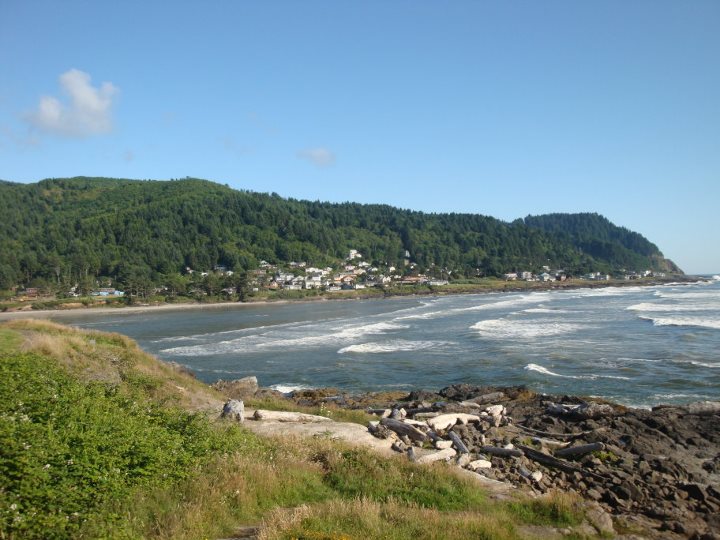
We lived somewhat nomadic lives as children, moving house and changing schools every year or two. We had bounced around from Southern California to Oregon, to Northern California and back down to the Los Angeles area by the time I was thirteen. The one area that remained constant was my grandparents’ home on the Oregon coast, just outside of a small town called Waldport. It is an unremarkable town, which has thankfully escaped much of the over-commercialization and kitschy extremes of more popular tourist areas on the coast. There are a few souvenir shops, but for the most part it is a quiet place with small-town appeal, sitting on the wide bay where the Alsea River joins the Pacific Ocean. The mountains come down almost to the water’s edge here, and the forest forms a dark backdrop to the little town that hugs the waters of the bay. Crab boats venture out into the choppy water every morning, watched by basking sea lions sunning themselves like pieces of driftwood on the ever- shifting sandbar of the opposite shore. You can walk for miles, even on a summer day, and only pass a small handful of people. It is lonely and rugged, and incredibly, achingly beautiful.
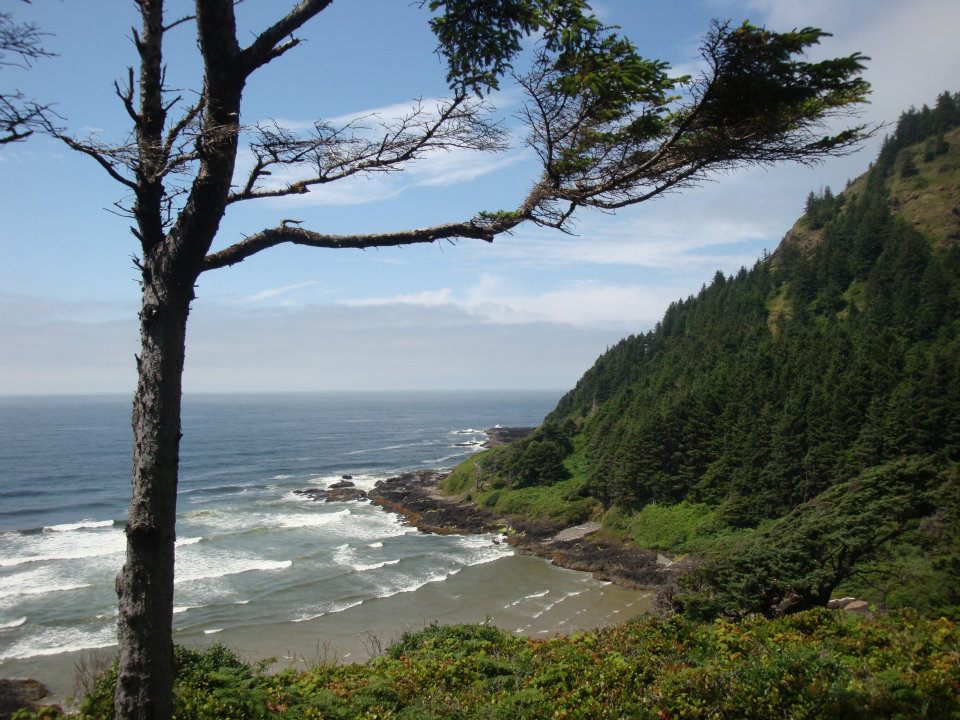
It is here that my heart calls home. Here is where we played as children, running barefoot from my grandparents’ back lawn down the steps cut into the bank between towering salmon berry bushes. We dammed the creek, built forts out of the driftwood on the beach, picked blackberries at the hidden spots up the rivers, and pretended to be Lawrence of Arabia when the wind blew and drove the sand into our eyes. It was here, at the age of sixteen, that my grandparents taught me to drive, navigating the winding coastal roads in my grandmother’s huge old Thunderbird. We hiked in the woods; we combed the beaches at low tide looking for glass floats drifting in from Japanese fishing nets; we roasted marshmallows over driftwood fires; and learned to love the wild beauty and majesty of this quiet piece of coastline.
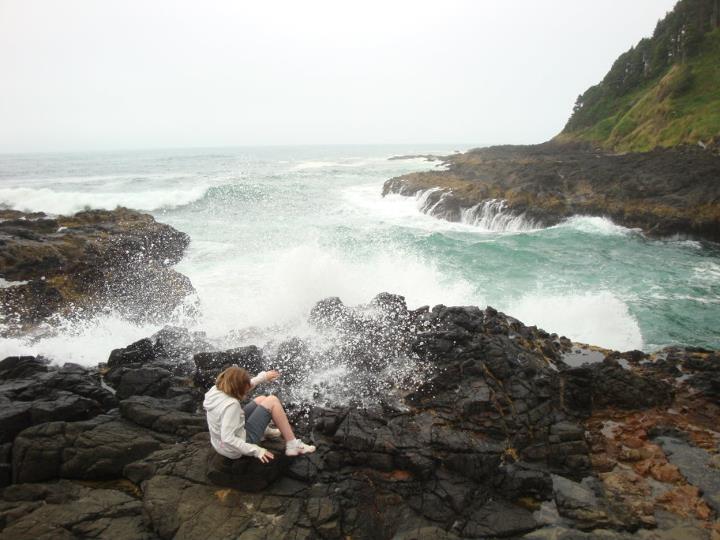
The Oregon coast isn’t for everyone. Those who like their beaches hot and crowded should go elsewhere, though I have actually worn a bathing suit and stretched out on the beach on a warm day on a few occasions. But two or three times in over forty years isn’t really what you can call a trend. The weather here is unpredictable, and you always bring a coat and a sweater with you when you come. Those of us who love it are willing to huddle in damp, cold misery, buffeted by wind and drizzle. We clamber down the rocks and over the driftwood to the sand and walk for miles in all weather. We take off our shoes, roll up our trouser legs and wade in the cold water until our feet turn pink and go numb. We stand on the shoreline at high tide oohing and aahing at the waves that crash against the rocks and spray high into the air, hoping for that really big splash, always telling ourselves just one more wave, and then we’ll leave.
The woods that come right down to the water’s edge are dark and deep, the ground springy with thousands of layers of pine needles. Bears still prowl at the edges of civilization, coming right into the small towns sometimes to scavenge for garbage. Even trash bins that are equipped with locking devices to keep the lids secure can fall prey, and on many a morning hapless vacationers will wake to find all of their rubbish scattered across the garden and into the woods by a marauding bear during the night. The wild has not been tamed in this region, just forced to retreat slightly, and it is always pushing back, trying to reclaim the ground that has been lost.
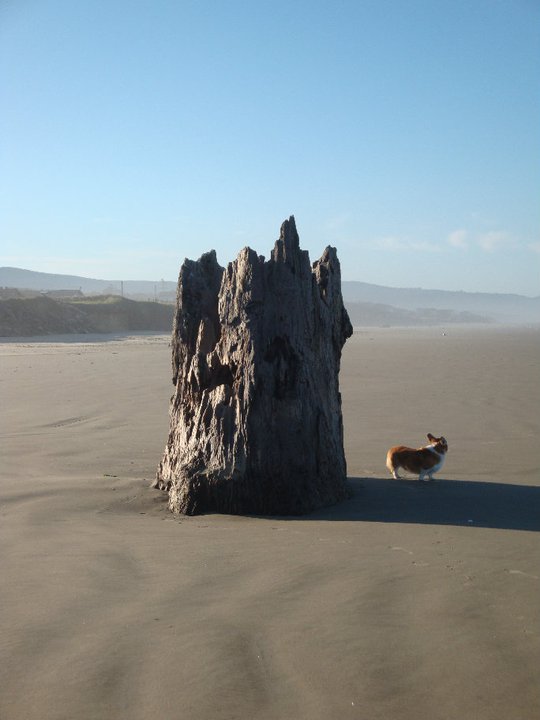
Nearly every mile along this stretch of coastline has some piece of family history attached to it. Here was where my grandfather used to cut his firewood, here was my aunt’s old beach cabin on the rocks, here was our favourite grocery store that still sold vile red and blue soda pop. Here was the spot where my grandparents and my aunt pitched their campsite on top of a skunk den. Here was the beach where the kite got caught in the tree. Here was where my brother once dug a huge hole, and we three children sat in it, staring up at the round circle of sky above us. Here was the huge tree stump sticking up out of the sand, big enough for three people to stand up inside, which had been there for as long as anyone could remember. Here was the campsite where my mother and her friends camped after they graduated from high school. Here was the house where my mother caught some strange men stealing one of their pet ducks. She chased after them, wrenched their car door open and rescued the duck. (The men were found by police and turned out to be two Canadians who had entered the country illegally – proof that not all Canadians are polite. Some are low-down, border-hopping, no good duck thieves.) Here was where the dead seal washed ashore. Here was the cove where we found the really big agates. Here was our favourite restaurant, which had changed hands three times, and which we all still called by its original name of Beulah’s, even though it had not been Beulah’s for twenty years. Up that road was where the dump used to be where we could go and watch the black bears digging through the garbage. Down that way was where I stepped on the slug barefoot. Over there, under that honeysuckle vine, was where our beloved cocker spaniel was buried. That shop over there used to be a bakery and it is where we once bought some very dubious apple strudel, inspiring my father lean over and whisper this piece of age-old wisdom in my ear, “Never trust a skinny baker.”
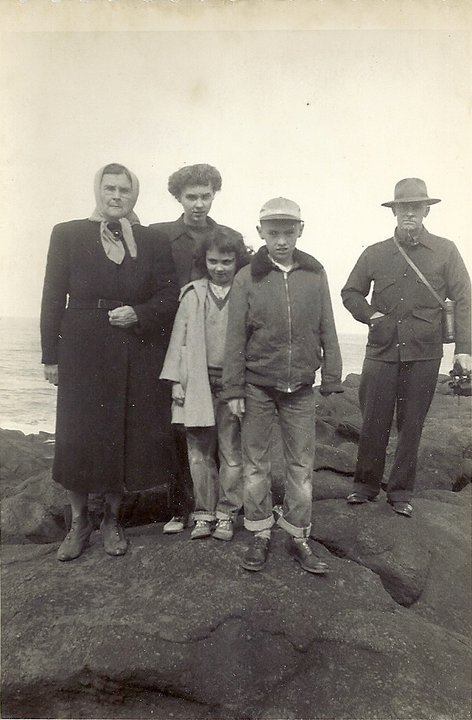
Over time the landmarks and the memories increased, and each year my siblings and our parents, cousins, aunts and uncles would return here, to add to our memories and our family history. The next generation was introduced to all of our favourite haunts, and it was with incredible joy that I was able to be there and share the moment when, after a day of playing on the beach, my young nephew turned to me and said,
“I wish we could stay here forever.”
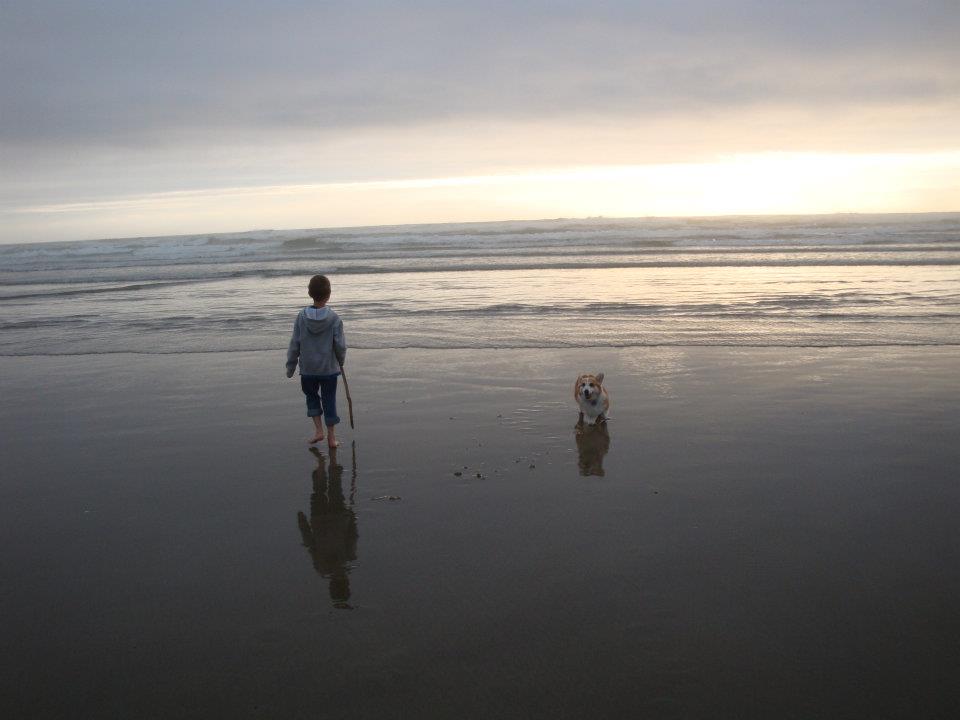
We all have our private maps – those places that have woven themselves into the fabric of our lives and become part of what makes us who we are. We all have that special place that means home to us, even if it is not where we actually are living.
“Regular maps have few surprises: their contour lines reveal where the Andes are, and are reasonably clear. More precious, though, are the unpublished maps we make ourselves, of our city, our place, our daily world, our life; those maps of our private world we use every day; here I was happy, in that place I left my coat behind after a party, that is where I met my love; I cried there once, I was heartsore; but felt better round the corner once I saw the hills of Fife across the Forth, things of that sort, our personal memories, that make the private tapestry of our lives.” ~ Alexander McCall Smith
The Oregon coast made up a vast territory on the map of my private world, and it is with incredible sadness that I have to face the fact that I may never visit it again, and certainly not with the regularity that I was able to when it was just an easy drive away. Will my brother and I ever make another early morning run into the village for coffee and croissants at the Green Salmon Bakery? Will we ever make another impromptu dash up the Yachats River before breakfast to pick blackberries for a pie? Probably not. I will not be a part of my youngest niece and nephew’s memories of Oregon. I will not be woven into their tapestry in the same way I would have been, and that can be a difficult fact to accept sometimes.
“But she knew that no matter what beauty lay behind, it must remain there. No one could go forward with a load of aching memories.” ~ Margaret Mitchell
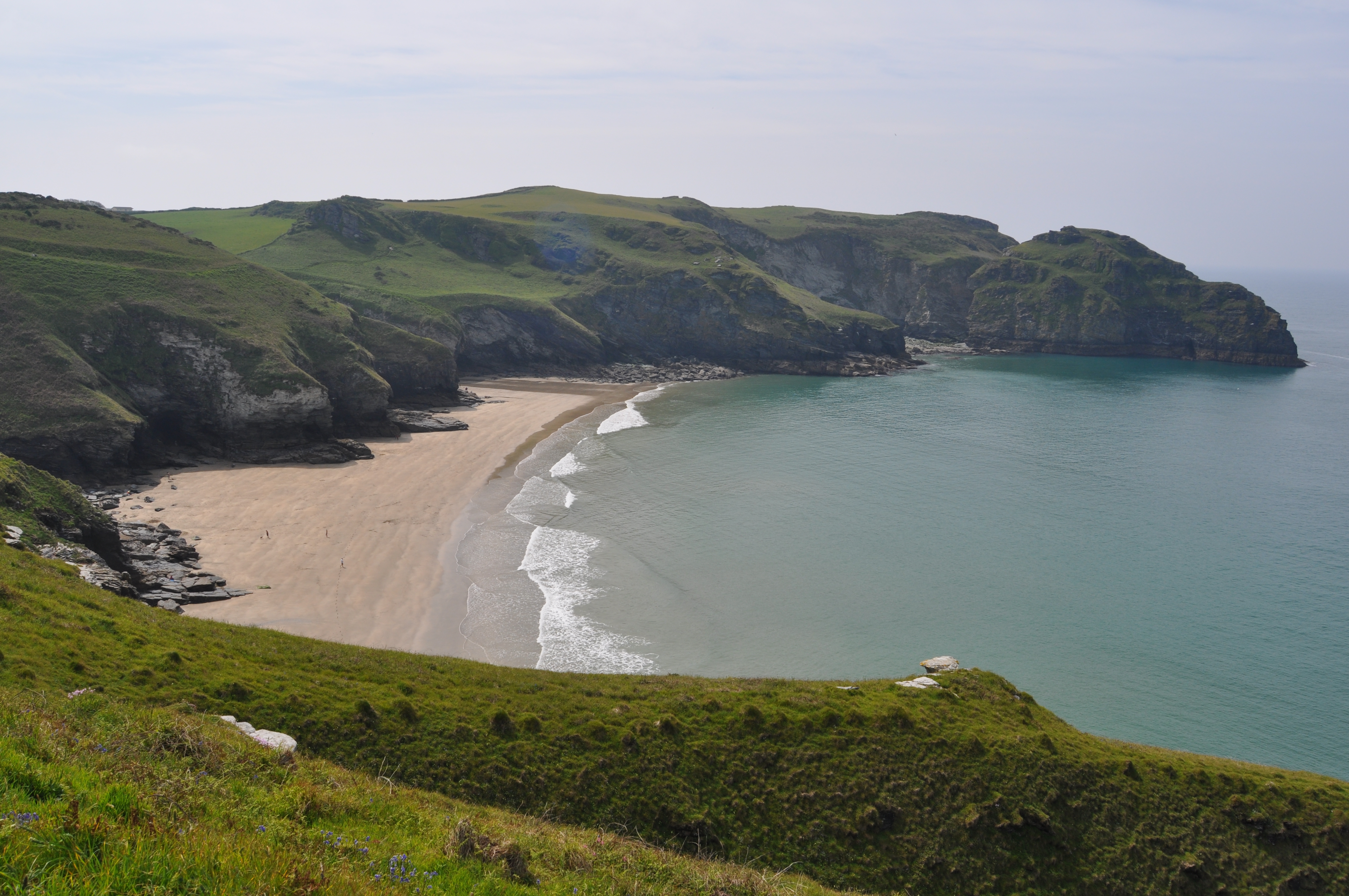
However, the heart that seeks joy and happiness can usually find it, and my heart has managed to find a place to love, one which very strongly reminds me of my beloved Oregon. For our first anniversary my husband took me to Cornwall, and it was love at first sight. Here, I felt, is where we will begin to draw our own map of special places, places we have shared that will be woven into the private tapestry of our life together.
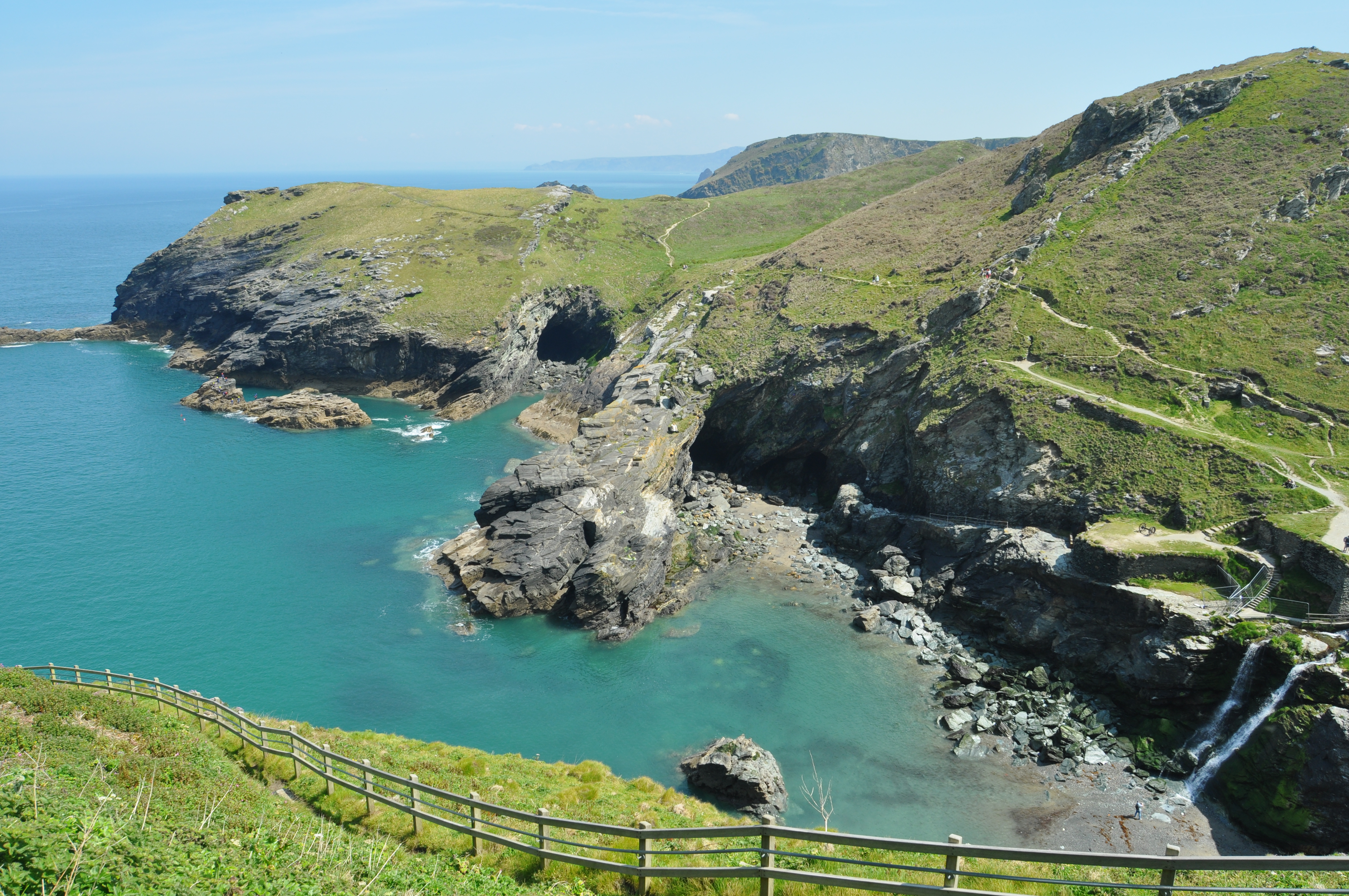
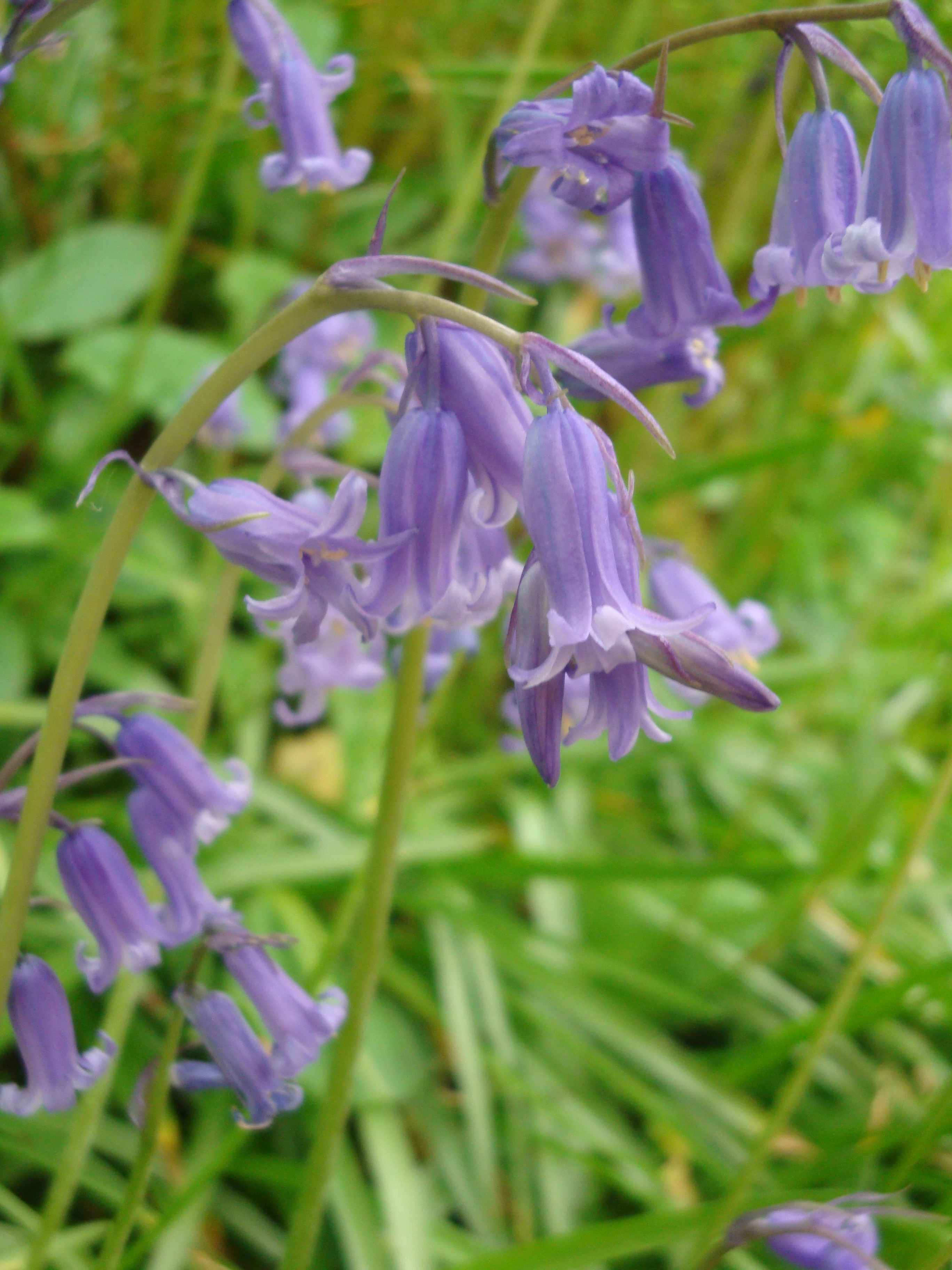
In future years I will be able to tick off the points of our map – here is where we did that eleven mile hike, here is the bench where we sat in the sun and ate our lunch, here is that road where we got lost, here is the wood that was full of bluebells, here is where we stood together and looked out across the ocean. Here is the campground where we stayed in a yurt, here is where we tried to light a bonfire with the wood that would not burn (say that three times fast), here is where we were followed up the road by the cows, here is where we sat and had tea (me) and ice cream (my husband), and here, yes, right here, is where I had the fright of my life when we encountered the Beast of Bodmin.
Yes, we already have a crazy animal story to put on our memory map! It might not be quite as impressive as my aunt’s camping-on-the-skunk-den story, but it has already become a part of our history as a couple.
***
When we began thinking about going to Cornwall to celebrate our anniversary we first looked into cottage rentals. Too expensive. We then started looking at campgrounds, and in spite of the one, tiny section of my brain where presides that prissy female who wants a pampered spa vacation, a good 85% of me thought it was a fun idea. 15% of me realized it would be a whole lot of work and not exactly a relaxing holiday, but I was still game. If it was a choice between camping in Cornwall and staying home then I’d choose camping in Cornwall any day. Then one evening my husband was reading through one of his camping guides and came across a listing for South Penquite Farm on Bodmin Moor. All the reviews were glowing, and they actually had four well-equipped yurts available for those who wanted a bit more upscale, less roughing-it camping experience.
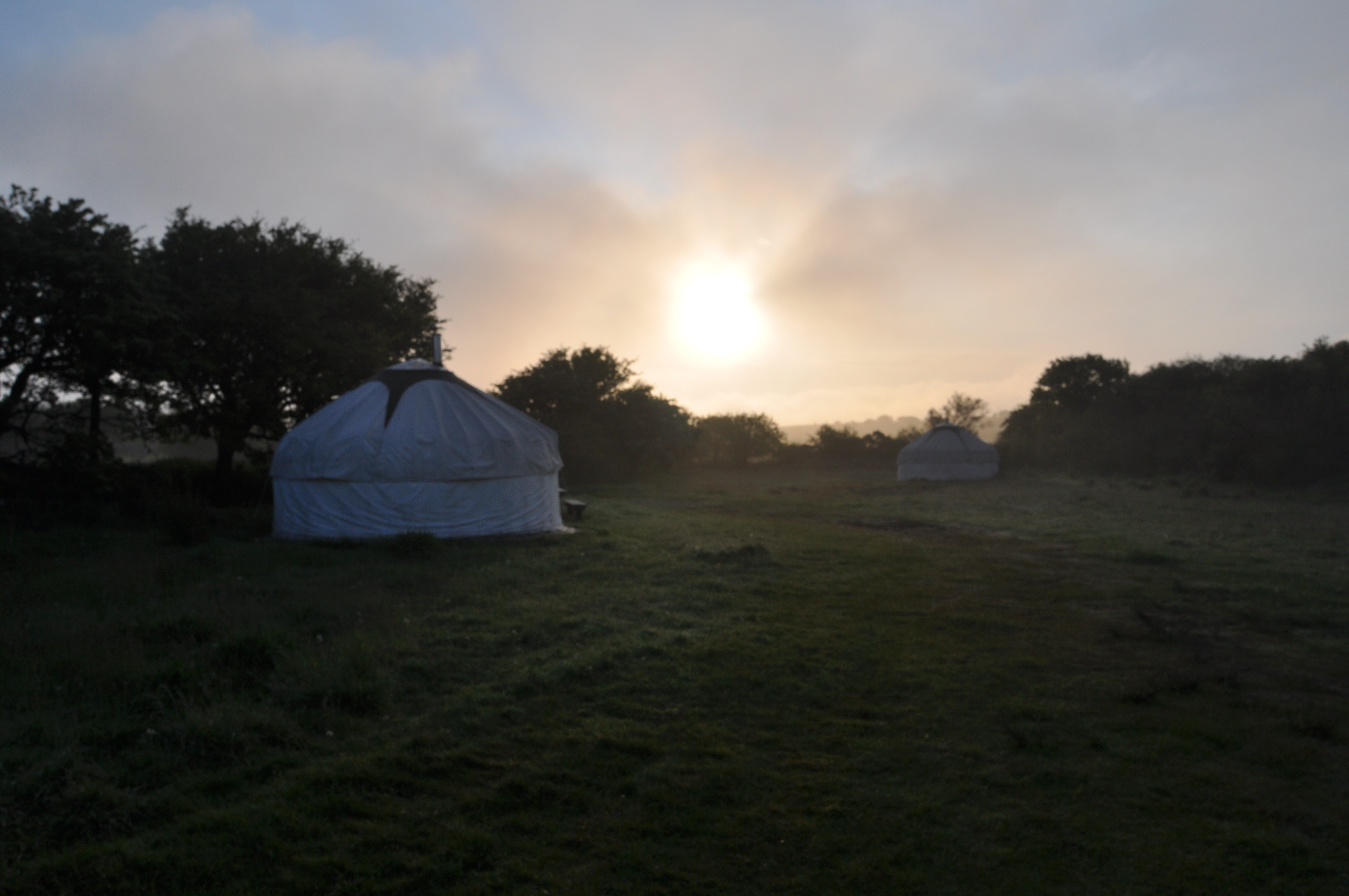
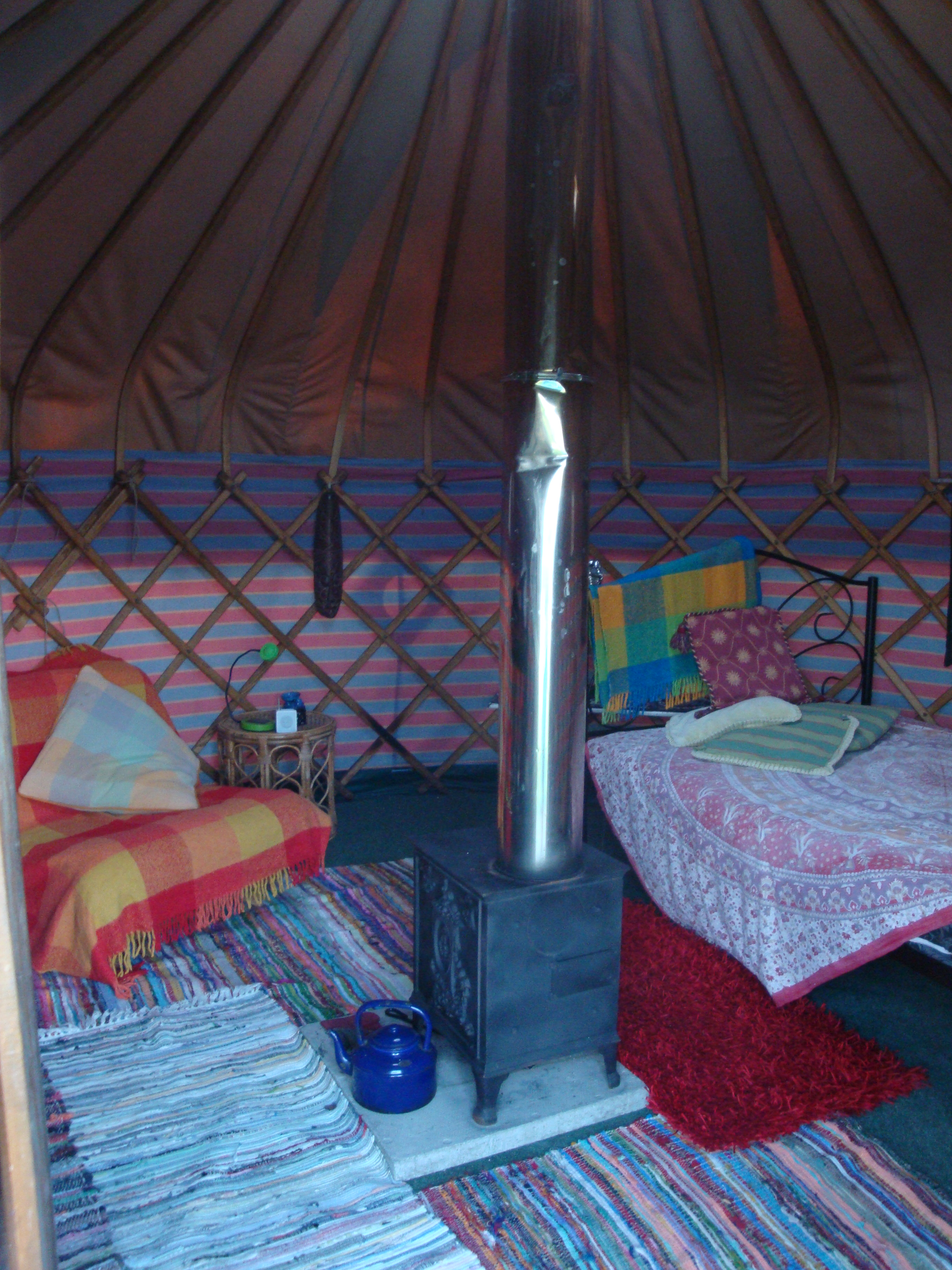
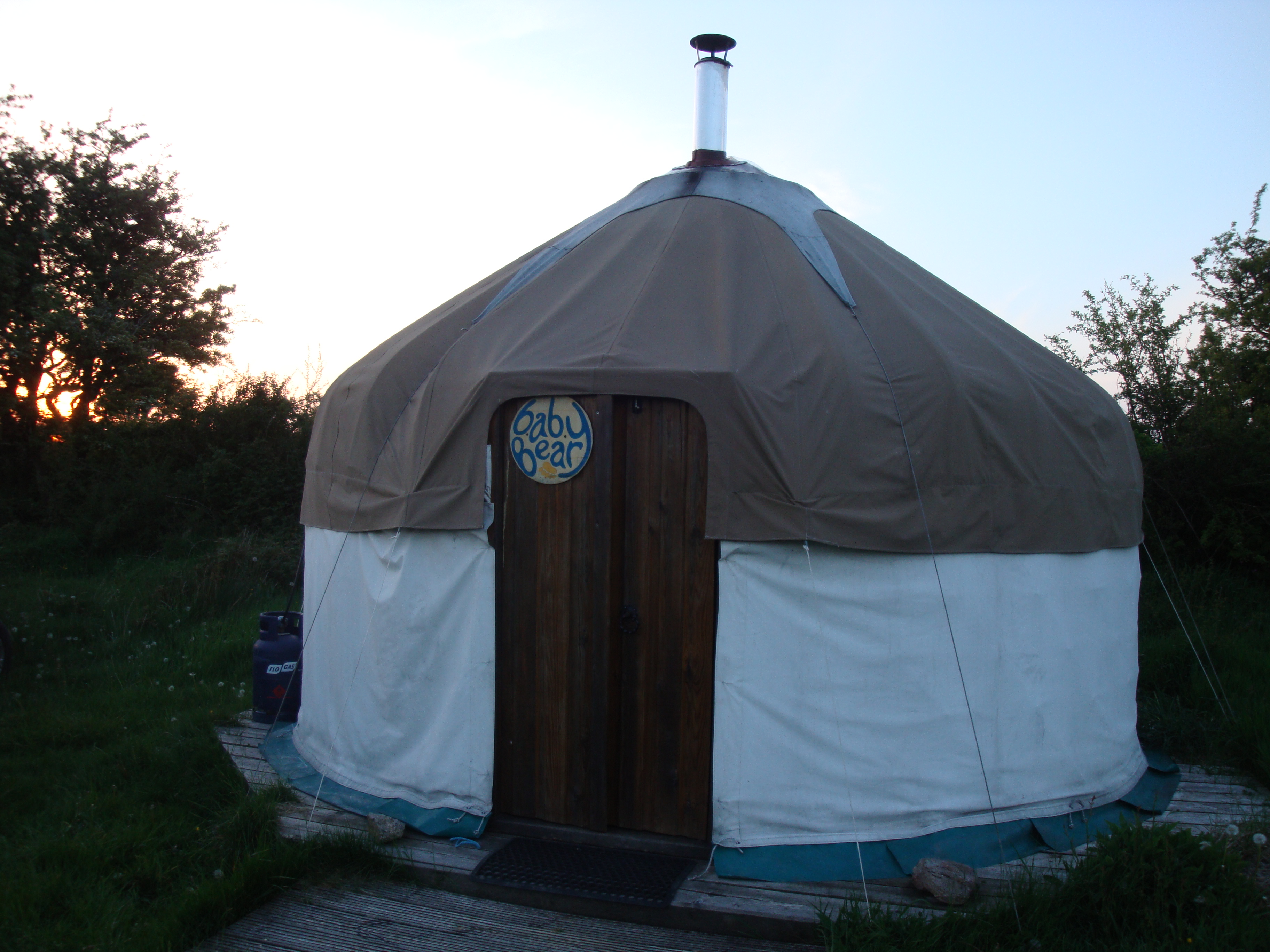
I have to confess that I’ve always had a secret desire to stay in a yurt. Some of the state parks in Oregon have yurts available, but they are very basic. The yurts at South Penquite Farm came with a cooking stove, dishes, pots and pans, a wood-burning stove for heat, furniture, rugs scattered across the floor, and a tiny front deck area. We were hooked on the idea and booked our three-night holiday for the week before our actual anniversary to avoid the bank holiday crowds.
In my next blog I will write about Cornwall and the places we visited – Tintagel, Boscastle and Lanhydrock- and the incredible beauty of the scenery in this lovely county. I will share with you the sun-kissed days when we walked along the coastline and explored the castle ruins steeped in King Arthur lore. That is the stuff for another day, another blog. Today I shall tell you about another side of Cornwall – the strange, mysterious side. Today I shall tell you about Bodmin Moor, and the night we encountered…The Beast of Bodmin.
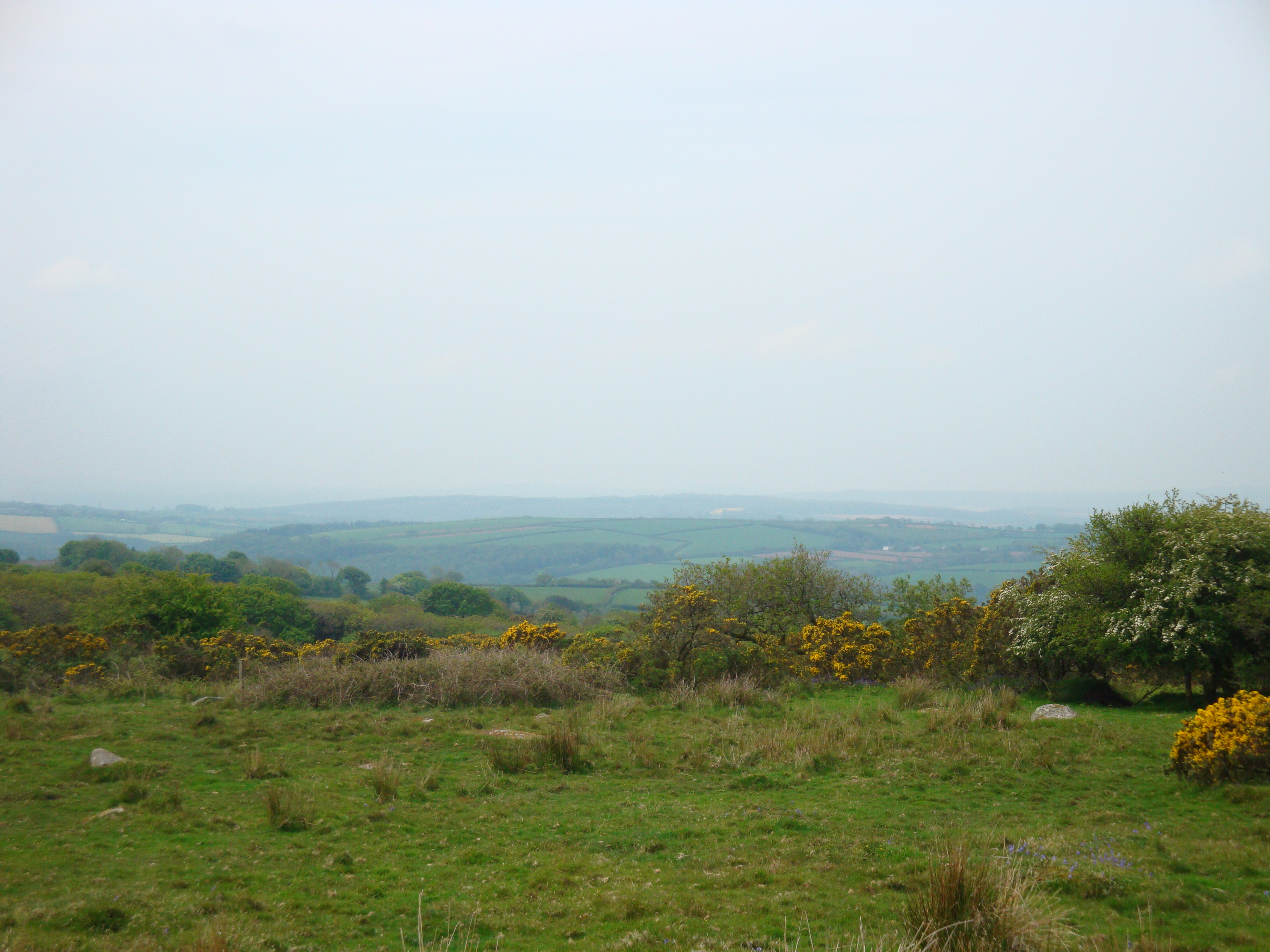
For my American readers who have never been to Bodmin Moor, and who don’t even know what a moor is, imagine an almost bleak landscape of grassland punctuated with gorse and broom. Granite rock outcroppings called tors stand out against the horizon, and the heights of Brown Willy and Rough Tor loom over the lower hills.The wind sweeps across the moor, and the weather can change from fickle sunshine to disorienting fog and rain within minutes. The rivers that originate high up in the moor cut steep valleys through the hills, creating pockets of lush oak woodland carpeted in spring with a dazzling display of bluebells and pink campion. The roads which cross Bodmin are narrow, one lane affairs which wind up and down through the hills and valleys, with the occasional pull-out in which to allow cars from the opposite direction to pass.
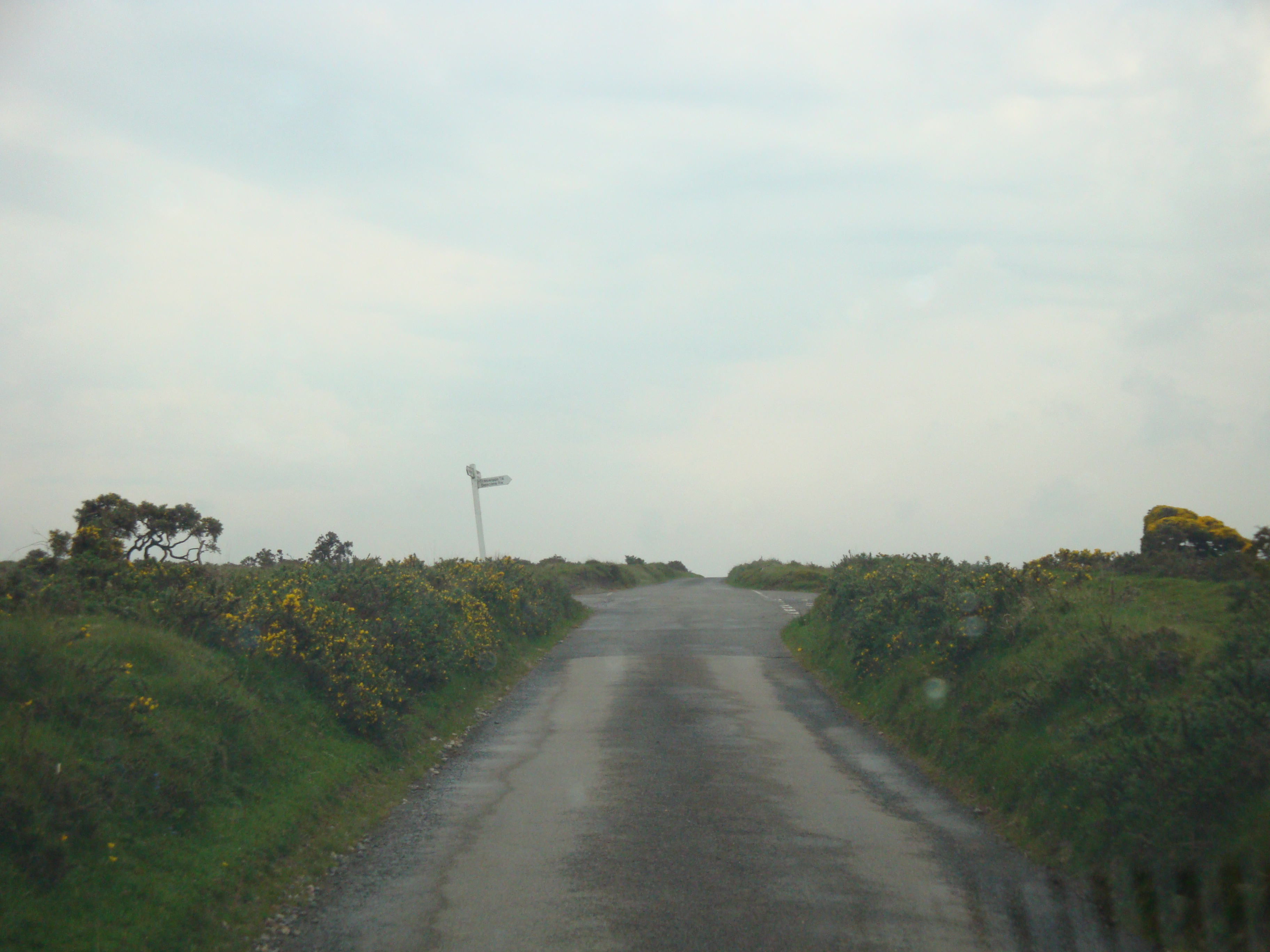
It is a strange place, and once you have been there you can see why it has been the setting for tales of smuggling, piracy and murder; and you can understand how such a lonely, sparsely populated area can so easily give rise to mysterious tales and legends. One of those legends is of the Beast of Bodmin Moor.
The Beast of Bodmin is described as a black, panther-like cat some three and a half feet long. Some suggest that illegally imported panthers were released when their owners could no longer afford to keep them, and the descendants of those cats prowl and kill on the moor to this day. Scientists reject these tales, pointing out that there is not enough food to support a population of such animals, but local farmers are not convinced. Occasional sightings and mutilated livestock keep the legends alive, and many still believe that big cats roam the moors.
Having camped in Yosemite National Park where all food has to be locked in a steel box cemented into the ground to keep the bears away, I did not find myself worrying too much about some mythical cat that no one could ever prove existed. From the stories I’d been told about camping in the UK I was more worried about slugs, frogs, or (shudder!) mice taking up residence in my yurt than I was about any predatory animals paying us a visit.
I have to confess that when it comes to rodentia I have no self-control whatsoever. I think it’s a genetic thing because my grandmother was the same. She was the most self-sufficient person I’ve ever known, able to sew all her clothes, make wall paper hang straight on a crooked wall, bake pie, chop wood and nail on roof shingles. She turned her hand to anything that needed doing, and seemed fearless in all things – except where rodents were concerned. I well remember the time a mouse got in the house when she was visiting us. My mother was trying to kill it while my grandmother, my daughter-of-the-pioneers farm girl grandmother, screamed and hopped around with her hands clamped firmly over her knees to keep the mouse from racing up her legs.
“Kill it! Kill it!” she screamed hysterically, while my mother jabbed and whacked the best she could with a broom.
It must skip a generation, because my mother is practical and calm when faced with mice and rats. She once crouched on the kitchen counter in the middle of the night – in the dark – with a butcher knife in her hand waiting for a rat to creep out of its hole under the kitchen cupboard. Now that is brave.
When we had a mouse in the house one time the whole family was recruited to try to evict it. We’d cornered it in the front closet and my step-brother was going to try to force it into moving and then try to cudgel it. I was supposed to hold the line in the hallway and not allow it to get past me if it should manage to evade my brother. I planted my feet and stood firm. It was just a tiny mouse barely bigger than my thumb. What was there to fear? It was more afraid of me than I was of it. This was how I steeled myself to do my duty as I waited to pounce should that filthy little rodent head my way.
Suddenly there was a mighty commotion and chaos and movement. My brother dove, my mother made a swipe, but the mouse dodged and pivoted and charged right at me, clinging close to the wall. All my resolve and all my courage vanished in an instant.
“Aaaaaeeeuuuwwww!” I shrieked. Time stood still as I somehow managed to leap straight up into the air and remain suspended there long enough for the mouse to get past me. It was a close thing, but I survived.
My mother and step-brother cast very disappointed, superior looks in my direction, obviously thinking me useless and feeble, but I didn’t care. That mouse nearly got me and I’d only escaped by the tiniest of margins.
So I will admit that I have an irrational fear of mice and rats, and basically anything that scurries around and has a hairless tail. I don’t care how cute their little ears and their little eyes and their little whiskers are. Mice mean trouble with a capital T.
And so with that background I can now tell you how my husband and I discovered the true identity of the Beast of Bodmin Moor on that memorable night when we were camping in a yurt at South Penquite Farm.
***
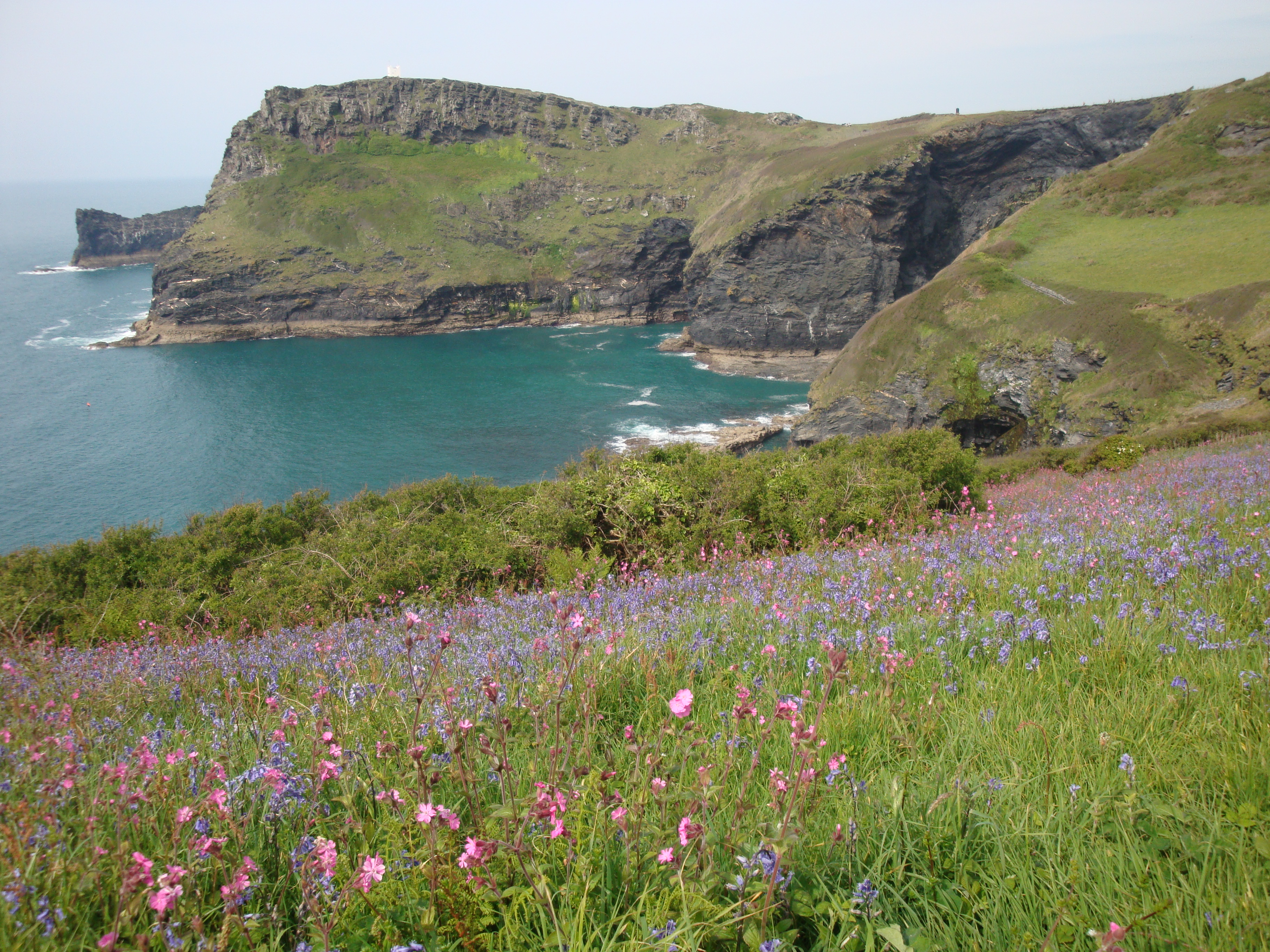
It was our first full day in Cornwall. We had arrived the evening before and settled into our cosy yurt and were awakened at dawn by the birdsong chorus and light streaming through the clear circle at the peak of the yurt roof. The day promised to be a beautiful one – warm and sunny – perfect for a walk along the Southwest Coast Path. After a leisurely breakfast we set out, driving from the moor down little lanes so narrow that the wildflowers growing alongside brushed the side mirrors of our car. At Tintagel we geared up and set out for our day’s walk.
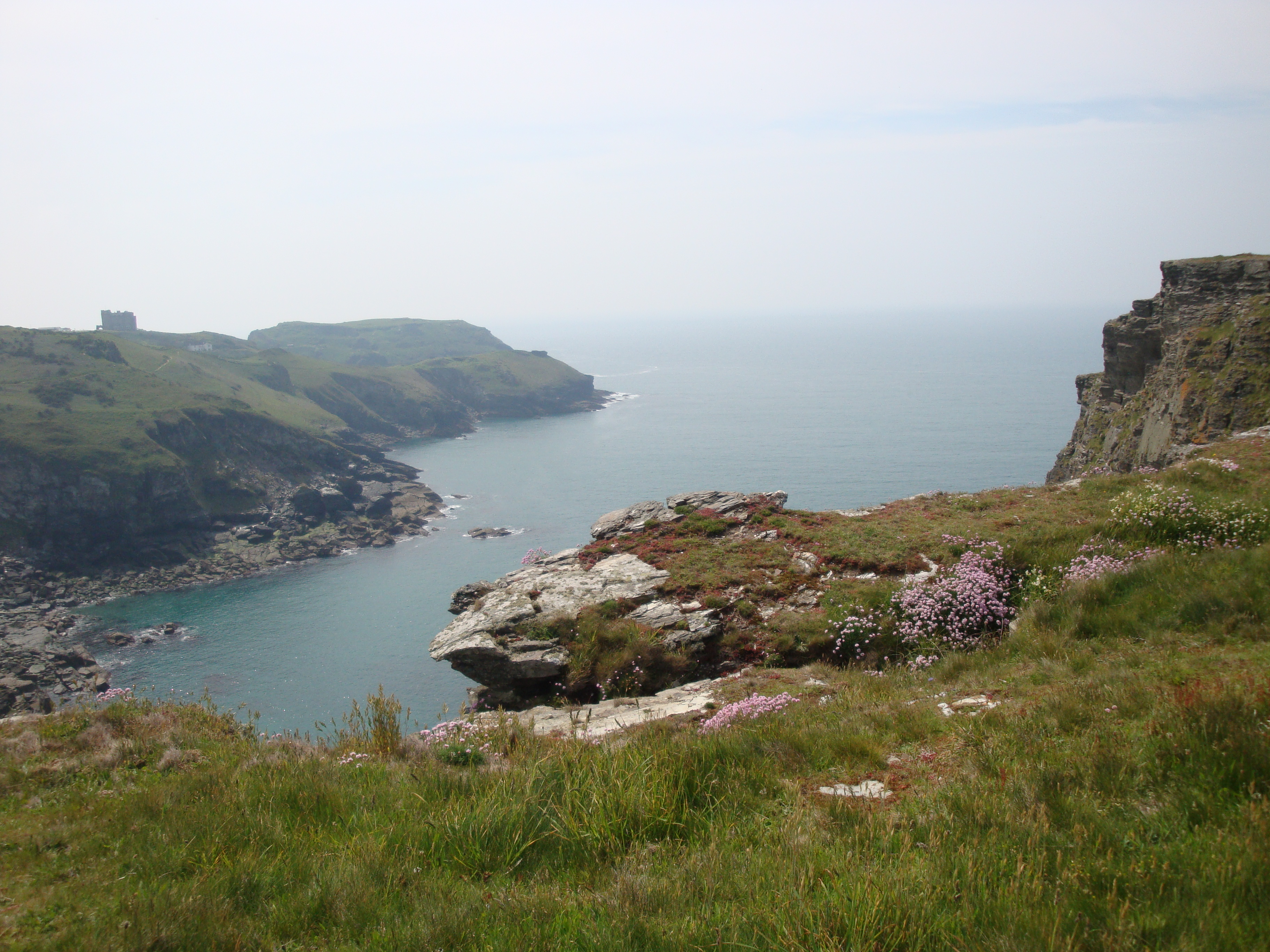
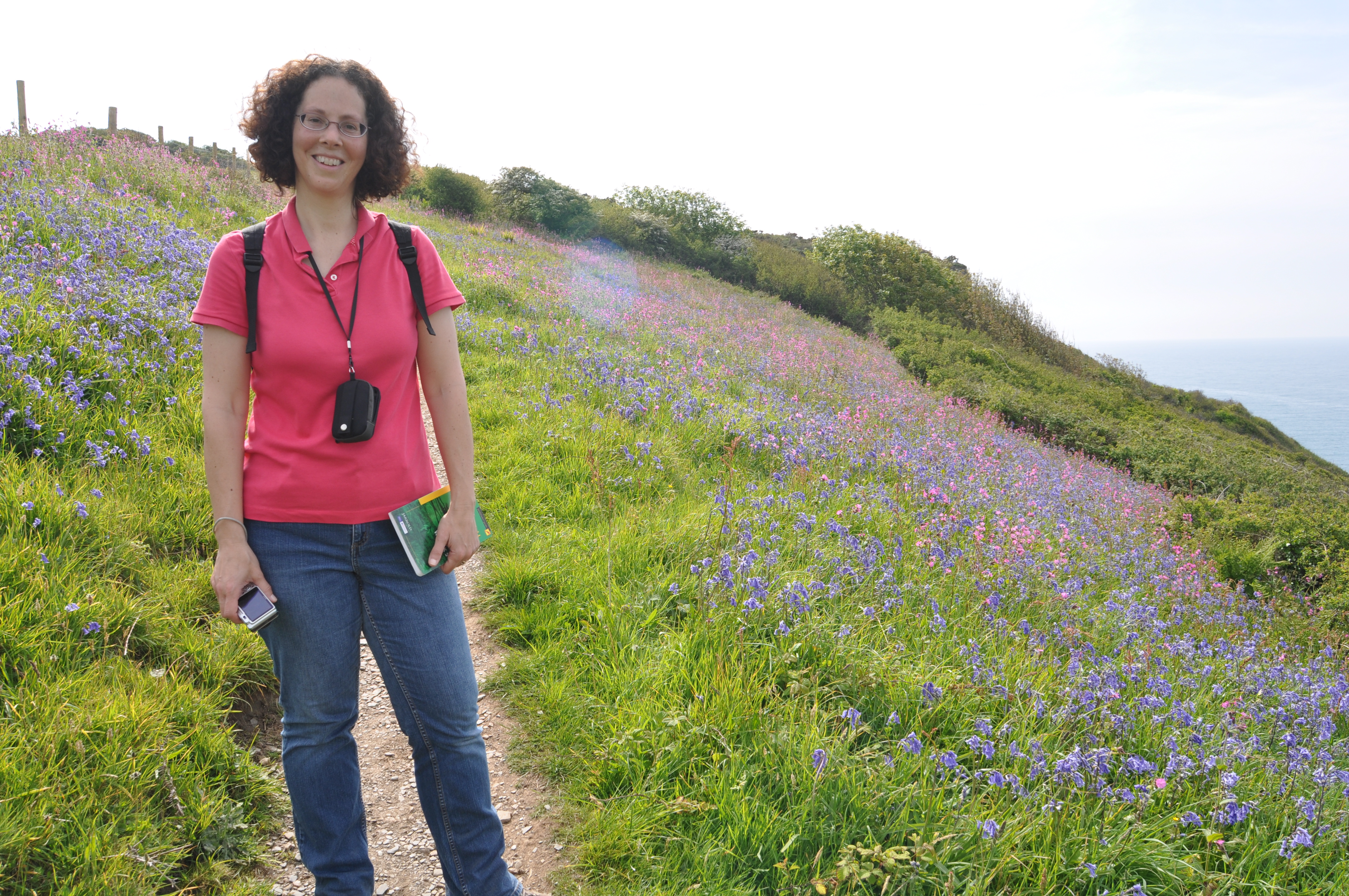
That day we walked over eleven miles, up and down hills so steep they had to have steps built into them. At the end of the day we tottered back to where we had parked our car, our legs aching from ascending and descending about 10,000 steps and climbing over roughly 150 stiles.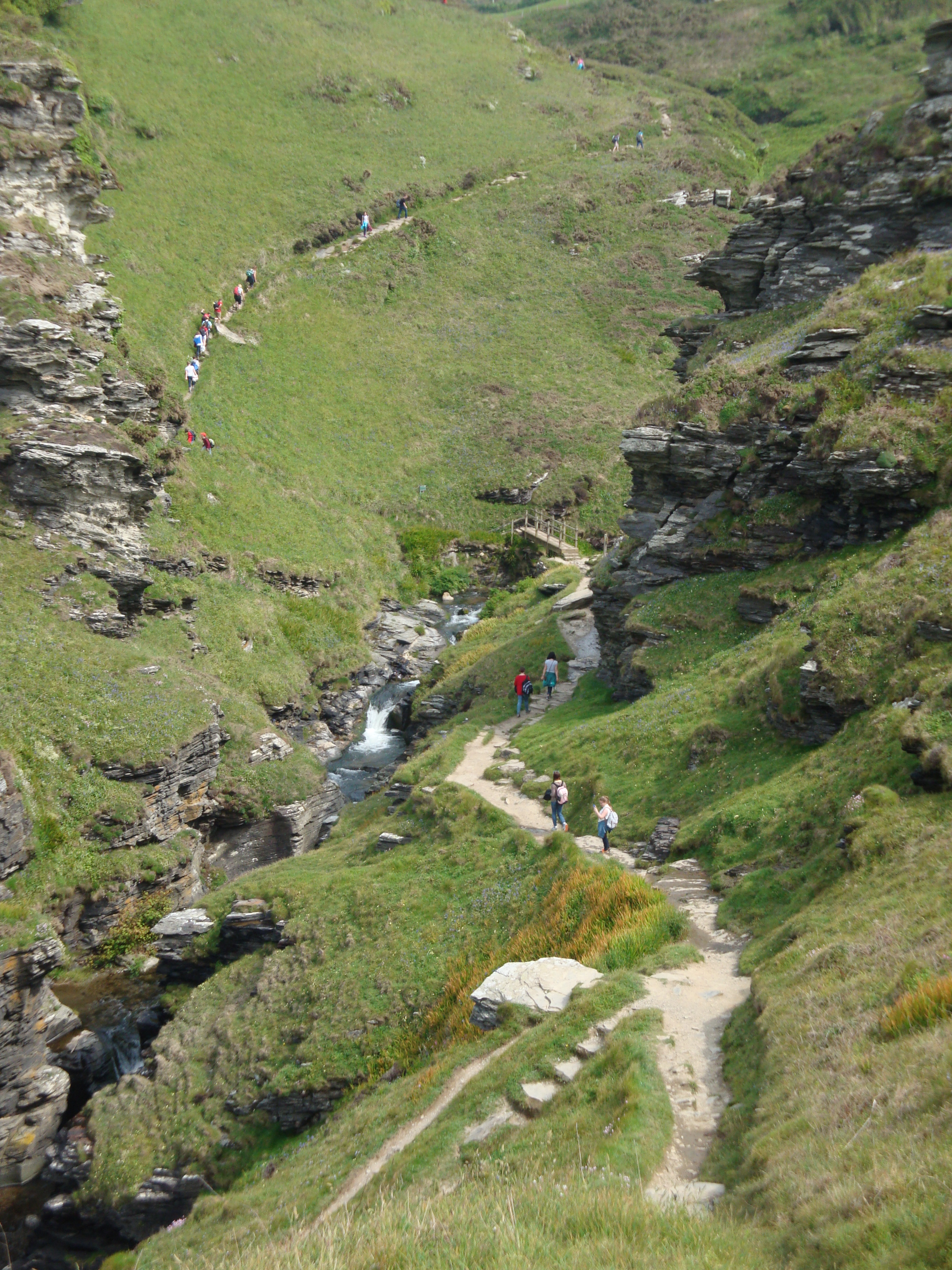
On the very last stile my legs protested and I could hardly swing it over to the other side.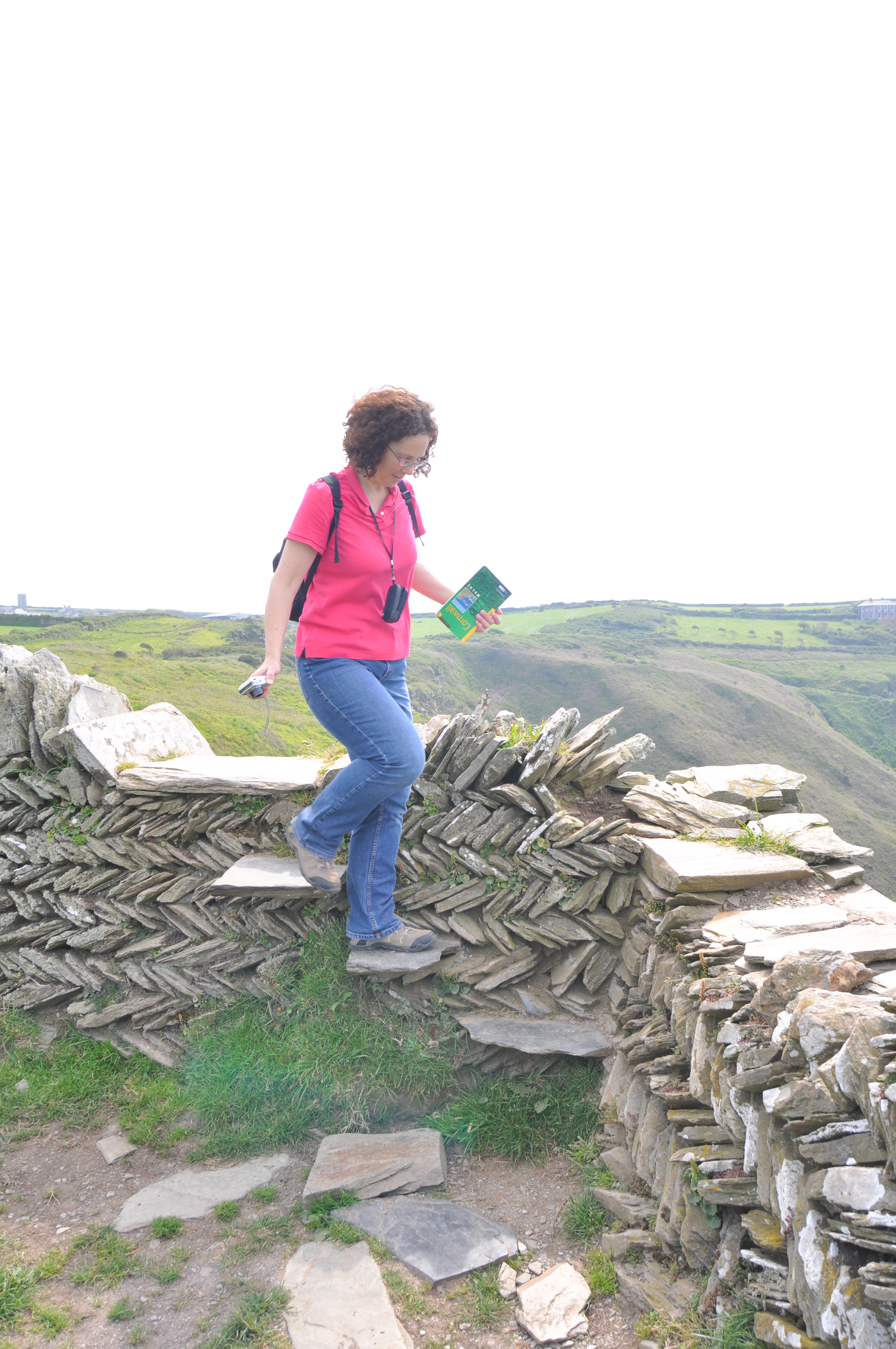
We were exhausted, but with that satisfied sort of exhaustion that comes after extreme physical exertion and after a day in the fresh air and sunshine.
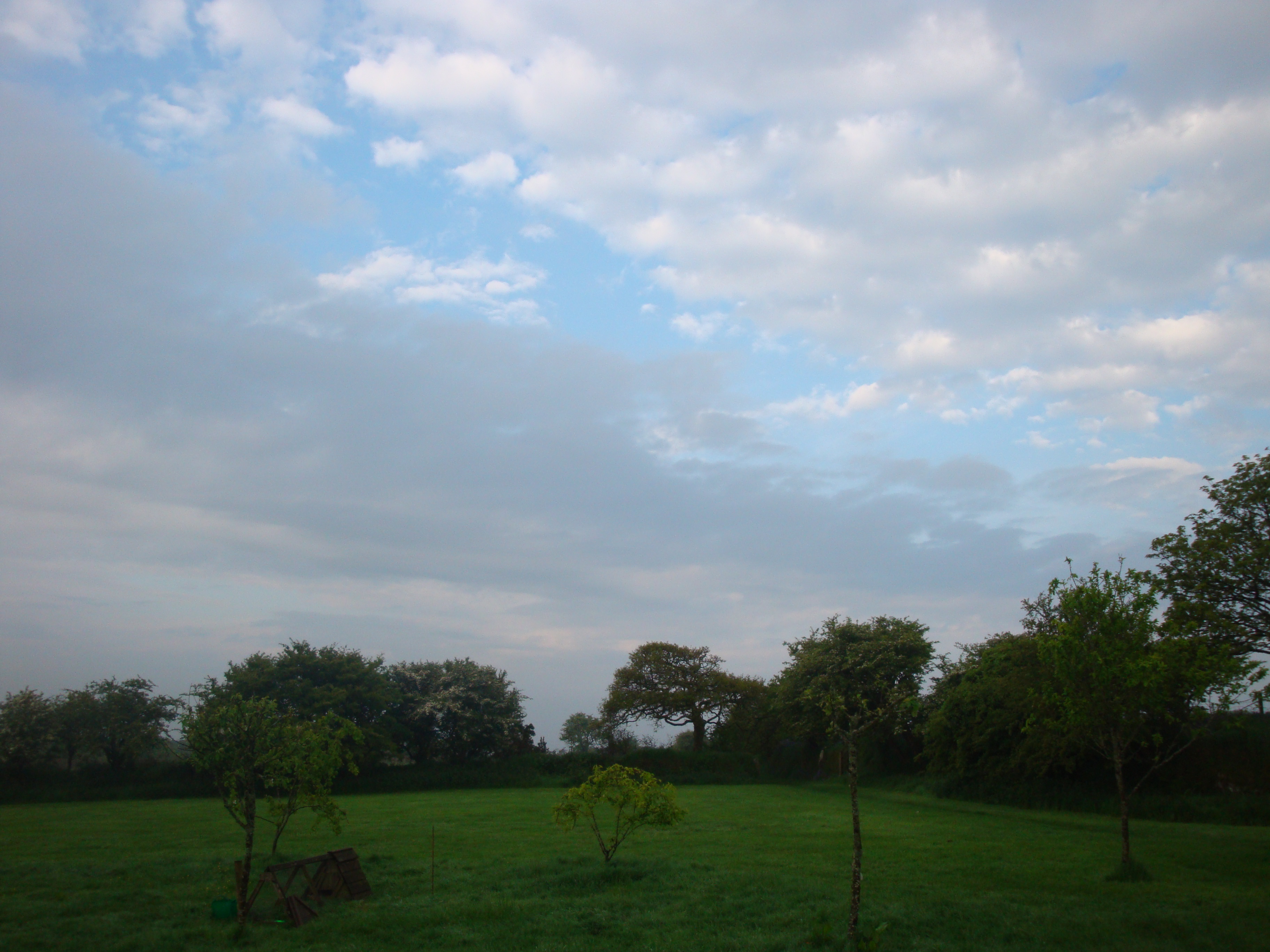
By the time we got back to camp on Bodmin Moor the sun was setting. While I prepared a dinner of warm soup accompanied by thick slices of bread and cheese my husband opened the wine and lit a fire outside in the fire ring. It was a Sunday evening, and all of the other campers had long since departed. The campground was deserted and silent except for the two of us. The long, late spring twilight lingered on, deceiving us into thinking it was earlier than it actually was. When we finally settled into our deck chairs by the fire with our dinner it was nearly ten o’clock.
It was incredibly peaceful sitting out there in the gloaming, sipping our wine and slurping our chicken soup. And then we heard it – a steady meowing that was growing louder. Searching the darkness beyond our campfire light we located the source. One of the farm cats was trotting across the meadow toward us, drawn, no doubt, by the delicious aromas of chicken soup. It approached eagerly, and immediately zeroed in on which one of us was the easy mark.
She was a pretty little calico, and very friendly. Her purring was loud and rumbling, and after just the briefest of introductions she hopped into my lap. I did not encourage this action, mind you, since I prefer to eat my dinner without cats trying to stick their noses into my bowl. I raised my plate up out of reach and she settled down, still purring, to take a nap. Every time I tried to take a bite of my dinner, however, she would sit up and stretch her neck up, trying to get her nose onto my plate. It was growing very frustrating, and my husband kept telling me, “Shove it off your lap.”
Well, that was easy for him to say, but first of all I was trying to balance my plate and my wine glass, with nowhere nearby to put them; and second of all, I didn’t want to get cat on my hands and then have to limp up across the fields on my tired legs to the sinks to wash my hands. I tried to stand up, but she dug her claws into my trousers and refused to be budged. We were at an impasse. Finally my husband put his plate down and shooed the cat away, making all sorts of funny noises which didn’t impress her one bit.
At about this time another cat showed up. This was a big ginger Tom, obviously rather old and slow and extremely dignified. Both cats eyed the plate of cheese on the picnic table, which we quickly removed, and my husband stamped his feet and clapped his hands and made hissing noises to drive the cats away. They did finally skulk off into the darkness, but circled back around the yurt, trying things from another angle.
My husband sat back down and we resumed eating our dinners. All was peaceful and calm when with a sudden leap the calico appeared out of nowhere and again tried to invade my lap. She bounced off my legs when I jumped, and my husband again drove them away from our campsite.
“They’re still out there,” he said. “I can see them sneaking about.”
Finally after eleven o’clock we gave up on the smoking bonfire with the wood that didn’t want to burn, dowsed what few embers remained, and got ready to go to bed. We were too tired to deal with the dirty dishes that night, so we merely rinsed them and stacked them in the carry bucket that was provided with our yurt. We would do the washing-up in the morning.
“Are you sure they won’t attract mice?” I asked nervously, eyeing the wide crack beneath the yurt door and the gap where the canvas met the door frame. Both looked plenty big enough to me to allow rodent access.
“There are too many cats around here for there to be any mice,” was my husband’s firm assertion.
He had more faith in those cats than I did. These particular cats seemed far too fond of raiding picnics to be interested in hunting mice, but I was too tired to do anything else.
I crawled into bed and curled up as far away from the edge of the bed as possible, hoping against hope that my husband was right, and that no mice would skitter across us in the night.
It is amazing how you can go from peaceful slumber to alert wakefulness in an instant, like having your brain zapped by an electric cattle prod. The sounds which woke me were unmistakable: small feet padding across a hard surface, paper rustling, something scraping. MICE! My heart thudded as I tried to hold the panic in check.
“Did you hear that? There’s something in here!”
One of the greatest advantages of being married over being single is that you have a man to stand between you and danger. If I had been camping with a group of women or children I would have had to swallow my fear and Take Action. But as one of the female perks of marriage I had my husband on the side of the bed between me and the beast, a wall of strength and manly courage to come to my rescue.
He fumbled for his glasses and reached for the remote control to turn on our camp lantern, at the same time flailing his legs in a valiant struggle to free himself from the Velcro-like grip of the sleeping bag. This might sound like it would take a while, but actually it was just a couple of seconds before he was bravely standing beside the bed with a torch (flashlight) in hand, searching the darkness for our intruder.
“It’s that CAT!” he said as something rushed past him and disappeared under the bed.
“How can it be the cat?” None of the openings around the door frame were big enough for a cat to squeeze through. I remained steadfast in the bed with the sleeping bag pulled up to my chin.
Something bumped the bottom of the mattress! Can you literally be frightened to death? There was definitely something underneath the bed!
“I can’t get to it from this side,” my practical husband said, “You’re going to have to get it from your side.”
Did he really say that? Did he actually expect me to lunge over into the darkness between the bed and the side of the tent and try to grab whatever was under there?
“I am not sticking my head over the side of the bed!” I was NOT sticking my head over the side of the bed.
I love my husband. For him I gave up my family, my home and my country. I would go to the ends of the earth for him, but there was no way I was sticking my head down over the side of the bed to come face to face in the darkness with the Rat of Bodmin.
“It won’t come to me,” my husband said.
“Well that’s what you get for being so mean and scaring them earlier.” I was beginning to think that perhaps, somehow, it really was a cat that had snuck into our yurt when our backs were turned. Had it been curled up, hidden somewhere among our piles of gear, the whole time we got ready for bed? Had it slept peacefully along with us until the hours when all cats like to get up and dance? I slowly stepped out of bed, ready to dive back to safety if a rodent suddenly bolted from cover and made a dash for my bare feet.
“Kitty…kitty?” I called nervously.
With a happy, chirpy meow the calico cat emerged from under the bed and sauntered over to me, tail up, totally at ease. Relief flooded over me, making my legs feel weak and jellified. I gathered the cat up in my arms where she settled, purring happily.
“What time is it?” I asked.
“Four o’clock.”
I like cats, I will admit – not as much as dogs, but I do like them. However, cats that secret themselves in my tent and then decide to leap about the place at 4am, scaring me half to death, get dumped unceremoniously on the front doorstep. Perhaps she was happy about that, because we didn’t hear any pathetic mews asking to be let back in.
We went back to bed to try to sleep for a couple of hours more, and the cat took herself off to be a wild thing undisturbed.
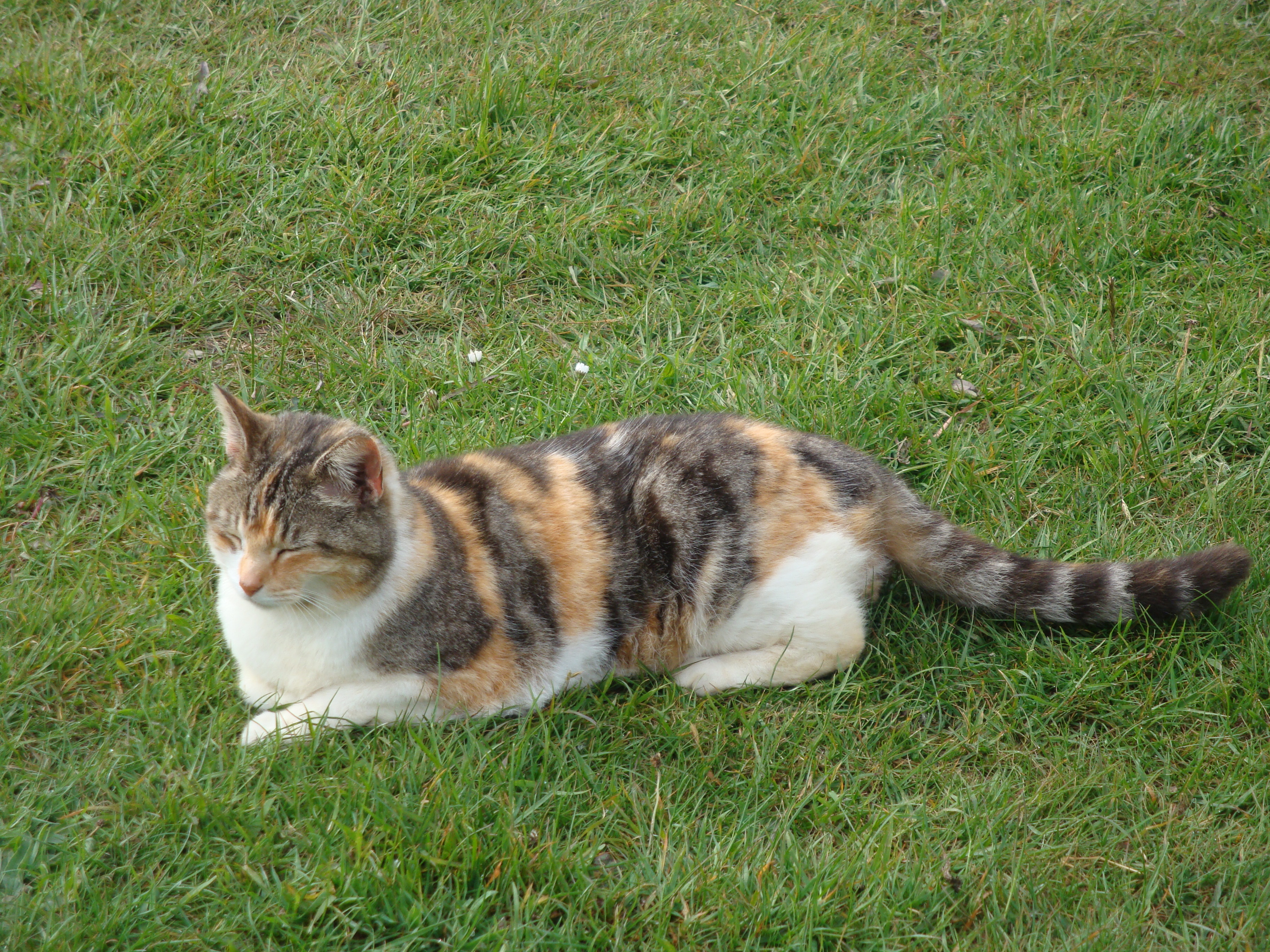
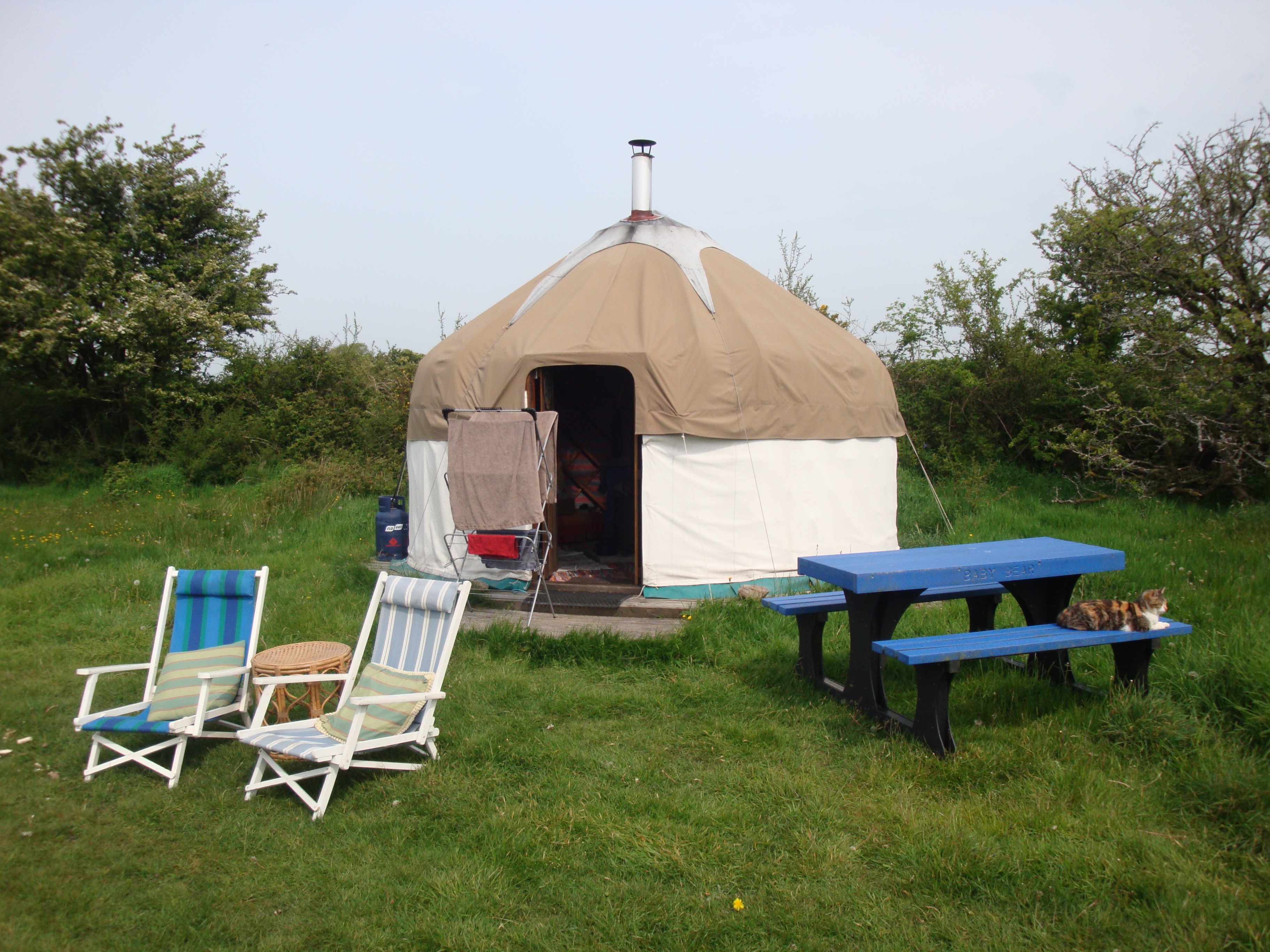
And that was our encounter with the Beast of Bodmin. Although it is not even close to three and a half feet long, it is definitely a feline. It is sneaky and very clever at camouflage, and obviously has developed a taste for human…food. Be careful where you tread and where you choose to unroll your sleeping bag, because for all you know the beast could be hiding right in the midst of your camp.
On the bright side, we never did see a single mouse.
***
And so we left Cornwall at the end of our short break, having placed a small dot on our private map of memories. Someday we will be speeding past Bodmin Moor on the highway, heading for other points of the compass, and I shall glance over and think, “We were happy here.”

 An American Wife in Wiltshire
It made me smile when you were talking about the mouse adventures and the term “cudgel it ” ( the mouse). I must admit, I have never heard that word before. The British terminology is now fitting into your memories. I thought that was pretty funny.
Now I almost expected at the end of the blog to say you came home and now have your own new family member – your new Beast of Bodmin… 🙂 Looking forward to seeing you in Wales.
If you hadn’t mentioned stepping on the slug, I would have. Still funny. Uh..for me, anyway.
I enjoyed happening across your story.. After living on the Oregon Coast all of my 50 years (minus college) and wishing I was somewhere, anywhere but this cold, wet, miserable place (words from my grandmother), I am beginning to embrace the fact that the Oregon Coast is HOME, and I am falling in love with it day by day… Thanks for sharing your memories of this special place and I hope that your new home becomes equally fulfilling…. CHEERS from the Southern Oregon Coast
Thank you for the reminder from Margaret Mitchell – it does seem to be true enough that going forward with a heavy heart is near impossible. We plan to visit Cornwall next year so thanks for the great idea about yurt camping – I think we’ll give that a go.
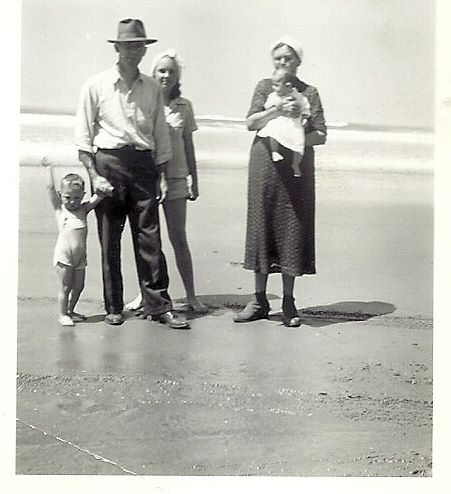
You picture snatcher! That one had to be 1941. I was just a baby, being held by your great grandma, with Uncle Glen about 2 years old, and your Aunt Geneva was 12, and of course your grandfather in his early 40’s.
Deb O, friend of Joanna
I so enjoy your blogs. This one in particular, as I too find that the same area of the Oregon Coast has an emotional draw for me. Your thoughts on memory maps and moving forward are theraputic. Thank you for sharing.
I wanted to tell you how much I enjoyed your blog – We Were Happy Here – written on May 30, 2014. I just came across it tonight (July 22, 2015) while searching the internet to see if I was the only one who thought that gorgeous Cornwall, which I’ve come to know through the Poldark series on PBS, was somewhat similar to coastal Oregon. I am delighted to learn that I’m not alone!
I confess to having only visited Oregon twice, for a few days each time, while living in Sacramento, California in the early 1990s. I immediately fell in love with Oregon, but life being what it is, I eventually found myself back in Houston, Texas, my hometown and the place where I’ve spent most of my life. However, I never felt like a typical Texan, and with my retirement approaching in the not-too-distant future, I have become determined to live in an aesthetically beautiful place. I badly need to recharge my soul; listening to smooth jazz or new age music late at night while looking at photos of the Pacific Coast isn’t enough. The general area of the California coast known as Big Sur and the Oregon coast are the two most beautiful places I’ve yet seen in the U.S., and I cannot afford to live in the former. So, the Oregon coast is the winner, and for a few other reasons in addition to the cost of property anywhere near Big Sur. As you said about Oregon’s coast, “…lonely and rugged and incredibly, achingly beautiful.” That about sums it up…and it’s exactly what I’m looking for.
I’ve done a considerable amount of research on the state of Oregon, and particularly on the coastal towns in Oregon, from Brookings in the “Banana Belt” part of Oregon, up to Astoria. For a number of reasons, I think Newport might be a good place to try, at least to start with. It has such amenities as the Visual Arts Center and a writer’s group, Writers on the Edge, as well as some variety. I’ve even have a gauzy, dreamy, pastel photo of the Yaquina Head Lighthouse as my computer desktop. What I’m really looking forward to, however, are the winter storms, the cool summer temperatures, that wonderful Pacific Ocean, and the wildlife, particularly the raptor species that call Oregon home. And worry not; I’m not seeking a “beach” experience. I know I’m in for lots of gray, windy, drizzly days. It sounds perfect! A good friend of mine who lives in Balcombe Village in England thinks I’m the most un-Texan Texan she’s ever met, and that I would fit in perfectly in the U.K. Well, Oregon’s coast will in some ways be a good substitute.
I’m so glad you found Cornwall after having experienced life on Oregon’s coast. It must have been difficult to leave Waldport, but now you know where to go to bring it back. I think you have exactly the right attitude to make such a change, and to make the most of your new home – keeping an open mind and a keen eye out for new “compensatory” places that can step in for the ones you left behind. As a bonus, your vacation at Cornwall seems to have taken you to some places that were used in the filming of Poldark; many of your photos immediately looked familiar. Here in the ‘States, everyone who watches Poldark on PBS has been going on about how lovely the Cornwall coast is.
So, I would say that you’re making the most of your journey, and a wonderful journey it seems to be, too. You’ve found much to love in your new home, and I sincerely hope you have many great adventures ahead. Just watch out for those beasts that wander into your tent in the wee hours!
Wishing you all the best!
Thank you, Gene. The journey is wonderful. It has its ups and downs, like any other journey, but our hearts know when they are home, and mine is at home here.
I wish you all the best with your journey, as well, and hope that you will soon be able to relocate to the place your heart calls home. Newport is a very good choice. It has the arts and culture you’re looking for, some lovely bookshops and restaurants (Canyon Way is an old favorite of mine, and my husband had fish and chips in a restaurant in Nye Beach which he declared the best he’d ever had in America), plus miles and miles of some of the most spectacular coastal scenery in the world. It sounds like you’ll fit right in and be a local in no time. And someday, when you drive down to Yachats to watch the winter storm breakers crash against the rocks there, go have a maple croissant at the Green Salmon Bakery for me.