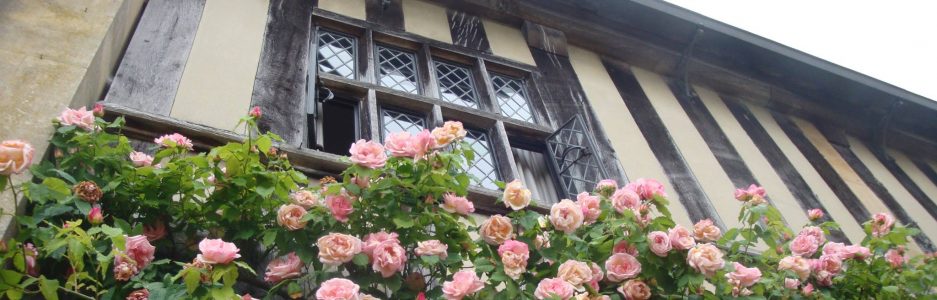

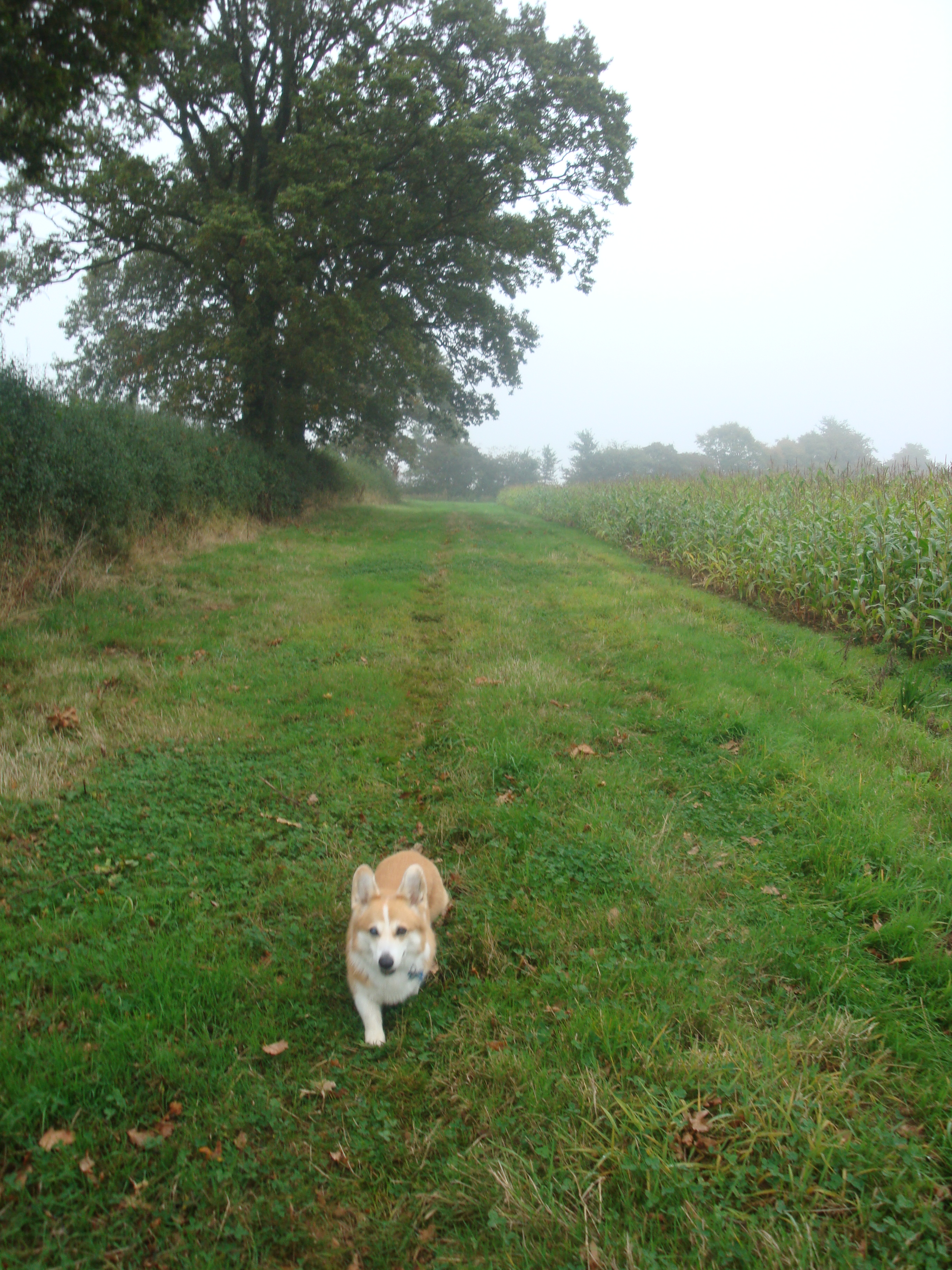
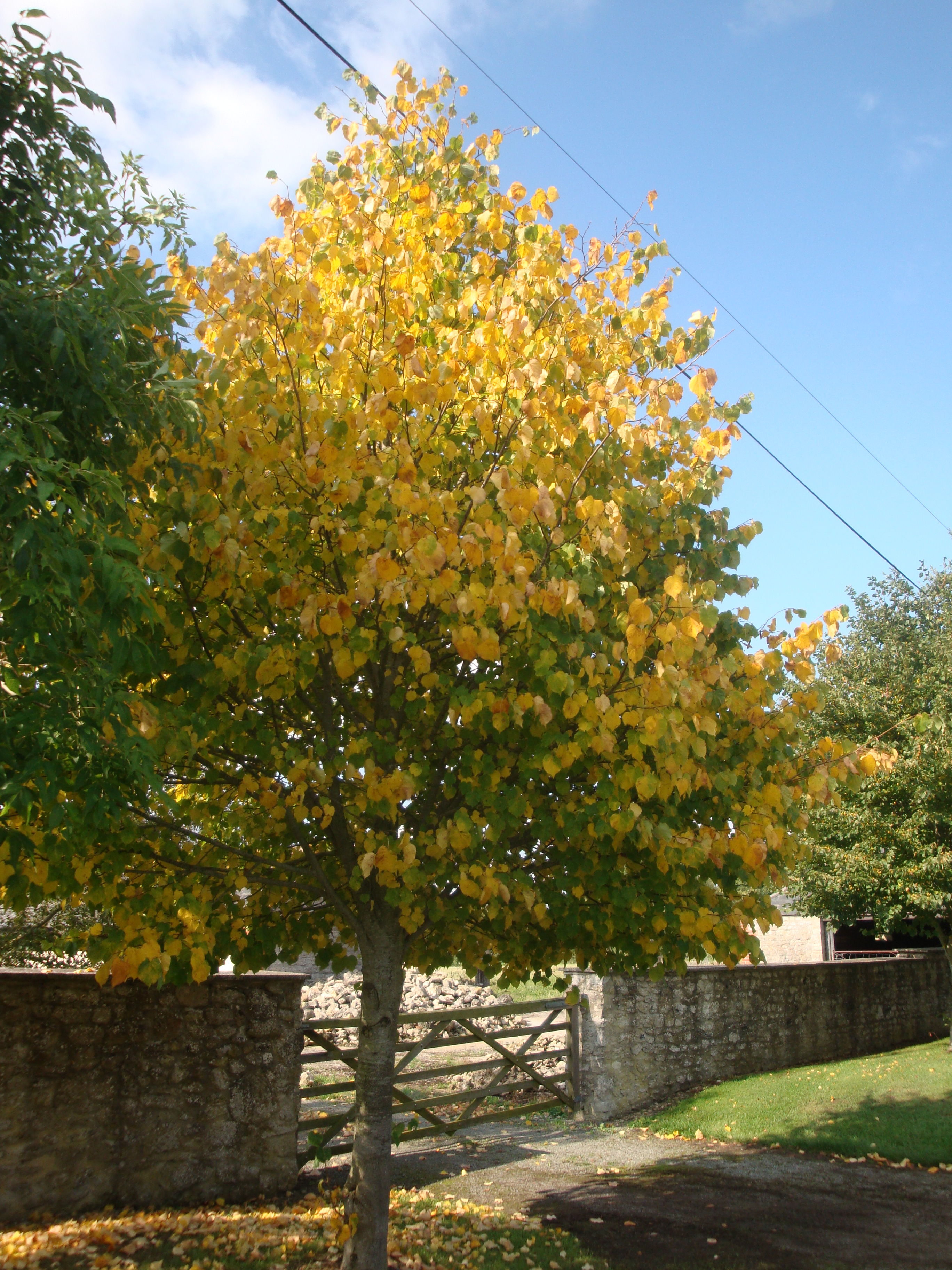
Keats is famous for calling autumn the season of “mists and mellow fruitfulness”, and that certainly is an apt description of autumn in the UK. The days grow shorter, the nights colder, and each morning it seems to take just a little bit longer for the rising sun to warm the countryside and burn off the morning fog that weaves its way like a ribbon along the base of the nearby hills. The trees are beginning to glow with their glorious gold and russet, and the old stone houses that are covered with ivy flame with scarlet.
Robins, which had grown quiet during the peak summer months, are now singing again as they try to stake out the prime territory which will provide enough food to see them through the coming winter. Their song is sweet and thrilling to hear, but it is a reminder of the struggle that is to come at the end of this season of abundance.
My husband and I have been enjoying the free gifts of the harvest among the hedgerows as much as the wild things, and have probably grown almost as territorial. We haven’t gone as far as perching on a branch of our favourite hazelnut tree and singing for half an hour each day (the branches wouldn’t hold us if we tried), but we do take a decided interest in the areas we have discovered to have especially good crops, and are slightly affronted if we find that someone else has been there picking ahead of us.
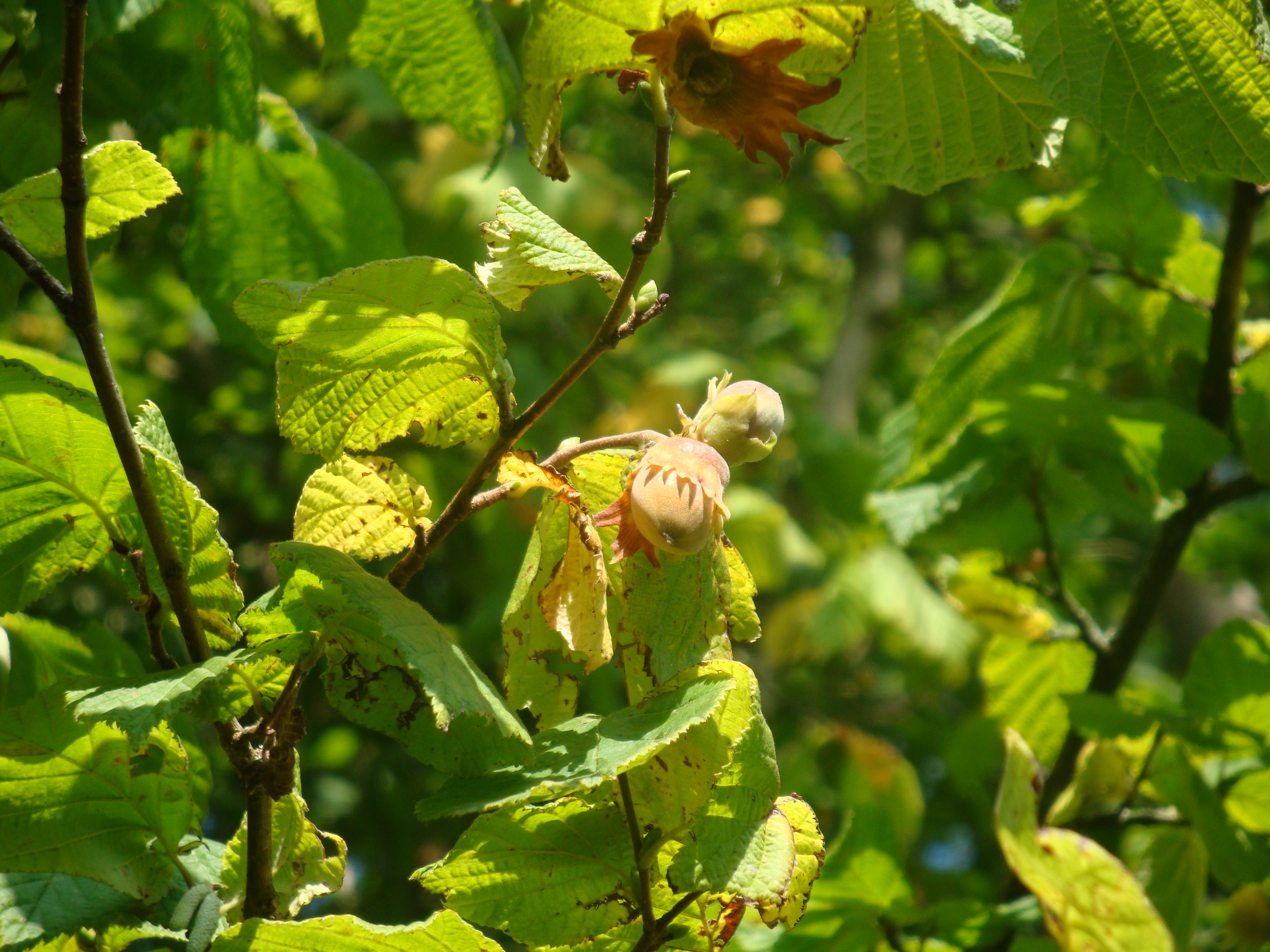
The hazelnuts have been my husband’s special interest this year. He fills his pockets with them nearly every time we go walking. He has proclaimed several times that he is done, finished, finito, and will not gather any more hazelnuts, but now and then he just can’t help himself. He comes across a stand where they practically fall out into his palm when he lifts his hands, and how can you say no to that? And so the windowsills at home are lined with a parade of bowls mounded with drying hazelnuts. Every few days my husband will sit down and pick through them, discarding any that appear wormy, in what I call his Squirrel Nutkin mode.
When I told him he looked like Squirrel Nutkin he gave me a blank look which told me that he had never read what I consider to be an essential part of everyone’s education – the complete works of Beatrix Potter. So one evening while he was picking through his stash I sat down and read to him “The Tale of Squirrel Nutkin”. (Yes, we really do know how to live it up, don’t we?)
“This is a tale about a tail…” And so begins the story of a very impudent squirrel who learned the hard way not to torment owls.
Probably all my husband heard was “Blah, blah, blah, blah. See? Blah, blah, blah, blah. See?” Every time I said, “See?” I was holding the book up like a librarian during story hour so he could see the illustrations, and I know he heard that much because he would obligingly look up and pretend to be interested.
He is a patient man, my husband.
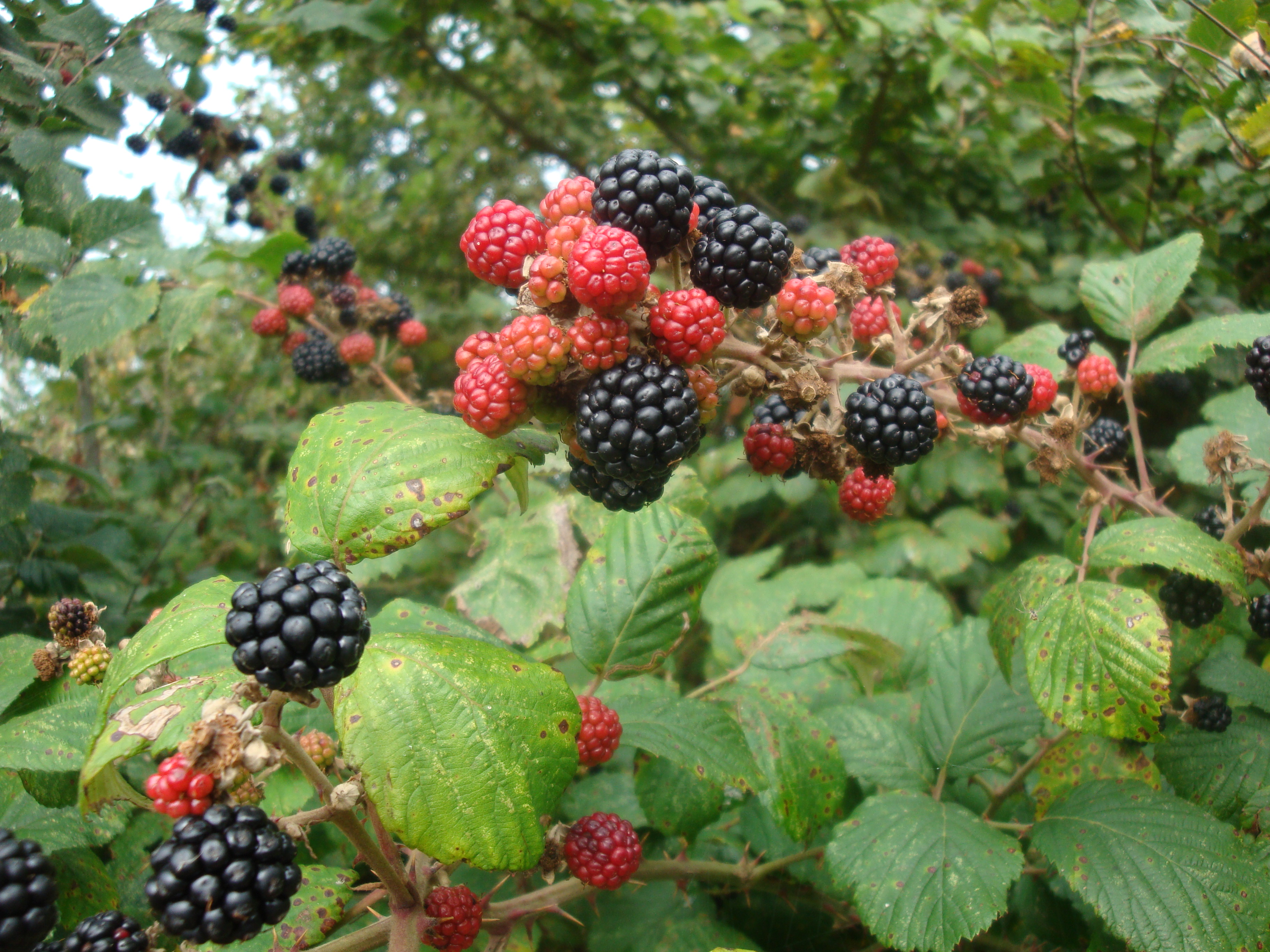
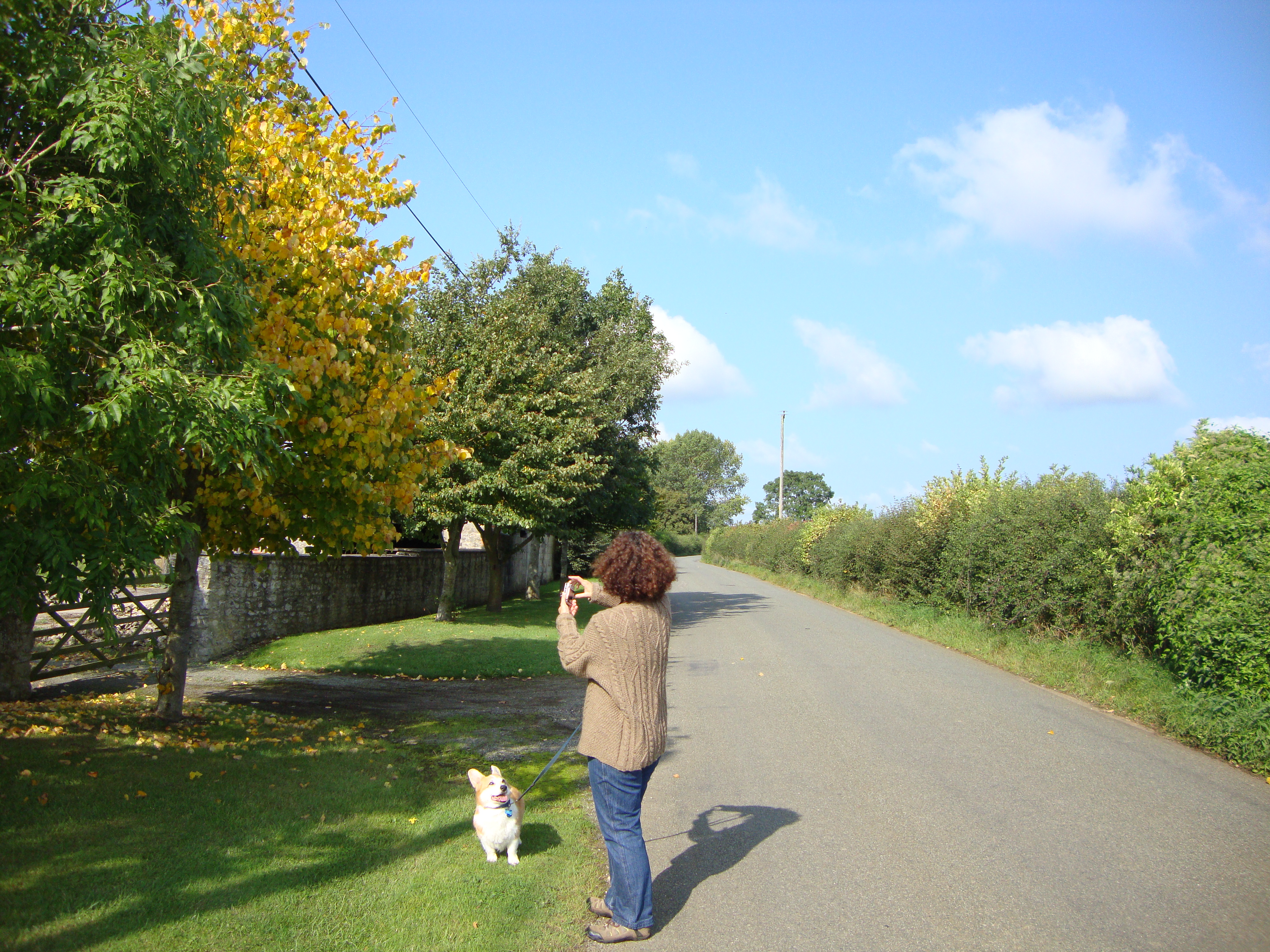
In addition to hazelnuts we are also territorial with our best blackberry-picking patches. So far this season we have gathered enough blackberries to keep us happily in jams and pies and ice cream for most of the winter. It’s been a bumper crop, and we can easily fill both of our picking tubs in just a very short time when we’re out walking the dog.
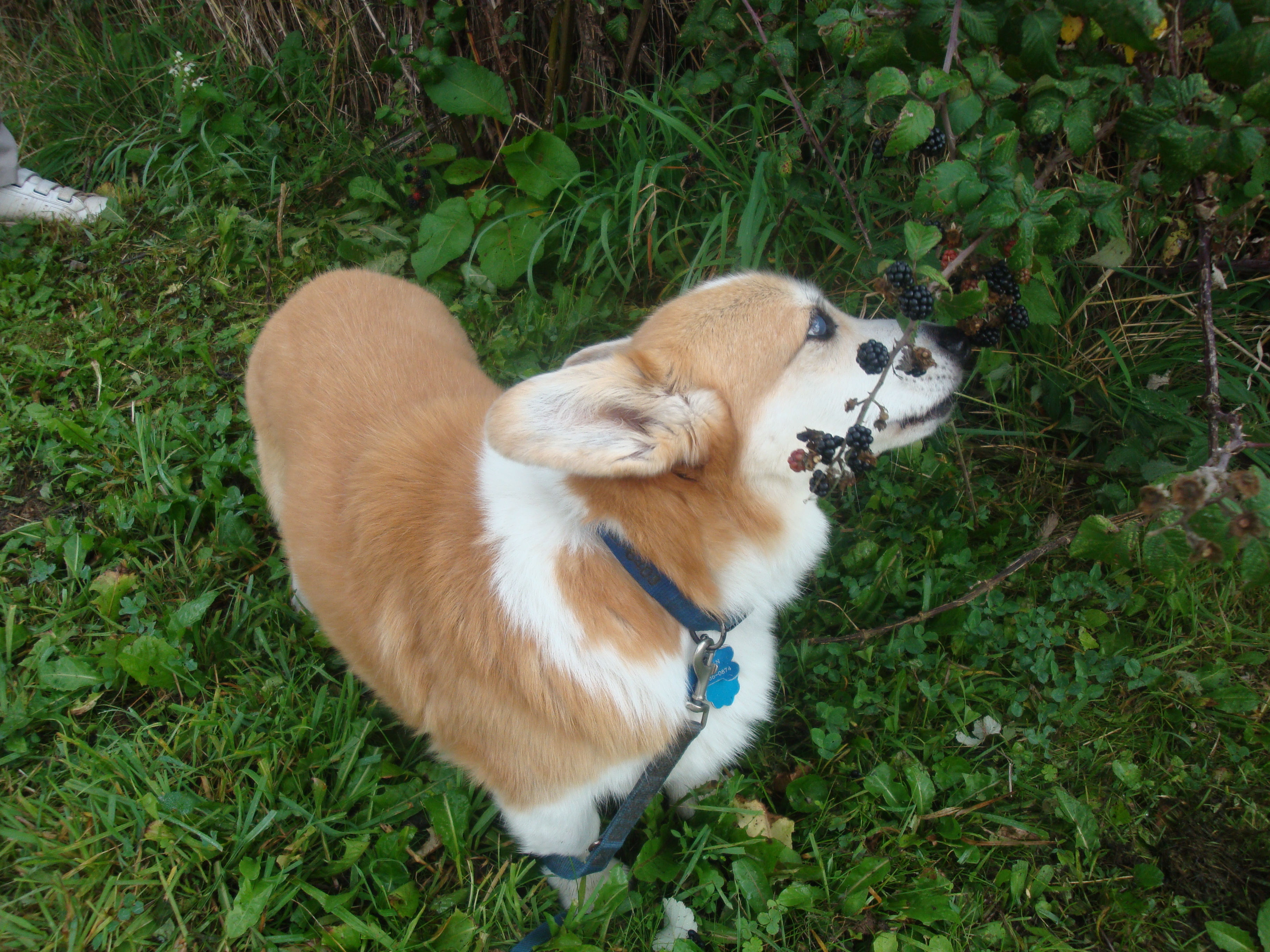
Tristan enjoys blackberries, too, and will even pick the berries off the prickly branches on his own if we aren’t dropping them fast enough to suit him.
My husband and I have very different picking techniques. I will find a spot and pick steadily down the row – slow, methodical, plodding. My husband, meanwhile, is always on the lookout for bigger berries. He’ll pick for a little while, then pop his head up and spy a mass of brambles on the other side of the road, or at the far edge of a field, and off he’ll go, thrashing through the tall grass and waist-high nettles, wielding a big stick like a machete, to see if those berries are better.
It seems to be a law of nature that the best blackberries are always guarded by the biggest patch of stinging nettles you’ve ever seen. It’s a sort of unholy alliance the two have forged to create an impenetrable barrier.
Once we have filled our picking tubs we will continue our walk, and as we explore we discover more and more free food just asking to be harvested, if only we had the means to do something with it all.
Down the road from us there used to be a microbrewery. Some of their hops obviously escaped and have gone wild. Hop vines, I believe, could probably take over the world if given the chance. They are to vines what Burmese pythons are to garter snakes. They climb up and sideways and you don’t even realize they are there until this time of year when the hops are suddenly dangling thickly from the vine and beginning to turn brown.
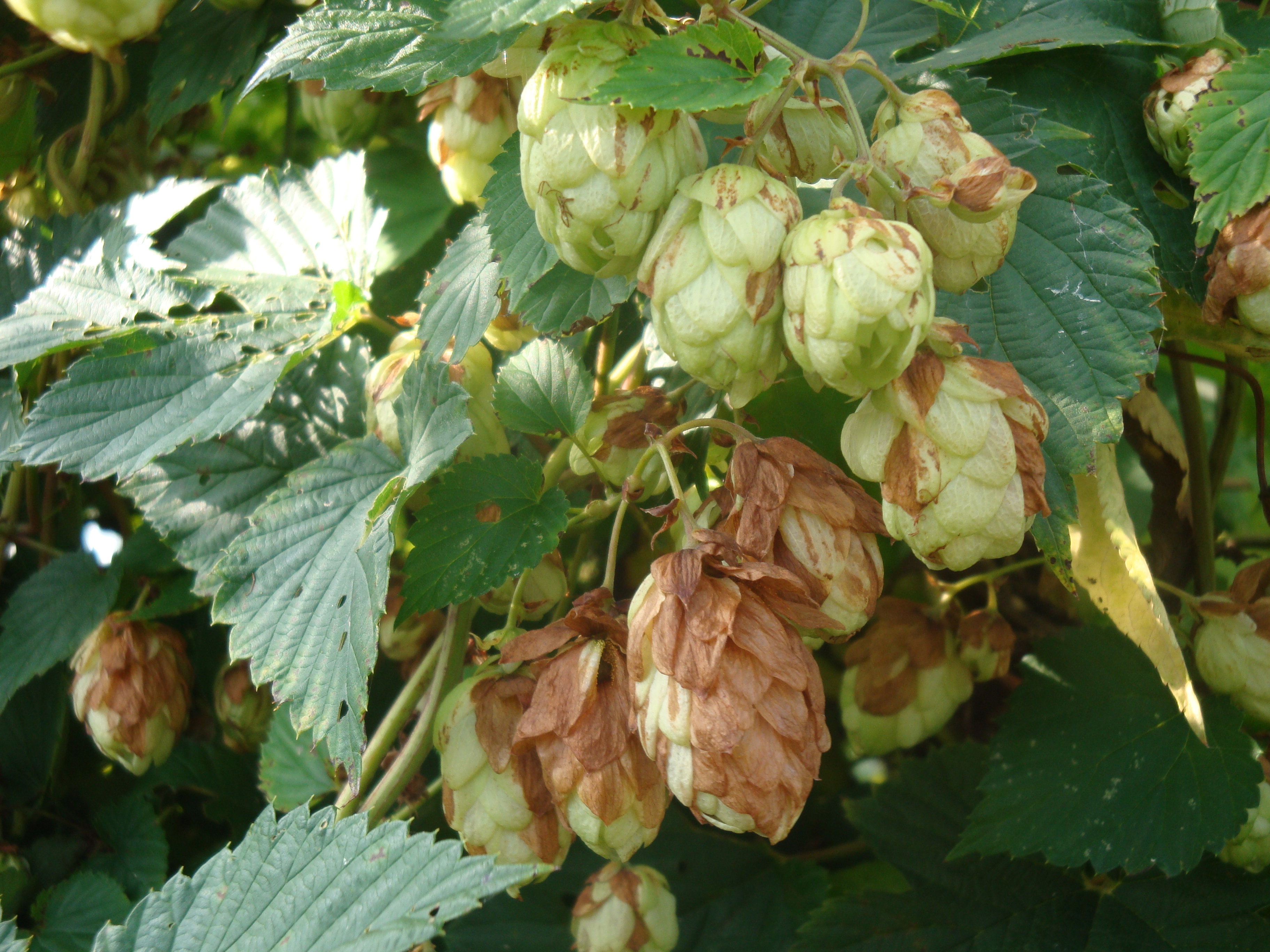
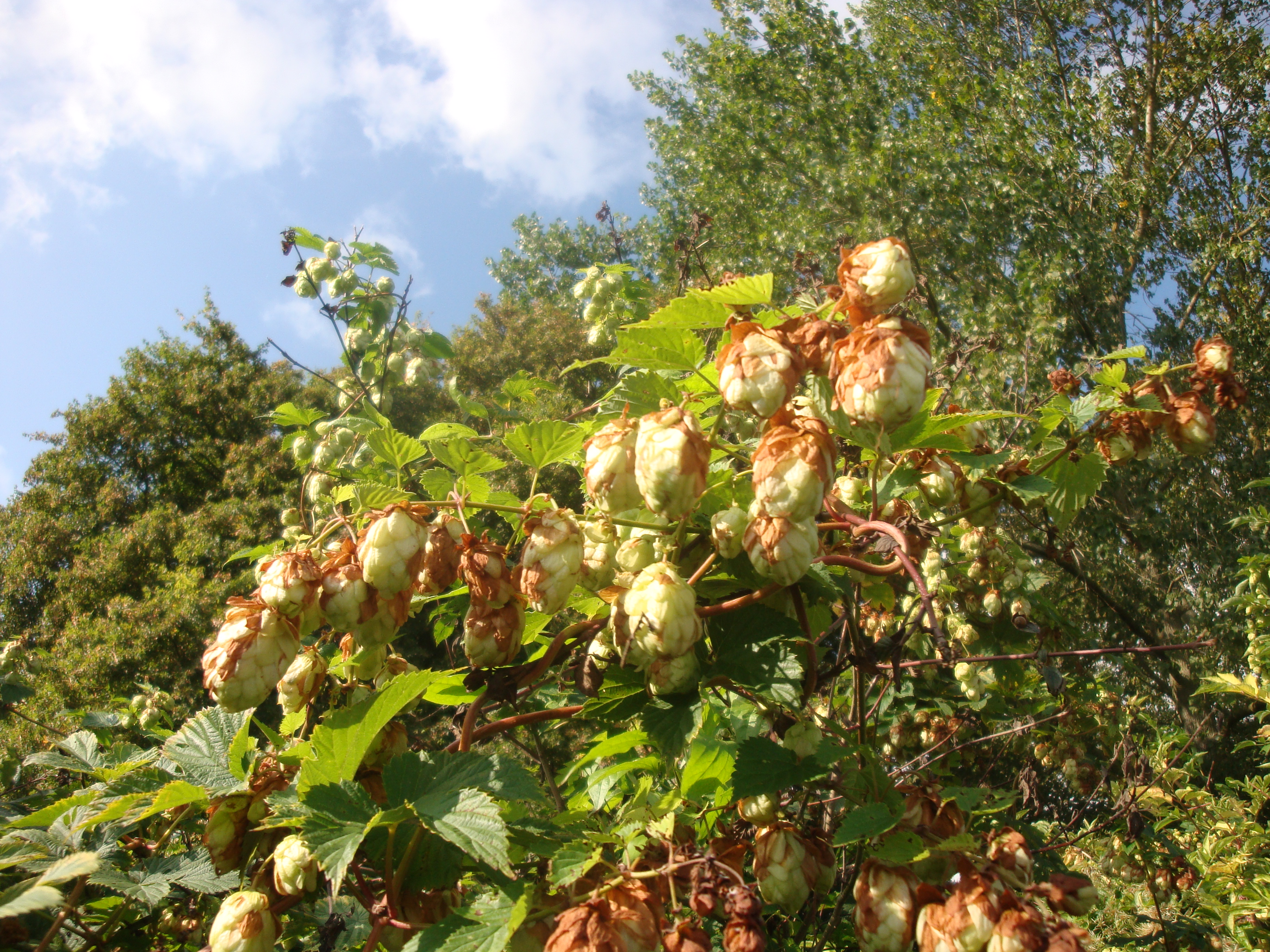
I have no desire to make my own beer, but I have read that you can make a sachet with hops and tuck it into your pillow case to help you sleep at night. Hops, apparently, have a soporific effect. Since sleeping is one of the things I excel at in life I have not tried that one out yet.
Also ripening in the hedgerows at this time are the dark elderberries and sloe berries. Sloes are what sloe gin is made out of. Again, I have no desire to get into the making of gin or wine, so for now I shall let the wild things harvest those.
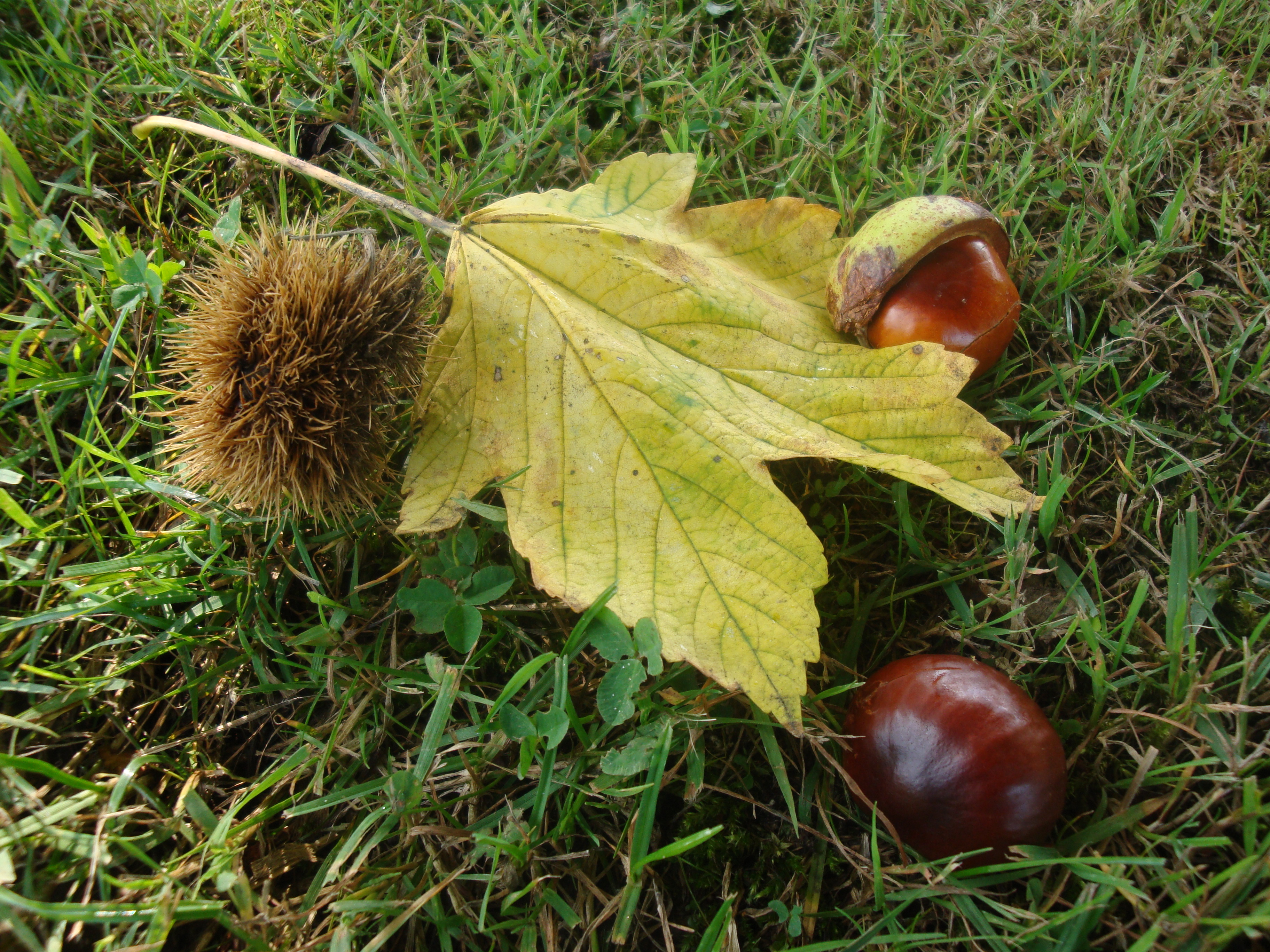
Finally, at the top of the list of treasured gifts from nature, there is the horse chestnut. It’s ironic that the horse chestnut is not actually edible for humans. It is prized, instead, because it is the necessary component for the game of conkers.
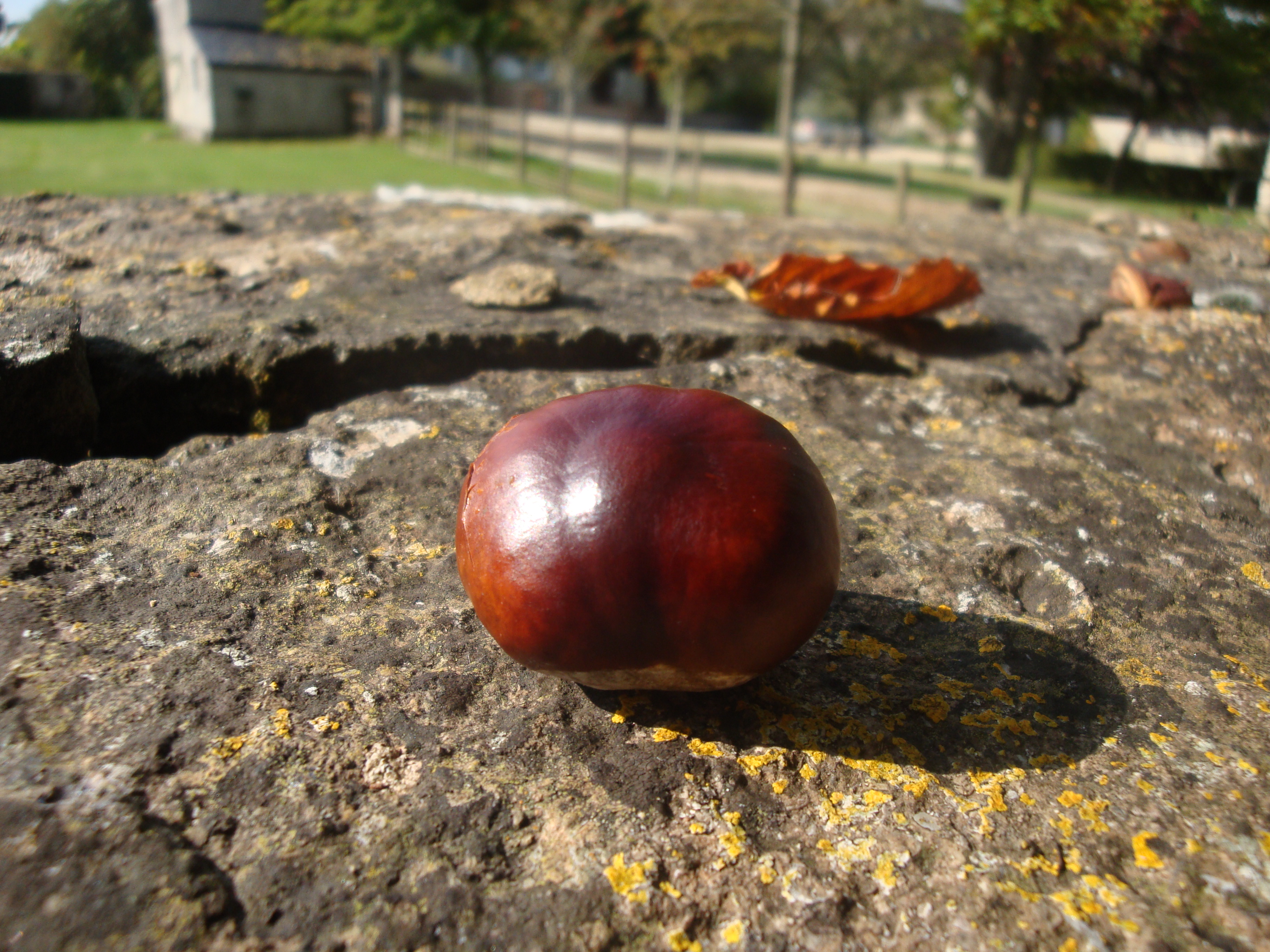
It has occurred to me that my friends and family in the US are probably totally oblivious to an age-old British phenomenon which peaks at this time of year. I know I had certainly never heard of it.
A conker is what the British call a horse chestnut. Don’t ask me why. Somewhere in the mists of time they started calling them conkers, and conkers they remain to this day.
The game of conkers is just one more example of the British inventing a game which could be fun if only it didn’t have such a baffling scoring system. (See ‘cricket’)
The basic premise is that you take a conker, the harder the better, drill a hole through it, stick a string through the hole and knot it at the end so that your conker ends up dangling at the end of the string. You and your opponent then stand face to face with your conkers. The first one to go is the striker. While his opponent holds his conker perfectly still the striker pulls his conker back, then lets it go and hopes to smash the other one to smithereens.
Now, here is where a simple game gets suddenly very complicated. I won’t even get into the official rules from the world conker championship. Those get into the nitty gritty of how long the string has to be, and so on. We’ll just stick to simple street conkers.
Scoring basics:
If you miss your opponent’s conker you are allowed up to two more turns.
If the strings get tangled the first person to shout “strings” gets to go again.
If you hit your opponent’s conker so that it completes a full circle after being hit, which is known as a “round the world”, you get to go again.
If you drop your conker you have to shout “no stamps” before your opponent yells “stamps”, because if he beats you to it he will jump on your prized conker and crush it.
You take turns trying to whack your opponent’s conker until one of them is destroyed. In “official” conkers you’re given five minutes.
OK, now it gets really tricky, but I’ll try to keep it simple.
Let’s say you have a brand-new conker. If you win the game and destroy your opponent’s nut, your nut scores 1, and is now known as a “one-er”. Keep in mind that it is the nut which has the score, not you.
You then take your “one-er”, and you compete against a conker which has previously beaten three other nuts. That conker is a “three-er”. If you beat that nut, your nut will now become a “five-er” – its own 1, then 1 for the nut it just beat, plus that nut’s previous 3 kills.
Are you still with me on this? Because to me it’s getting into the realm of the ridiculous. Personally, I believe the game of conkers was invented by a math teacher trying to instil the ability to do mental arithmetic in his students.
There were a few tricks used to make conkers stronger and harder. Some were considered sneaky and underhanded, others were allowed. Baking your conker in the oven was not considered to be fair play, but soaking it in vinegar was OK. The best conker was an older one which had survived from previous years, and some were even handed down from one sibling to the next.
Sadly, conkers is no longer allowed to be played at schools due to concerns about safety. (You’ll put your eye out!) Probably children prefer to play video games these days. It’s rather sad that you don’t see them searching beneath the horse chestnut trees for the shiniest, hardest conkers they can find, experiencing this seasonal tradition that has been a part of British life for so many generations.
However, if you’re in the UK on the second Sunday in October you can make your way to the town of Oundle in Northamptonshire for the World Conker Championship, and there you can watch the aces of the conker community do battle with their nuts on a string. The highlight of the day is when the winner is led to the Conker Throne and crowned with conkers.
And so go, gather ye conkers. Enjoy the beautiful autumn sunshine while it lasts. And if you don’t have any string handy it’s great fun to whack the conkers with a stick and watch them soar away into the fields.

 An American Wife in Wiltshire
I have been enjoying all your entries, Now I am inspired to plan another trip to England. Hopefully soon, like next summer. I miss being able to see you.
I’d love to see you, so be sure to let me know if you do make plans to come next summer.
Mmm, blackberries and hazelnuts . . . Those waist-high nettles are another “crop” you could be harvesting! The tender tops lose their “bite” when they’re cooked (like spinach), and are nutritional powerhouses. But don’t forget the gloves for picking!
Hmmm, I might have to try that, just to say I’ve done it. I’m always looking for ways to add greens to my diet, and there never fails to be a bumper crop of nettles to be harvested.