Why Do We Do It?

“Wilderness areas are first of all a series of sanctuaries for the primitive arts of wilderness travel, especially canoeing and packing. I suppose some will wish to debate whether it is important to keep these primitive arts alive. I shall not debate it. Either you know it in your bones, or you are very, very old.” ~ Aldo Leopold, A Sand County Almanac
Seasoned campers, no matter where they hail from, all have their own tales of harsh weather they have endured, tents that leaked, fires that wouldn’t start, and of course the favourite, wildlife they have encountered.
Here in the UK I have heard my share of stories. I’ve been told not to leave chocolate in my tent because the mice love chocolate and will chew a hole through the tent to get to it. One friend told of waking up in the morning with several slugs – SLUGS! – on her face. My husband relates a cute little story about a large toad crawling under one flap of his tent, clambering across the sleeping area in a business-like manner, then vanishing underneath the opposite flap without so much as a by-your-leave.
In spite of my aversion to mice and my horror at the thought of a slug facial, I have to state plainly that these tales of wildlife encounters have a rather whimsical, Beatrix Pottery air about them. They may be momentarily unpleasant, but they are hardly the stuff to hold an audience rapt with fear when retold around a campfire in the dark of night.
In America we have a distinct advantage in the story-telling department, and this is probably one of the most compelling differences between camping in the two countries, for in America we have BEARS.
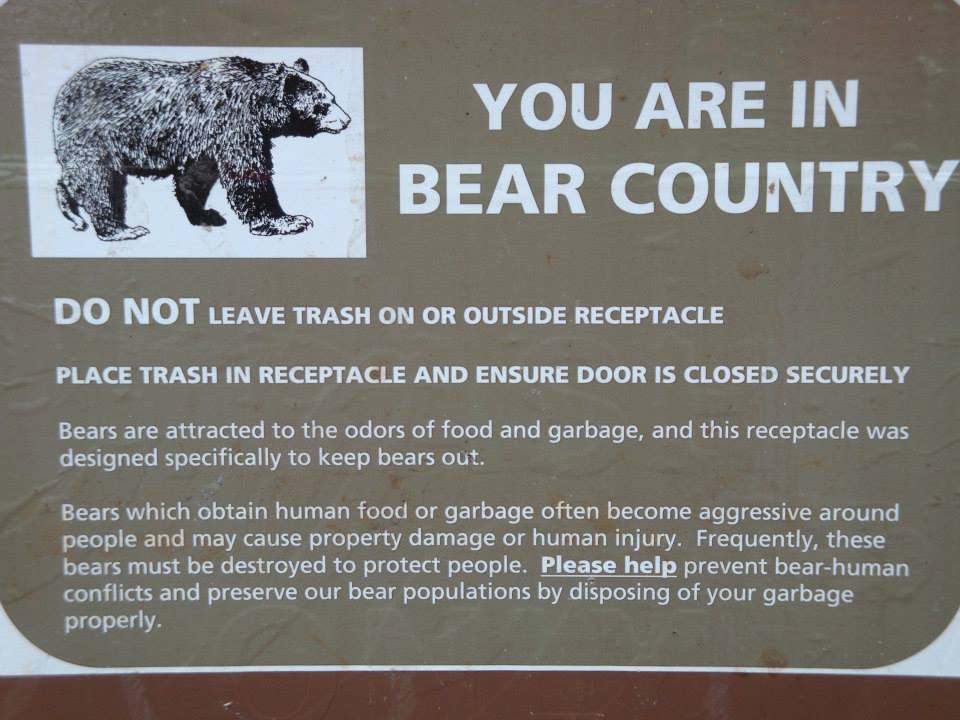
Upon entering most National Parks in the United States you are presented with a pamphlet or newspaper containing information about what is happening in the park during your visit, as well as important safety considerations you need to be aware of. If most people are like me the first thing we do is turn to the section on possible wildlife encounters and read the juicy bits out loud. Of course, they always begin by telling you that attacks by wild animals are extremely rare, and basically if you are attacked it’s your own stupid fault. Maybe they don’t come right out and say that in so many words. It’s usually phrased more tactfully, such as:
“A bear’s response to your presence depends heavily on how you respond to the bear’s.” ~ Mt. Rainier National Park bear warning
I do love the information they give you on what to do if you are unfortunate enough to have an up-close encounter with a bear: “If you are with other people, stand together to present a more intimidating figure, but do not surround the bear.” The idea of my family standing together and surrounding a bear is quite ludicrous, so as I read this aloud we all laugh uproariously, full of high spirits in the safety and comfort of the car. Then we glance out at the forest-covered mountains that rise and fall as far as the eye can see, and we think about bears; and a tiny sliver of fear enters our hearts.
You see, we have our own bear stories to tell, and in spite of our bravado we all have a healthy respect for these large predators that call the wilderness home.
“Hey, Booboo, let’s go get us a pic-a-nic basket” ~ Yogi Bear
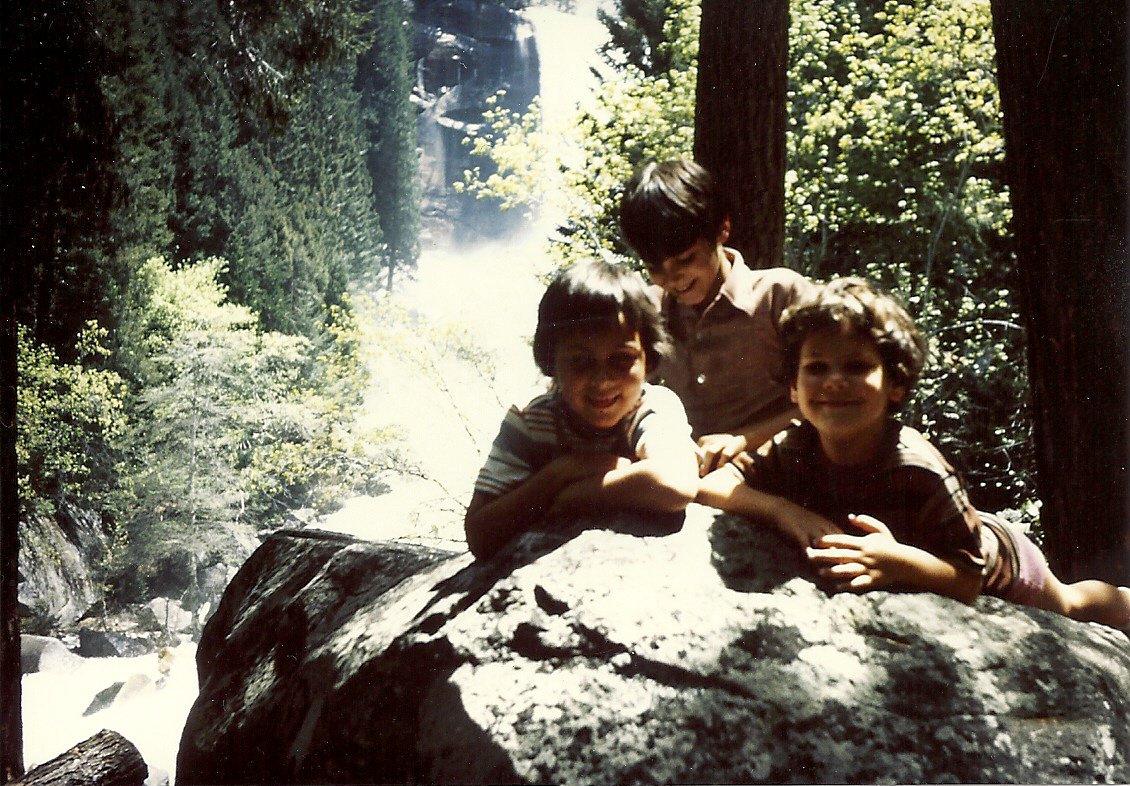
Spring has always been my family’s favourite time of year to visit Yosemite National Park. It is unquestionably one of the most spectacular seasons of the year. The waterfalls are in full spate and dogwood trees bloom along the rushing Merced River. At night the water of Yosemite Falls sometimes freezes. As the morning light warms the ice, huge chunks break away and thunder down to smash on the rocks below. The cracking and roaring of the ice echoes across the valley in a mighty display of power.
Spring was also the time when bears recently emerged from hibernation would prowl the camps and parking lots searching for easy food.
“Food includes any item with a scent, regardless of packaging. This may include items that you do not consider food, such as canned goods, bottles, drinks, soaps, cosmetics, toiletries, trash, ice chests (even when empty), and unwashed items used for preparing or eating meals.” ~ Yosemite National Park bear warning
One particular May visit that stands out in my mind was in 1972, give or take a year. We were staying in a tent cabin in Curry Village. The tent cabins were pretty much what you’d imagine – canvas walls and roof erected over a permanent wooden frame and floor. Although the nights could be terribly cold in these basic unheated units, they were affordable; so we put up with the shivering trips to the toilets and showers and spent most of our daylight hours hiking the park’s many trails.
It was upon our return from hiking the Mist Trail up Vernal Falls that I had my first close-up encounter with a black bear. Well, a sort of encounter. I didn’t actually see the bear because as we approached our tent we noticed a huge hole ripped out of the wall of the unit next to ours.
Someone cried, “BEAR!” and faster than you can say, “Hey, Boo–” my mother shoved me and my sister behind a large tree. All I managed to glimpse before I had a face full of pine needles was a large, dark mass inside the tent.
My brother, who was older and apparently more expendable, told us the rest. At 6’ 5” our father was already an imposing presence, and he calmly followed the directions on the pamphlet. Shouting and clapping his hands, yet maintaining his distance, he bravely stood between us and the jaws of death. The bear decided it had eaten enough toothpaste and Fig Newtons and ambled out of the tent, then as a mob of campers gathered (stand together…but do not surround the bear) it decided to seek food elsewhere and quickly disappeared into the shadowy woods at the edge of the campground.
For the rest of that trip we children would peer carefully from the doorway of the tent cabin, looking left and right, then race down the slope to the toilets. Every twig snapping and pine cone dropping caused our senses to go on full alert, straining our ears and eyes for any indication that the bear had returned. It was with equal parts hope and fear that we wondered whether there would be another visit, but people had learned their lesson by then and there was not a scrap of food to be found in any of the nearby tents after that incident.
But it isn’t always the bears that give us the stories of danger to tell. Sometimes the very measures put in place to protect us from bears end up being just as potentially harmful as the animals themselves.
“You must store all your food in food lockers. Bears may enter campsites even in your presence, and some will even check lockers to see if they’re latched.” ~ Yosemite National Park food storage instructions
A food locker is basically a large metal box with a hinged lid and a latch to lock it. In the Yosemite campgrounds each individual campsite has one of these food lockers. For some reason these always seem to be secured at the base of a tree – perhaps because there are trees everywhere you turn. What springs to mind when you mention trees, metal boxes and unpredictable mountain weather all in the same sentence? Yep, lightning.
One summer while camping in Tuolumne Meadows my brother and sister-in-law were knocked off their feet and suffered partial hearing loss and frizzy hair for the best part of two days when the metal box at an adjacent campsite was struck by lightning. The locker exploded and food flew everywhere, raining down Pringles particles and hot dog confetti far outside the immediate blast zone. They might as well have issued engraved invitations to all the bears in the area to come and enjoy the pic-a-nic.
Here in the UK what do we get? Sheep wandering through the campground munching the tall grass and owls screeching all night long so you can’t sleep. OK, I will admit that my first camping trip did provide a few moments of animal-induced terror, but anyone who has read my blog “We Were Happy Here” knows how that turned out.
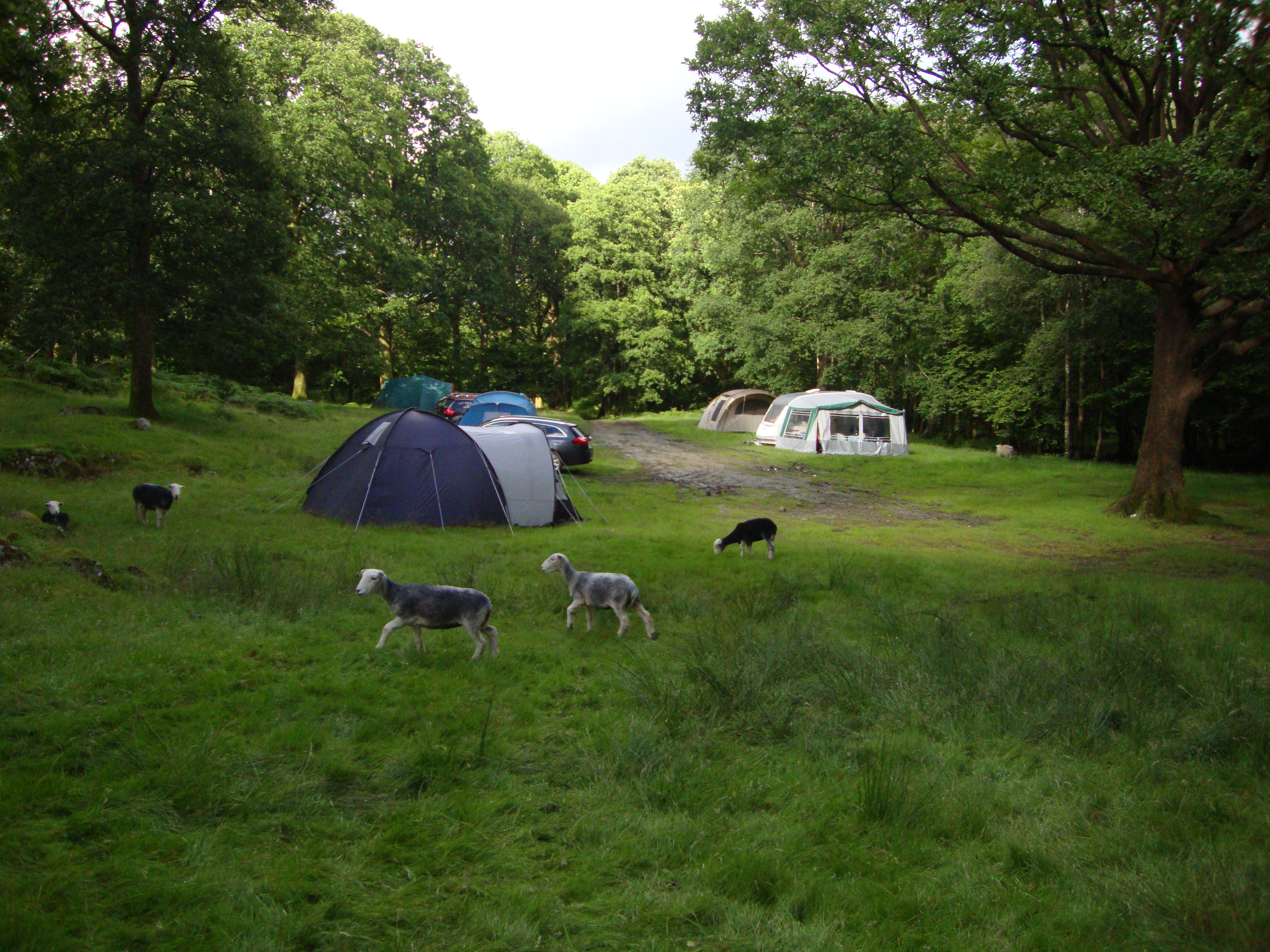
Let’s face it, camping in the UK might sometimes be cold and wet and miserable, but on the whole it is lacking that basic element all Americans expect and love on a camping trip: the fear factor.
This is due to two things:
- No bears or cougars – rumours of escaped big cats to the contrary. Sure there are deer and the occasional wild boar, but those don’t quite strike the same terror in the hearts of the general populace.
- A general lack of extremely isolated wilderness areas. The UK is a small, crowded island. There isn’t enough land to have huge tracts of empty wilderness. At first when I moved here I was surprised to realize that even when I thought we were miles from civilization we really weren’t. There always seems to be a pub or a village within at least 10 miles, no matter where you go. In fact, midway through our camping trip last year we needed to restock our supplies of fresh produce and dairy products. Did someone have to jump in the car and drive 50 miles to the nearest grocery store? No sir-ee. Someone logged online, placed a Tesco order, and the next day a delivery van pulled up to the marquee with fresh supplies.
A short stroll away from our campsite in the village of Coniston were shops, pubs and restaurants. There were also some very nice B&B’s with soft downy beds. So why camp at all? Why not just stay in a B&B, you might ask.
I have to admit, there are times when I wonder the same thing.
When you’re standing in line for the showers clutching your overnight kit and trying to keep your clean socks from falling onto the damp, muddy floor and fumbling in your pocket for the 50p coin that you’ll need to turn on the water, you wonder why. When it’s cold and damp and you start counting how many more nights you’ll have to spend listening to the rain drumming on the roof of the tent and that crazy tawny owl screeching all night you wonder why. When you check your Wellies for slugs before sticking your feet into their dark dank depths you wonder why. When you’re toweling yourself dry and trying to get dressed before hypothermia sets in you wonder why, and you think about people who spend their vacations in hotels ordering room service and lounging around in plush robes.
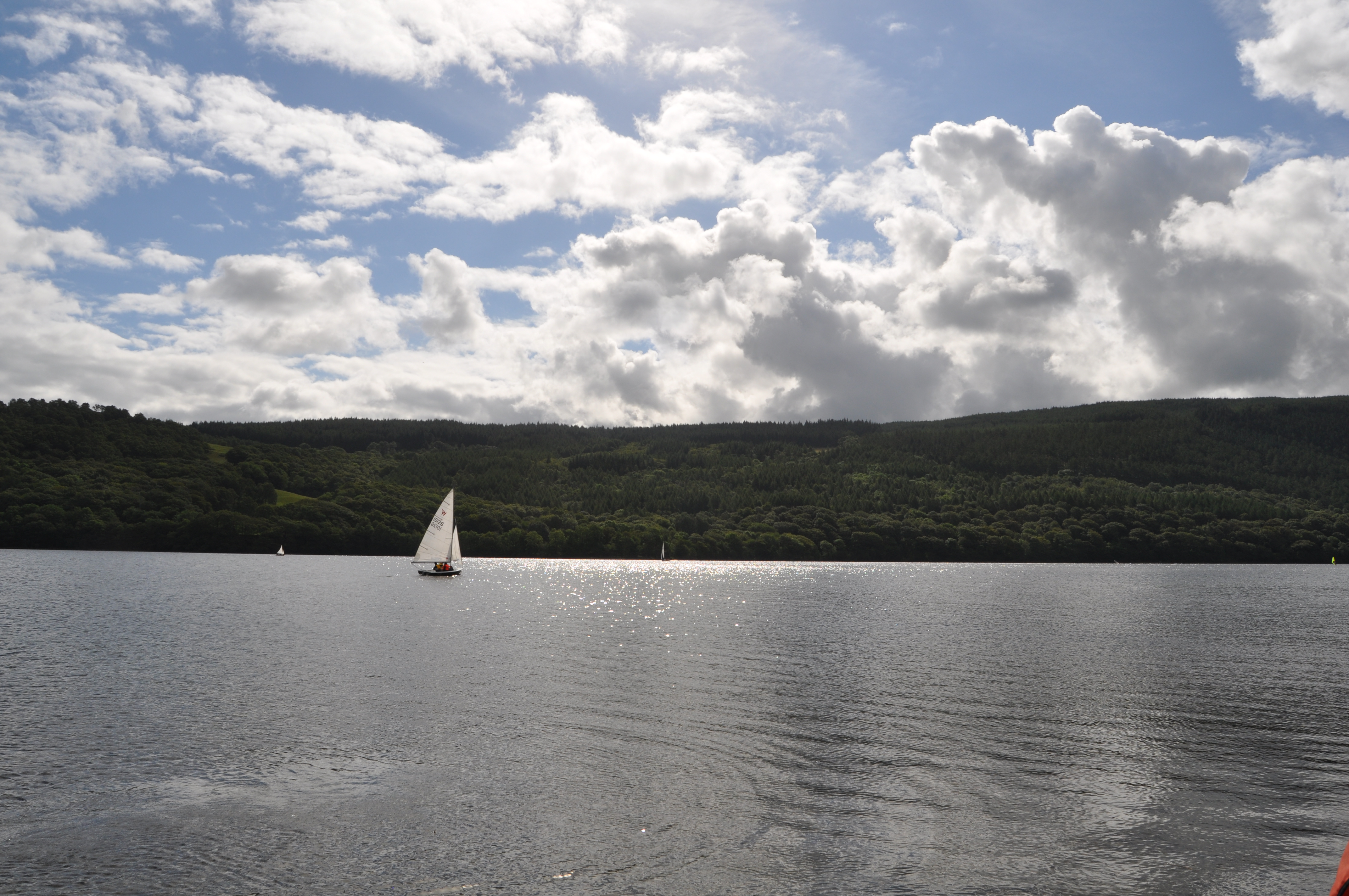
But eventually the rain stops, the owl is quiet, and you fall asleep on your air mattress as if resting on a cloud. You awaken in the morning to the singing of birds and the babbling of the nearby brook. When you emerge from your tent the glade has the fragrant smell of damp grass and clean lake air. Shafts of golden sunlight stream down through the tree canopy to illuminate the forest floor below. Mountains rise rocky and treeless from the lush valleys, stunning in their stark, harsh beauty. Sail boats dot the crystal clear waters of the long lake, mirroring the clouds which race overhead like ships in their own vast blue sea.
If you are a noticing sort of person you stop and take note of this perfect moment, are captivated by it, and gaze in wonder at the quiet majesty of the landscape surrounding you. This perfect moment is what camping is all about. This is why you came. This is why you eschew the fancy resort with the swim-up bar. This is real. This is nature at its best.
This is what makes it all worthwhile.
And then if you’re camping in the UK you can always walk down to the café in the village for a hot breakfast and a latte.
***
Our camping trip in the Lake District was almost a year ago now, but the memories remain fresh in my mind. It wasn’t perfect. Not only did our tent fail and have to be replaced, but I was suffering from a problem with my ankle which made walking painful. Instead of hiking the famous fells in the footsteps of Arthur Wainwright I had to be content with sitting beside the lake taking pictures of the hills from below. Halfway through the week Mr. H tweaked his back and spent several days walking with a distinct list to starboard. Even when he was on level ground he looked like he was standing on a slope. On the last morning while scrambling to take down the tent and pack all our gear in the rain my husband banged his head against the hatchback door, slicing a deep cut on his forehead which bled dramatically.
Finally, lashed by the wind and rain caused by the tail end of Hurricane Bertha we made our long way home. We were battered, bruised and bleeding. For a time the only sounds were the furious swiping of the windshield wiper blades, the pounding of the rain, and the storm and traffic updates on the radio.
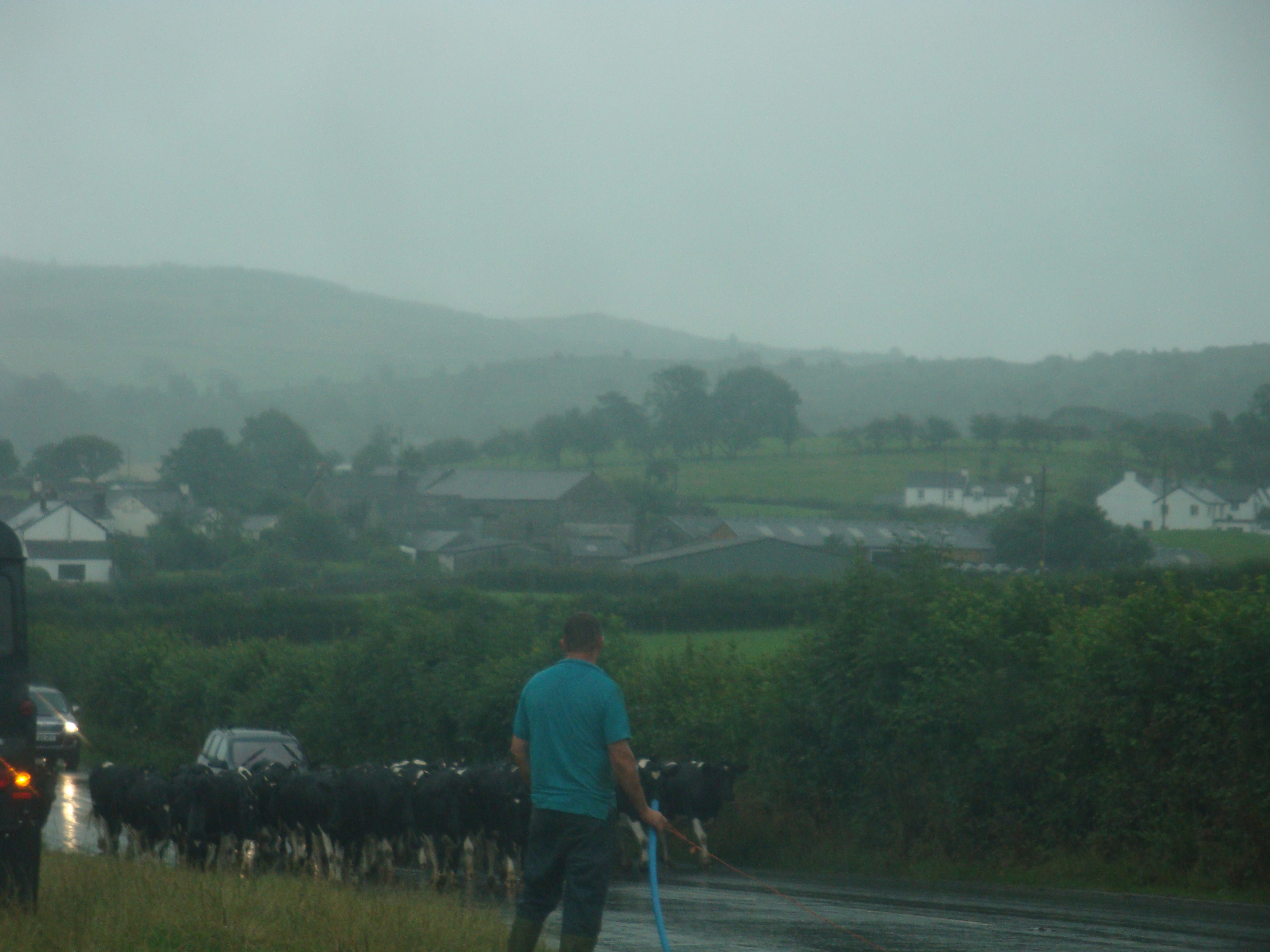
Then I twisted slightly in my seat to look at my husband and said, “Next year when we come back…”
“Some people walk in the rain, others just get wet.” ~ Roger Miller


 An American Wife in Wiltshire