
There are few hours in life more agreeable than the hour dedicated to the ceremony known as afternoon tea. – Henry James
It is a truth universally acknowledged that an English person in possession of ten spare minutes must be in want of a cup of tea.
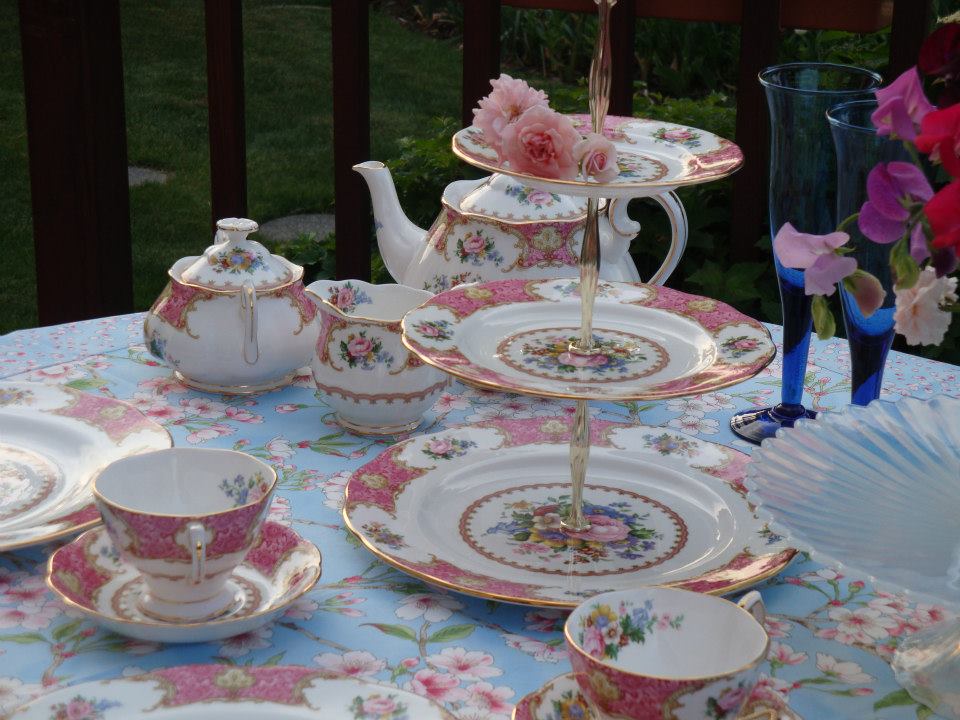
Ask Americans to name something that they commonly associate with the UK, and right up there with 007, the queen and fish and chips will be named that universally acknowledged beverage of the Brits: tea. We Americans have visions of the English sitting around in grand houses, being served tea from ancestral silver tea services, and sipping it out of delicate bone china teacups. Along with the tea, of course, will be served cucumber sandwiches on thinly sliced white bread, and piping hot scones with strawberry jam and mounds of clotted cream. In this fantasy of ours there is usually a butler in livery hovering in the background – one faintly resembling Carson from Downton Abbey.
The reality of tea in the UK can come as something of a disappointment for the first-time visitor to these shores. Over here tea is just…ordinary. Although wonderfully nostalgic tea shops do exist, on average there is no ceremony about your typical afternoon cup of tea; there are rarely delicate teacups and saucers and never butlers hovering in the background. Just as Americans consume our coffee out of take away cardboard cups and giant ceramic mugs, so do the Brits consume their tea. For Americans fed a steady diet of Masterpiece Theatre this is rather surprising.
Over here tea is for the British what coffee is for the Americans. It’s what revs them up in the morning and what warms them in the afternoon. It’s what they pack in their thermoses when they go on a picnic. It is their caffeine infusion of choice. Here are some facts I recently gleaned from the UK Tea Council:
- British people consume 165 million cups of tea a day. The 70 million cups of coffee consumed per day are paltry by comparison.
- 98% of the tea is taken with milk
- The Republic of Ireland is the largest per capita tea drinking nation, followed by Britain.
British people tend to think that Americans don’t know beans about tea. This is largely the fault of the Americans. We started down the slippery slope toward coffee dependence on that long-ago night when a group of Massachusetts Patriots dumped 92,000 pounds of tea into Boston Harbor. The loss of a cargo worth, at today’s prices, over $1,000,000 was a bitter one for the British, and perhaps that is why to this day they think we Americans don’t appreciate, don’t understand, and just can’t do tea up to the standards of the English.
This skepticism about Americans and tea comes in spite of the fact that the US has an increasing appreciation of the merits of a good cuppa. After all, it was an American, Thomas Sullivan, who is credited with the invention of the tea bag. He sent tea samples to his customers tied up in silken bags. Some clueless customers mistakenly steeped the tea, silk bag and all, and the tea bag was born. Now, 96% of the tea consumed in Britain is brewed with a teabag. (Thank you, once again, UK Tea Council.)
Perhaps the fact that we consume most of our tea iced is what makes the British think we are tea illiterates. My husband thinks iced tea is a terrible thing to do to an honest tea leaf, and he stubbornly insists that hot tea is a better way to cool down in hot weather than iced. I think that’s poppycock. Anyone who has ever sweltered through a hot July day when the temperature reaches 104 Fahrenheit in the shade is not going to buy into the argument of drinking hot tea to cool down. You can’t press a hot cup of tea to your forehead for instant relief like you can a glass of iced tea.
My husband just read this last paragraph and he has lodged a strong protest. He claims to have been served a cup of spicy, hot chai tea on a sweltering day in Singapore when the humidity was hovering right around 100%, and that it did cool him down. So he is standing firm on his conviction. I have to admit that the pesky UK Tea Council does try to back him up by stating that there is some actual science behind this theory. Drinking hot tea raises the body temperature momentarily, causing the body to perspire, and then the perspiration on your skin creates a cooling effect. I’m pretty sure my scientist husband did actually state this at some point, but I was too carried away with the brilliance and humour of my argument at the time to be swayed by cold, hard facts. I’m still not entirely swayed.
I will concede that it has been a long journey to the making of the tea lover I now claim to be. My early childhood experiences might have been enough to prove the Brits right about Americans and tea. Growing up in the 1970’s my introduction to tea came from my mother, who was going through what back then was called a health food kick. We were given large glasses of freshly pressed beet and carrot juice and told they were delicious, and bean sprouts made regular appearances in all sorts of dishes where they should not appear, such as scrambled eggs. On the bright side, however, were the huge loaves of whole wheat bread sliced while still hot from the oven, spread with butter that melted instantly into the softness beneath the crisp crust, then topped with a thick layer of homemade blackberry jam. Along with the fresh bread loaves would be a big pot of peppermint tea. Made double strength with loose leaves, when the lid was lifted off the teapot the strong peppermint vapours were enough to clear your sinuses at twenty paces. This we sweetened with honey and enjoyed at all hours of the day.
Herbal teas, or tisanes, comprised all of my early encounters with tea. Brightly coloured boxes of herbal teas lined a shelf in the kitchen cupboard. They had names like Sleepytime and Red Zinger. When we were ill we were served cups of chamomile tea, just like Peter Rabbit after his nasty experience in Mr. McGregor’s garden. Tea was soothing. It was comforting. It was a treat. In the evenings we would eat popcorn and drink peppermint tea and watch The Waltons on TV. Herbal tea was viewed as a healthy alternative to soda pop. It was not something you drank to pep yourself up. It was for relaxation. It was to help you sleep. It was to settle an upset tummy. It was medicinal.
In the summertime we would visit our grandparents, and there we were given an entirely new tea experience, and certainly one which would have reinforced the Brits’ opinions of Americans and tea. Every day at lunch my grandfather was given a tall clear Coke glass full of water. Into this he would spoon a couple of heaping tablespoons of Nestea instant tea powder. On top of this he would pour about half an inch of white sugar, so that the bottom of his glass had a brown stripe topped by a white stripe. He would then stir and stir and stir, his spoon clinking noisily against the sides of the glass, until the tea and the sugar were dissolved. It was quite disgusting, and of course we children always clamoured for a glass of the revolting mixture. Anything with that much sugar in it had to be delicious.
As I grew older and began to experience the world through books I was exposed to that great British tradition of teatime. Little girls in books were always having afternoon tea – when they weren’t being starved in garrets or worked off their feet in the scullery. As I grew older, so too did the characters in the books I read; but one constant remained – whenever faced with a dead body in the library some stout, sensible woman in tweed was invariably ordering the hysterics in the group to down gallons of hot, sweet tea, as if the drinking of tea alone could restore order to their fictional universe. References to tea were rife throughout all of English literature. It seemed that the English were guzzling tea all day long. To be English was to drink tea.
Indoctrinated as I was by my immersion in the fictional worlds of Jane Eyre and Miss Marple, on my first visit to this island I was determined to try a cup of genuine British tea. I would have it hot and sweet, with a splash of milk, just like a character in one of my books. On the flight from Los Angeles to London I ordered my first cup when the flight attendant came around with the drinks cart. It was everything I had hoped it would be. It was delicious; perhaps more because I had made up my mind that it would be rather than because it actually was. I was seventeen and embarking on a great adventure. On the outside I was a tall, frumpy girl with frizzy hair and big glasses; but as I stirred my tea and took that first sip I felt glamorous and sophisticated, a world traveller able to face whatever bumps might be down the road as long as I had my cup of strong, hot, sweet tea.
My mother, also, became hooked on “real” tea, and together the two of us discovered the delights of what the British call a cream tea – that’s tea served with scones and thick cream. Over the years we became known for our tea parties, and I don’t think there was a single bridal or baby shower that I ever hosted which did not have a tea party theme. Our love for making things pretty and elegant took flight, and even a simple tea to be shared between just the two of us was prepared with the best china teapot and teacups.
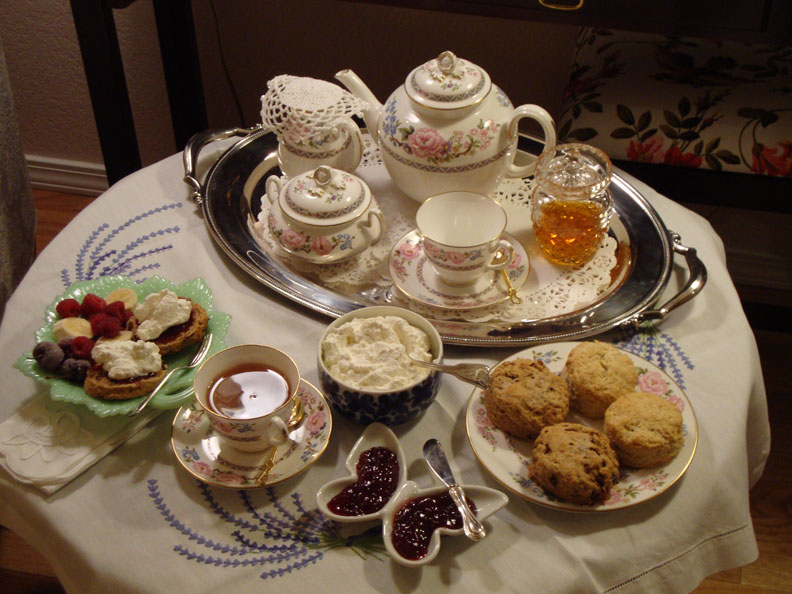
There was a time, not too many years ago, after my step-father had died and before my mother remarried, when for a few years she and I lived together, just the two of us. My mother was facing the long, slow process of rebuilding some sort of life without her husband, while I had to come to terms with the reality that I very likely would never have a husband or children of my own. Through that time tea became a comforting ritual.
Nearly every evening we would put the kettle on, and then ask, “Which teapot should we use tonight?” for by this time we had quite a collection.
Out would come the tray, to be overlaid with a crisp white napkin or lace doily. The teapot was carefully warmed first, and then loose leaves spooned in – one per cup, and then an extra one for the pot. To the tray we added the cream pitcher and a crystal honey jar, and often a plate of warm scones. This was carried into the living room where we would sit in the evenings and knit while watching an episode of Midsomer Murders or Poirot. It sounds silly, but this soothing end to each day helped to carry us both through some very difficult years.
So what is it that makes a truly great cup of tea? Some would argue about heating the teapot first, using loose tea leaves, and whether the water should be brought to a full boil depending on the type of tea. I will concede that all of these are factors which contribute to the quality of the finished product; but, I will also argue that what makes a good cup of tea has nothing to do with the preparation. Instead, I think that the best cups of tea are those which include what I like to call “the comfort factor.” The best cups of tea I’ve ever had have been more about the place and the people I was with than about the actual beverage.
There was that first cup on the airplane when I was seventeen. It was probably horrible swill, but to me it will always stand out as sublime.
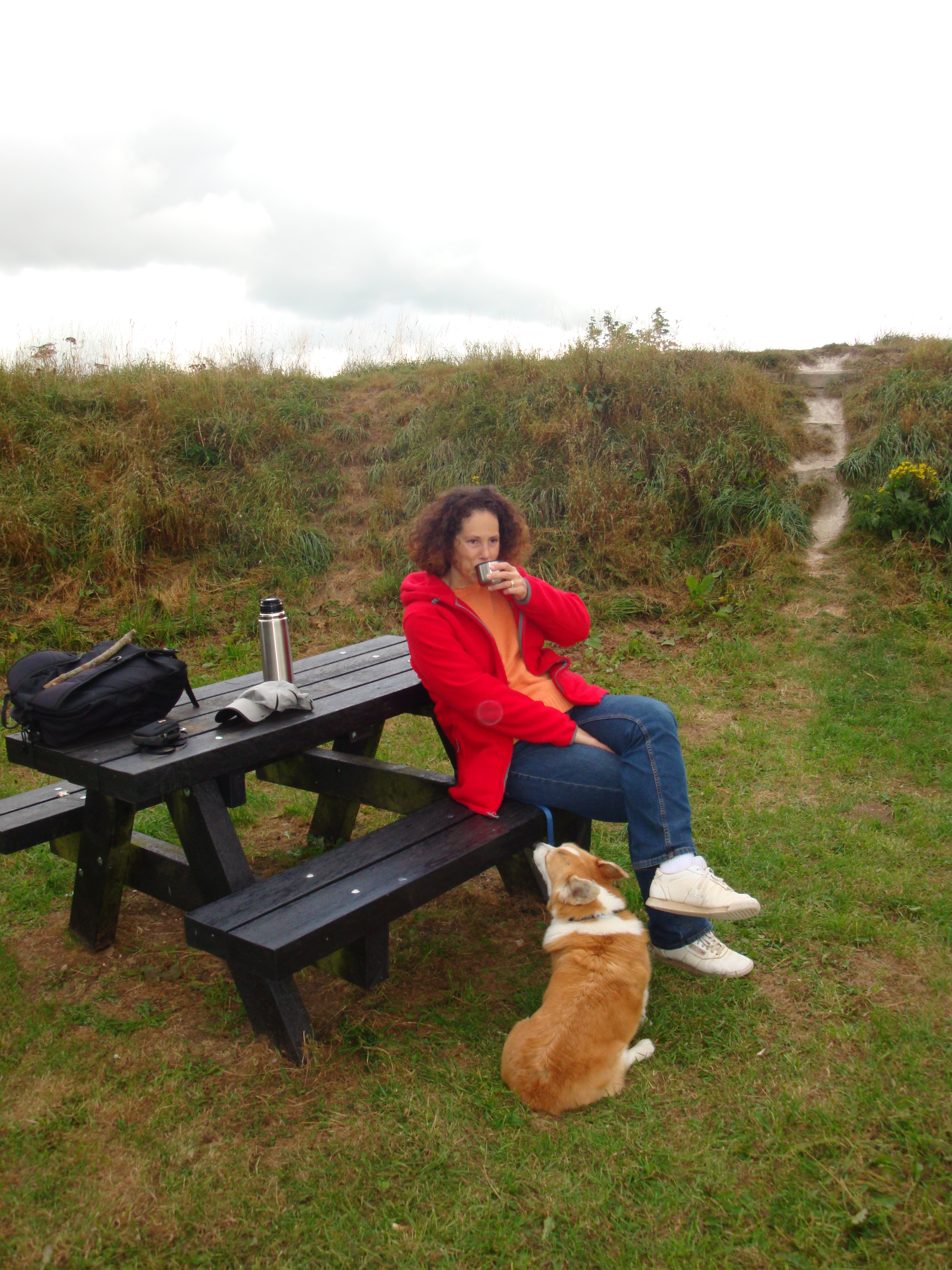
There was the tea shared out of a thermos cap with my husband while we sat on a hillside with all the world seemingly spread out below us. The wind was blowing in our faces, bending down the grass around us and making our eyes sting, and we passed that thermos cap back and forth, sipping the hot tea and being restored after a particularly long walk.
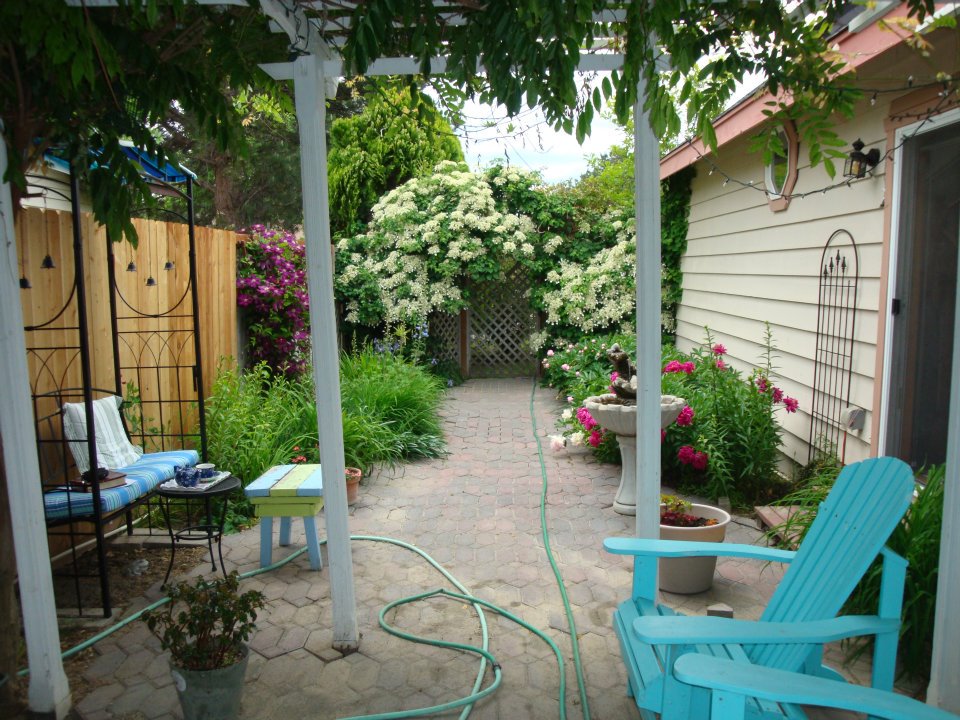
There were the cups of tea sipped in my mother’s beautiful back garden, listening to the birds chatter in the trees, the fragrance of lilies perfuming the air in summertime.
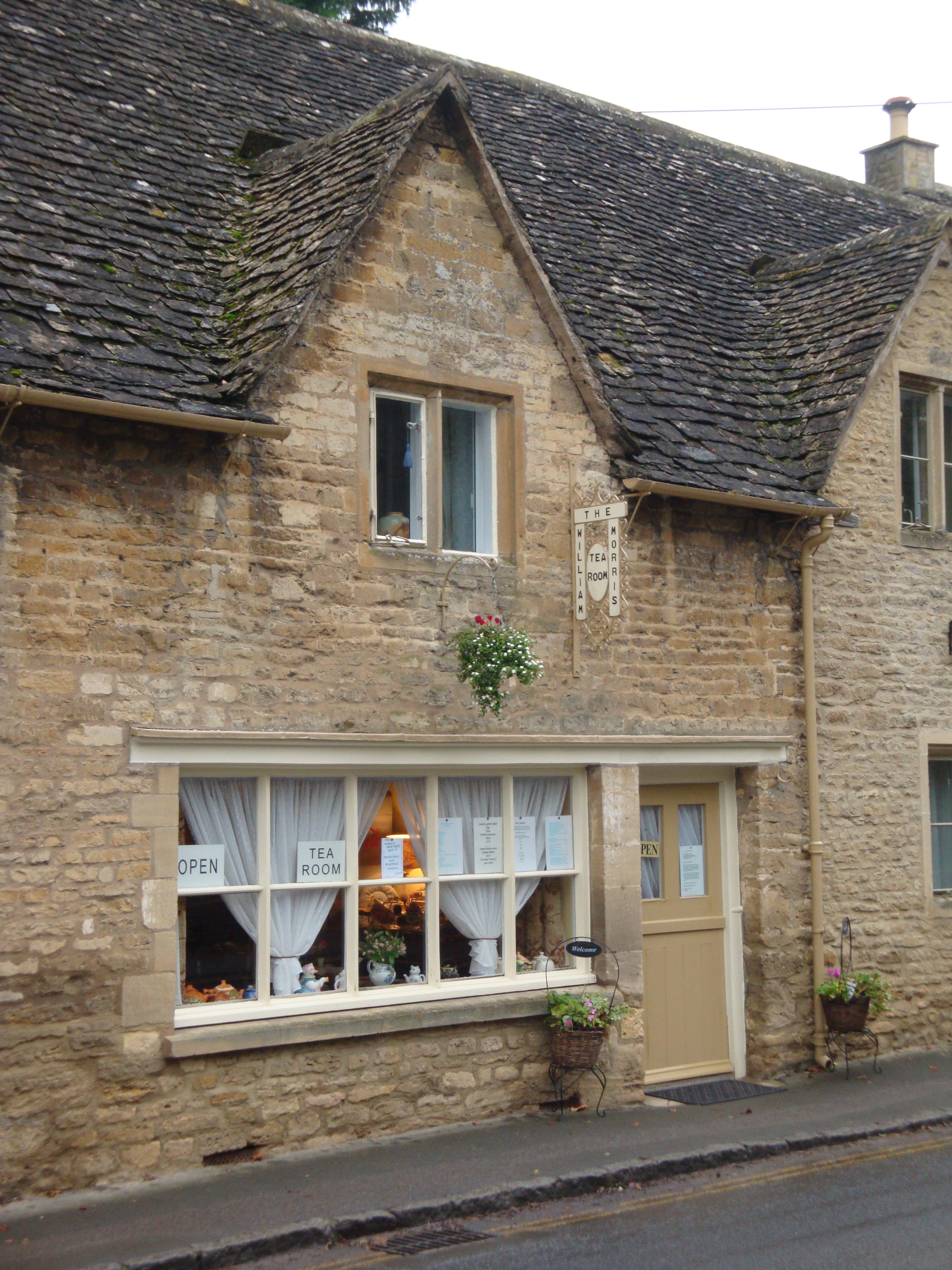
There have been countless cups of tea shared with friends old and new while the conversation sparkled and danced back and forth, with jokes and laughter, and sometimes sorrow and tears; and somehow the tea gets interwoven into that, and becomes a part of it, so that when I try to pinpoint what it is I like about tea I think of friendship and love and solace. Perhaps for the British it is just how they wake up in the mornings, but for this American it is so much more than that. It represents what we all admire and love best about the British – an indomitable ability to keep pressing forward in spite of hardship, and to joke about it along the way.
And so this American has come to love her tea. I still love my coffee first thing in the morning, to be sure, and perhaps someday I will write a blog about coffee-drinking in the UK. In the meantime, I shall continue to enjoy tea with friends and family here in my new home; and I shall continue the search for the tea room which lives up to my teen-age expectations of what a British tea room should be. So far I have found one or two which are practically perfect in every way, and I shall write more about those in future blogs.
For now, put the kettle on and enjoy a nice, hot, sweet cup of tea with me.
I shall end this blog with a quote supplied by my husband, from the movie Moonraker:
Hugo Drax: You have arrived at a propitious moment, considered to be your country’s one indisputable contribution to Western Civilization: Afternoon tea. May I press you to a cucumber sandwich?
James Bond: Thank you, no, nothing at all.
 Just a note – that is a window decoration behind my head, not a tiarra.

 An American Wife in Wiltshire
Elizabeth, We so miss you!! Reading your blogs kind of brings us together,with or without the tea. Reading all about England and your roamings is like reading a really good book. Thanks for sharing!
What a delightful blog
Am finally catching up. Love your blog And miss you so!