“Die when I may, I want it said by those who knew me best that I always plucked a thistle and planted a flower where I thought a flower would grow.” ~ Abraham Lincoln
The Homesteading Act of 1862 is sometimes cited as the most important piece of legislation in the history of the United States of America. Under this act homesteaders could file an application and lay claim to a surveyed plot of government land. If the homesteaders were able to build a dwelling, make improvements to the land and produce crops for a five year period they could then file paperwork to have the land deeded to them free and clear. By 1934 over 1.6 million homestead applications had been processed and more than 270 million acres of land had passed into the hands of individuals.
Those Americans who were enticed west by the lure of free land faced a difficult journey across the plains and mountains to reach their destination. Those who made it all the way along the Oregon Trail to the fertile Willamette Valley found…my family already there. Yes, I am the daughter of pioneers who in the late 1840’s decided the East was growing too populated and struck out from Independence, Missouri in a covered wagon to a land where one could get some peace and quiet.
Whether or not any of my family members took advantage of the Homestead Act I can’t say, but I do know that in the early years of the 20th century my great grandparents, Farra and Katherine, followed their own dream to work the land with an 80-acre farmstead near the ranch where my great-grandmother had been born and raised.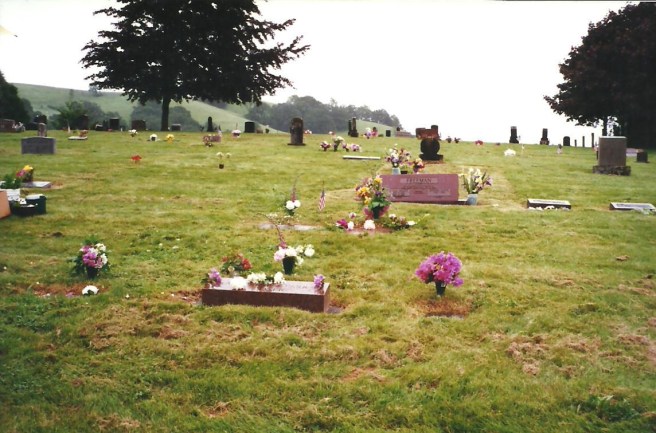 The gravestones in the old pioneer cemetery on the hill tell the story of what a difficult life it was. In 1905 a baby boy was stillborn. In 1927 Farra was killed in a farming accident, leaving Katherine with two daughters to support and a farm to run. Finally, in 1931 my grandmother’s beautiful, vivacious little sister died from undulant fever. In spite of the tragedies, the grief and the hardships she had faced, Katherine did the only thing she could: she carried on. Yet, from the stories I’ve been told it seems that she did more than just carry on; she somehow managed to survive the pain of all she had lost and still find joy and humour in life.
The original 80 acre farm was sold and a move down the road to a more manageable 40 acres happened at some point, and Katherine somehow managed to hang on. She worked the land, made improvements, and she resiliently kept on doing what needed to be done, each week piling the produce she had grown onto the back of a trailer and hauling it to market to be sold.
One of her seemingly endless tasks was trying to control the noxious weed Canada thistle. Whenever she had time she would head out to the fields with her hoe and chop the Canada thistles. In one letter to my grandmother she recounted having hoed 1,000 thistles that day.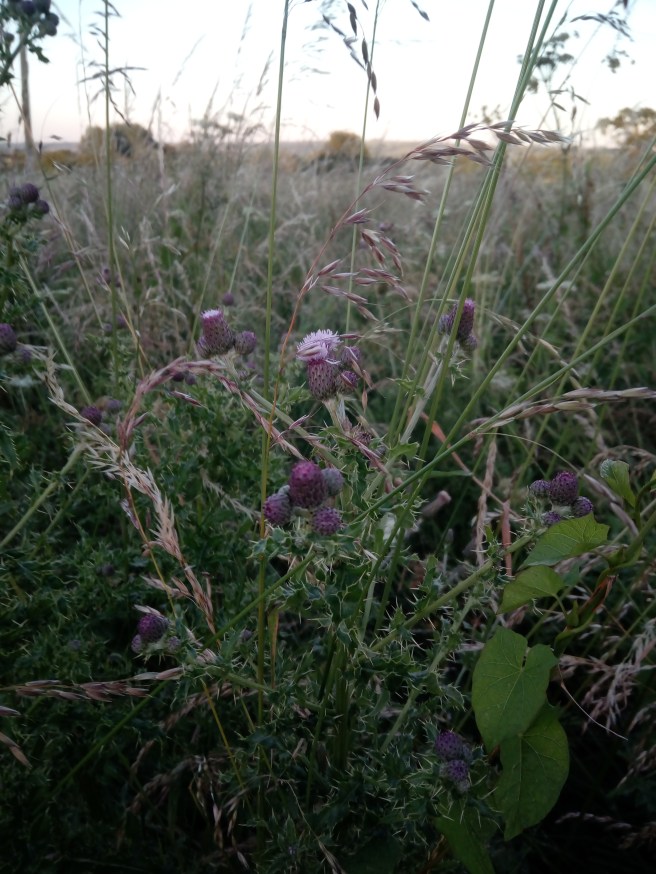
Somehow, when my father first told me the story of Katherine hoeing thistles it struck a chord with me. “Hoeing thistles” became a catchphrase for overcoming the adversities of life, of chopping away one by one at the obstacles that can sometimes overwhelm us. If my great-grandmother could overcome all the grief and the hardships in her life and carry on hoeing thistles with good humour, then so could I.
In a way, I’ve been hoeing my own thistles for the past five years. The U.K. has what is called a 5-year route to permanent settlement for people who have married British citizens, and I’ve often thought of it in relation to the original 5-year route to land ownership that the settlers in America were willing to work so hard for. For five years we immigrants are required to demonstrate that our marriage is genuine, we have to learn about and integrate into British society, and finally we have to pass a Life in the UK Test.
The Life in the UK Test demonstrates your understanding of British history, laws, customs, language, government and culture, and learning the information required is a way of showing your willingness to permanently settle here. Taking the test is a nerve-wracking experience because without a pass letter you cannot move on to the next stage of settlement. In March I took the Life in the UK Test and passed. One more thistle hoed in the five-year journey toward making my permanent home here in the United Kingdom.
In the past five years I’ve learned far more than any test could cover. I’ve overcome a considerable mental block and learned how to drive a manual transmission car on the left side of the road. I’ve learned to navigate the mystifying realm of public transport and can now complain about late trains like a local. I’ve learned never to try to drive to the southwest on a bank holiday weekend. I’ve learned to put the cream on my scone first, then the jam. I’ve learned if I want good Mexican food I have to make it myself, but the curry is excellent.
For five years I have been meeting the government’s requirements, proceeding step by step toward the ultimate goal. It has been arduous at times, and shockingly expensive as each year the prices were increased, but we always tried to keep looking toward the light at the end of the tunnel. This week, at the Premium Service Centre in Cardiff, Wales, my husband and I presented the final packet of documents and paperwork required for the long-desired settlement application.
The letter which accompanied the granting of my new status of Indefinite Leave to Remain read in part: “There is now no restriction on you living and working in the United Kingdom.”
I don’t know how my great-grandmother felt when she finally held the deed to her forty acres of land, but I hope she felt as I do, that the hardships were worth it. She worked and sacrificed to own a piece of land, something tangible to hold onto and pass on to future generations. My own struggles cannot in any way compare to those my great-grandmother faced, but I hope that in keeping with family tradition I have managed to weather what has come my way with fortitude and good humour.
My biometric residence permit arrived today, and in spite of how hideously old and stern I look in the photo I couldn’t help but smile as I tucked it away in a safe place.
One more thistle has been hoed.
“All problems become smaller if you don’t dodge them, but confront them. Touch a thistle timidly, and it pricks you; grasp it boldly, and its spines crumble.” ~ William Halsey


So you can test yourself here are some sample questions from the Life in the UK Test:
1. Is the statement below TRUE or FALSE? “It is possible for parents or other community groups to open a free school in any part of the UK.”
2. Is the statement below TRUE or FALSE? “There has been a Welsh Assembly and a Scottish Parliament since 1999.”
3. How often is Prime Minister’s Questions Held?
A) Every day
B) Every day whilst Parliament is in session
C) Every week
D) Every week whilst Parliament is in session
4. The Royal Society was formed to promote what?
A) Astrology
B) Natural knowledge
C) Art
D) Music
5. Which TWO events happened to the church in England following the restoration of Charles II?
A) The church of England was restored as the official church
B) The Puritans and Roman Catholics were kept out of power
C) The Puritans grew in strength and number
D) The church of England was suppressed
6. Which period of British history saw the emergence of a national culture and identity?
A)The Bronze Age
B) The Middle Ages
C) The Victorian period
D) The Tudor period
7. Is the statement below TRUE or FALSE? “Sir Ian Botham captained the England rugby team.
Answers: 1)False 2) True 3)D 4)B 5)A and B 6)B 7)False

 An American Wife in Wiltshire
As I have an English mother, my application to becoming a British Citizen was granted last April and was a reasonably easy task compared to yours. – Although I had to apply for my birth certificate again from Wisconsin- and fill out a few endless forms of course. I needed to give my biometric details and have an interview at the registry office – where the officer seemed to find it a struggle to believe that I had never been in any trouble with the authorities – down to not even a traffic speeding ticket! ( I obviously lead a quiet life! ) My path these past years – especially the last 10 or so has found me giving my time and a lot of effort to the needs and raising of hundreds / thousands of chicks and hens. The passage to becoming English; although a right of birth for me, has been one of hoeing thistles too – in many respects of your analogy!!
Thank you!
Sent from my iPhone
>
Lovely piece, well done Elizabeth.
Just came across your blog, while doing a little bit of research.
My wife and I are beginning the process of moving to South West England (from Colorado), currently looking at Melksham and Devices area.
I am Irish born and raised, my wife is from Texas.
My questions are, is there a community of America expats living in and around the Wiltshire area, and if so, where can I or my wife find out about them?
Thank you,
Kenneth
Hello Kenneth.
Please forgive my delay in responding. Our unusually warm, sunny weather kept me busy outdoors for the past couple of weeks, but today the rain has returned and I am catching up on some long-overdue office tasks.
How exciting that you and your wife will be moving to this part of England. Devises and Melksham are not too far from us. We enjoy doing the walk along the Kennet & Avon Canal in Devises and watching the canal boats going up the Caen Hill Locks. There are so many things nearby to see and do that I am sure you both will love the area.
I’m afraid I have never looked for any clubs or groups of American expats, but you might find some in the Salisbury area. There are usually some Americans near military bases, and Salisbury Plain definitely has those. Although I’ve never read it, there is a magazine for expats in the UK called The American, and when I looked at their website their editorial offices are actually located in Wiltshire. I did find this link on their website:
https://www.theamerican.co.uk/pr/american-groups. You may have already found that yourself by now.
I wish you all the best in your move.
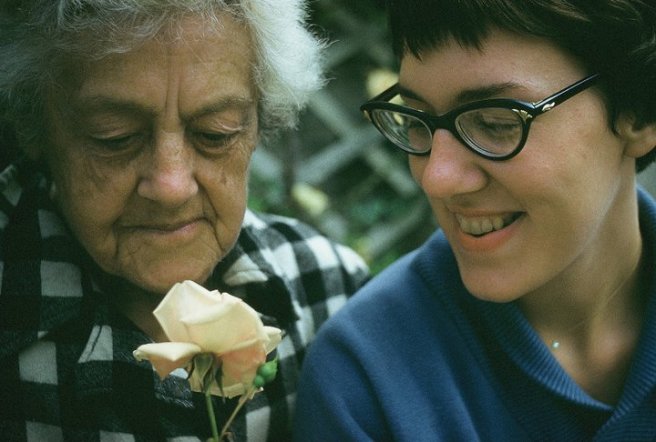
First time I’ve read this one. Good to see old familiar faces, and there was Baby John, your brother!